
Their shared brief: To assert India's case with clarity, rebut hostile narratives, and secure enduring partnerships for global counter-terror cooperation.
Following the deadly Pahalgam attack, Michael Rubin, a former Pentagon official and senior fellow at the American Enterprise Institute, issued a strong statement and said that 'it is now the duty of India to do to Pakistan and to Pakistan's Inter-Services Intelligence (ISI) what Israel did to Hamas', calling for decisive action against Pakistan's intelligence agency for its alleged role in supporting terrorism.
In October 2024, Jindal Stainless challenged a Goods and Services Tax (GST) notice in the Delhi high court. It was about corporate guarantees issued to related parties by its former group company, Jindal Stainless (Hisar), before their merger in March 2023.
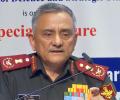
Pakistan's decision to talk to India on May 10 stemmed from realisation that it will suffer more if its operation continues, Gen Chauhan said.
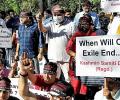
A British MP has tabled a parliamentary motion in the House of Commons to commemorate the 35th anniversary of the "genocide of Kashmiri Pandit Hindus from Jammu and Kashmir in India." The motion, which calls for recognition and justice for the events of January 1990, has been met with support from other MPs. The motion condemns the attacks on the Hindu population of Kashmir Valley and calls for the Indian government to enact a bill to punish the perpetrators.
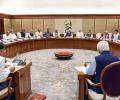
India has reached out to key global powers, including members of the UN Security Council, and apprised them about the reasons behind its military strikes on nine terror targets in Pakistan and Pakistan-occupied-Kashmir in retaliation for the Pahalgam terror attack. New Delhi also conveyed to the countries that it will retaliate if Islamabad escalates the already tense situation.

The United States said it encourages 'direct communication' between India and Pakistan and commends Prime Minister Narendra Modi and Pakistan Prime Minister Shehbaz Sharif for choosing the path of peace.
'Looking at how quickly the hostilities were escalating, the nuclear threshold did not seem that far.'
'Three days after the Kargil War ended, the Vajpayee Government set up the Kargil Review Committee on July 29 1999. Its report was tabled in Parliament on February 23, 2000 although sections of it have remained classified -- as indeed they must'

Suspected drones were observed along the International Border in Samba district of Jammu region on Monday, while armed forces downed a 'surveillance drone' in Punjab's Jalandhar district.

During the talks, the two sides appreciated the deepening of the defence ties as a key pillar of the strategic partnership and welcomed the creation of a Ministerial Committee on Defence Cooperation under the Strategic Partnership Council.
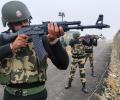
While the Indian Army made no mention of any casualty on the Pakistan side, official sources said five enemy soldiers were injured in the explosion and the subsequent firing between the two sides.

India succeeded in busting the Pakistani narrative on Operation Sindoor, particularly among the Organisation of Islamic Conference (OIC) member nations, where Islamabad sought succour after carrying out terror activities across the border, Shiv Sena leader Shrikant Shinde said.
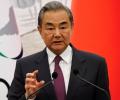
China on Tuesday called for a 'comprehensive and lasting ceasefire' between India and Pakistan, urging both countries to properly handle their differences through dialogue.
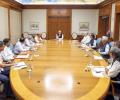
Terrorism and insurgency in J&K had subsided when India demolished East Pakistan -- for the simple reason that Pakistan understands power. We need to follow Chanakya's dictum of Saam, Daam, Dand, Bhed for strategising against Pakistan, asserts Lieutenant General Prakash Katoch (Retd). The ground truth is that unless we are prepared to acknowledge our shortcomings, including massive intelligence failures, punish those responsible and take corrective actions, we will continue in the same vein, asserts Lieutenant General Prakash Katoch (Retd).
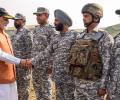
With United States President Donald Trump reiterating his claims of brokering a ceasefire between India and Pakistan, the Congress on Wednesday asked what do the 'typically loquacious' Prime Minister Narendra Modi and External Affairs Minister S Jaishankar have to say about this revelation and did they 'mortgage' India's security interests in the face of US 'pressure'.

Several Pakistani nationals visiting India started returning home through the Attari-Wagah land route in Amritsar on Thursday, a day after the Centre set a 48-hour deadline for them to leave the country. The decision came after India announced a raft of measures, including the expulsion of Pakistani military attaches, suspension of the Indus Water Treaty of 1960, and the immediate shutting down of the Attari land-transit post in view of the cross-border links to the horrific terror attack in Kashmir's Pahalgam that killed 26 civilians on Tuesday.
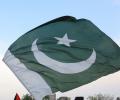
The International Monetary Fund (IMF) has slapped 11 new conditions on Pakistan for the release of the next tranche of its bailout programme and warned that tensions with India could heighten risks to the scheme's fiscal, external, and reform goals, according to a media report on Sunday.
The United Nations Secretary-General, Antonio Guterres, has called for de-escalation between India and Pakistan, expressing deep concern over rising tensions following a terrorist attack in Jammu and Kashmir. Guterres reiterated his condemnation of the attack and urged both sides to avoid a confrontation, which he described as catastrophic. The Secretary-General has also offered his good offices to support de-escalation efforts. The President of the UN General Assembly, Philemon Yang, has also expressed concern over the escalating violence and called for a resolution through diplomatic means. Meanwhile, Pakistan has denied any involvement in the attack and reiterated its commitment to fighting terrorism.

Several opposition MPs have made a similar demand to the government in the wake of the dastardly attack in which 26 people, mostly tourists, were killed last week, leaving the nation grief-stricken and outraged.
China hopes both sides will remain restrained, move toward each other, and work together to de-escalate the situation.

'The larger and more opaque this shadow economy becomes, especially online, the greater the risk to India's national security.'
Defence Minister Rajnath Singh on Thursday questioned the safety of nuclear weapons in the hands of Pakistan, and said they should be taken under monitoring of the International Atomic Energy Agency.

The father of Murali Naik, a soldier from Andhra Pradesh who died during cross-border shelling in Jammu and Kashmir's Poonch, said his son joined the Army despite his opposition as he wanted to serve the nation. Naik, a 23-year-old Agniveer, died in the line of duty on Friday. He was the primary breadwinner for his family, which has been living in Mumbai for the past 32 years. Naik's death has been mourned by politicians and officials, including Andhra Pradesh Chief Minister N Chandrababu Naidu and Maharashtra Chief Minister Devendra Fadnavis.

India and Pakistan on Friday held a flag meeting along the Line of Control (LoC) in Jammu and Kashmir's Poonch district in an effort to ease tension after several recent incidents of cross-border firing and an IED attack, official sources said.

US President Donald Trump has repeated his claim that Washington got involved with India and Pakistan, saying he didn't like what was happening and that he did a good job as he convinced the two countries to let's have peace and let's go and make trade deals.

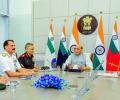
The government will send seven all-party delegations to key partner countries, including members of the United Nations Security Council, later this month to convey India's message of zero tolerance against terrorism following the Pahalgam terror attack and Operation Sindoor.

Heavy Pakistani shelling in the border district of Poonch in Jammu and Kashmir left nine people dead and 28 injured. The shelling, described by residents and officials as "barbaric and cowardly", started around 2 am, damaging dozens of residential houses, shops, vehicles, and heritage sites. The incident comes after India launched "Operation Sindoor" in retaliation to the April 22 Pahalgam terror attack. India condemned the act, calling it a cowardly attack on civilians, and reaffirmed that civilian safety remains its top priority.
'The government has to explain (to the army, air force and navy chiefs) whether they want a punitive strike, a deep punitive strike, or whether they want limited war or an all-out war, will it be a circumscribed war or will it be a shallow attack along the border.'

'India's letter to Pakistan on April 24 (2025; two days after the Pahalgam terrorist attack) didn't tear up the treaty -- but it did put it on ice.'

India is at war with terrorists and will bring justice to victims of the Pahalgam attack by holding the perpetrators accountable, Indian Ambassador to the US Vinay Kwatra has said. He underscored that India launched 'Operation Sindoor' on May 7, striking terror factories at nine locations in Pakistan and Pakistan-occupied Kashmir in retaliation for the Pahalgam terror attack that killed 26 civilians. Kwatra also criticized Pakistan for its continued support of terrorism and said that the world should be concerned about this.
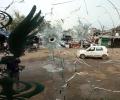
People in several districts of Punjab, Jammu and Kashmir and Gujarat spent an anxious night as authorities enforced blackouts amid heightened tension between India and Pakistan.
Non-banking entities such as fintech firms will have to tap into use cases beyond peer-to-peer (P2P) and peer-to-merchant (P2M) transactions to scale up the presence of the retail version of the central bank digital currency (CBDC), which is also known as the e, said industry players. These use cases will enable programmable transactions across domains, including the government's direct benefit transfer (DBT) schemes, with subsidies restricted to specific purposes such as food coupons, hospital bills, fertilisers, pesticides, and cross-border remittances.
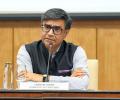
Foreign Secretary Vikram Misri, who faced trolling on social media in the wake of India and Pakistan reaching an understanding on May 10 to halt all military actions, has received support from veteran diplomat Nirupama Menon Rao, a body of Indian diplomats and a host of politicians from several parties.

India and Pakistan exchanged lists of their nuclear installations on Wednesday, fulfilling a decades-old agreement that prohibits attacks on each other's atomic facilities. The exchange took place amid strained relations between the two countries over the Kashmir issue and cross-border terrorism. The agreement, signed in 1988, mandates the annual exchange of such lists, which has occurred for the 34th consecutive year.
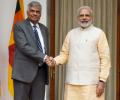
Asserting a war was not an option between India and Pakistan, Sri Lanka on Wednesday said cross-border terrorism was a core issue on the table for SAARC and the members of eight-nation grouping have to discuss it and its impact before moving forward.

India has revoked all visas issued to Pakistani nationals effective April 27, advised Indian nationals in Pakistan to return home, and suspended visa services to Pakistani nationals. The move comes in retaliation to the Pahalgam terror attack that killed 26 people and alleged cross-border links to the attack. This escalation follows India's previous actions against Pakistan, including expelling Pakistani military attaches, suspending the Indus Water Treaty, and shutting down the Attari land-transit post.
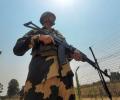
The incident took place on the intervening night of April 8-9 near Dorangla village in Gurdaspur district. The Border Security Force (BSF) has issued an "alert" all along the 553 km of this front in Punjab and suspension of farming around the blast area.

This is increasing the potential for hostilities breaking out between India and Pakistan in the wake of a 'triggering event', he told the senate committee.
Amid escalating tensions between India and Pakistan, the US has said it will not get involved in the conflict, stressing that it is "fundamentally none of our business." While acknowledging concerns about a potential nuclear war, Vice President J D Vance emphasized that the US cannot control India and Pakistan, but can encourage them to de-escalate. The US has also reiterated its support for direct dialogue between the two countries and encouraged efforts to improve communications.
