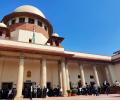
The Supreme Court has agreed to constitute a special bench to address the Centre's plea regarding the applicability of its March 11 judgment on OBC creamy-layer criteria to candidates of the Civil Services Examination (CSE) 2025. The Department of Personnel and Training (DoPT) seeks to proceed with service allocation for 958 recommended candidates based on the creamy-layer determination applied before the verdict, citing potential unequal treatment and disruption to training schedules.
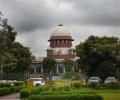
The Supreme Court will consider the Centre's plea for clarification on the applicability of its March 11 judgement regarding OBC creamy-layer criteria for the Civil Services Examination (CSE) 2025. The government highlights practical difficulties and potential unequal treatment of candidates if the ruling is applied retrospectively, as the CSE 2025 selection process concluded before the verdict. The Department of Personnel and Training (DoPT) seeks to proceed with service allocation based on the pre-March 11 criteria to avoid disruption to training schedules and ensure fairness for candidates.
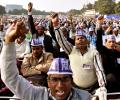
The Centre has informed the Supreme Court that the 'creamy layer' principle, which excludes affluent individuals from reservation benefits, does not apply to Scheduled Castes (SCs) and Scheduled Tribes (STs). This stance opposes Public Interest Litigations (PILs) seeking to implement such a principle for SC/ST reservations and to direct the government to formulate policies for more equitable distribution of reservation benefits.
Justice Gavai, who wrote a 281-page separate but concurring verdict, said it is the duty of the State to give preferential treatment to the backward class of citizens who are not adequately represented in government jobs.

This has been a bone of contention between the UPA's allies.
Lok Janshakti Party leader Ram Vilas Paswan on Thursday said the creamy layer should not be excluded from reservation benefits while Congress leader Digvijay Singh said Parliament was supreme in policy issues.
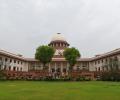
The Supreme Court on Thursday said the executive and the legislature would decide whether persons, who had availed quota benefits and were in a position to compete with others, were to be excluded from reservation.

The government also ruled out having a re-look at the present reservation system.
The Union Cabinet, at a meeting chaired by Prime Minister Narendra Modi, held a detailed discussion on the Supreme Court judgement on the sub-categorisation of reservation for SCs and STs as granted in the Constitution.
The Indian Institutes of Management have begun the exercise to sift creamy layer among OBC by asking candidates belonging to the category to give details of their status with regard to 'creamy layer' in keeping with the Supreme Court directive. The move by the IIMs comes in the wake of the HRD Ministry's directive last Sunday to all centrally-funded elite educational institutions, including IIMs and IITs, to implement the OBC reservation from this year sans creamy layer.
Opposing the creamy layer concept, the Dravida Munnettra Kazhagam on Friday said that the Supreme Court judgment, which excludes economically well off Other Backward Classes from enjoying the benefit of 27 per cent reservation in higher education institutions, was not acceptable to it.It hailed the judgment, upholding the validity of 27 per cent reservation, as historic but said the judgment created a slight irritant.
"If the court feels that the creamy layer be excluded and says so, the Centre will obey," Solicitor General G E Vahanvati said before a five-judge Constitution bench headed by Chief Justice K G Balakrishnan.
Now that the Supreme Court has skimmed the OBC off its 'creamy layer', it has made it difficult for Mandal-fattened politicians to lick their chops. No matter how brave a front OBC caste activists may affect, they have little option but retreat to their chaupals where they can safely let their worry lines show.
The top law officer said that even if some people of the community have come up, the stigma of caste and backwardness is still attached to them.
The Supreme Court dismissed a PIL asking for its exemption.
OBC parliamentary forum says the 'creamy layer' barrier will hit a large number of OBC students; to meet soon. The definition, many fear, may deny a large number of students the benefit of the OBC quotas in central educational institutions that were given the go-ahead by the Supreme Court last week.
The Cabinet had agreed to the Kochi Metro Rail project and appointed retired additional general manager, Southern Railway, Gopinathan Nair as a special officer in this regard.

The ordinance will be tabled in the next session of the legislature, it said, adding that 27 posts were approved for the commission.
At present, 27 per cent quota in government jobs and educational institutions is given to OBCs, provided the annual income of the family is up to Rs six lakh. Those with higher earnings are referred to as the 'creamy layer' and are not eligible for reservation.
In a major relief to the Other Backward Classes, the Cabinet on Friday gave approval for revising the income criteria for the 'creamy layer' from the present Rs 2.5 lakh per annum to Rs 4.5 lakh per year.
The National Commission for Backward Classes has recommended an income limit of Rs 4 to 6 lakh for determination of the creamy layer, which is to be excluded from the benefit of reservation for Other Backward Clases. The existing ceiling is at Rs 2.5 lakh per year. The Commission finalised its view on the income ceiling after ascertaining the views of the state commissions on the issue.
The Supreme Court on Monday decided to hear a public interest litigation seeking exemption of the operation of the 'creamy layer' rule within the Other Backward Classes for persons engaged in hereditary occupations.
In a setback to those clamouring for quotas without any bar, the Supreme Court on Thursday held that the "creamy layer" should be excluded from the reservations for the Scheduled Castes and Scheduled Tribes in government jobs.

The Supreme Court of India has questioned the continued provision of reservation benefits to children from economically and educationally advanced families within backward classes, highlighting concerns about social mobility and fairness.

Jawaharlal Nehru Memorial Fund invites applications for Jawaharlal Nehru Scholarships for Doctoral Studies for the year 2026. A candidate may apply for scholarship in any one of the following areas of specialization:: Indian History & Civilization, Sociology, Comparative Studies in Religion & Culture, Ecology & Environment and Economics

This cocktail brings together vodka, paan syrup, fresh lime juice and coconut cream, and spices and fragrances.

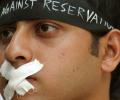
Delhi Police detained several anti-reservation protesters at Jantar Mantar who were demanding that economic criteria be prioritised over caste for government support and reservation. The protest, mobilised via social media by 'Reservation Hatao Andolan', proceeded despite police denying permission for Jantar Mantar and offering Ramlila Ground as an alternative venue. Demonstrators called for a review of the existing reservation system and the introduction of a creamy-layer criterion.

'The day we start making rules purely along caste lines, we only divide society further. That's the conversation the government needs to have, and soon.'

This International Coffee Day, let's raise a mug to some delicious and rather unusual coffee drinks from India and around the world.

Uttar Pradesh Deputy Chief Minister Brajesh Pathak met with students leading a "reservation reform" movement, assuring them that their demands would be presented to the BJP's central leadership and a Union minister. The movement, led by anti-reservation activists, seeks equal opportunities, while Samajwadi Party chief Akhilesh Yadav criticised the "reform" as a plot against the PDA community, asserting the permanence of reservation rights.

ITC's biscuits, which have a sweet spot in the cream segment, now want a bigger piece of the cookies market

'Some people may not like what I am saying, but shortcomings have to be pointed out. These deficiencies should be rectified within the next three months.' 'This is Gorakhpur, where our CM himself resides. If such shortcomings exist here, then what will happen?'

Many students who do well in the NEET exams miss out on a medical seat because they didn't get their documentation in order. You don't want to be that student, says Ashok Hegde.

Karnataka Governor Thaawarchand Gehlot has suspended KPSC Chairman Shivashankarappa S Sahukar following allegations that he facilitated the illegal selection of his two daughters as Industrial Extension Officers. The Governor has also recommended to the President that the matter be referred to the Supreme Court for an inquiry under Article 317(1) of the Constitution.

A modern, fuss-free take on the traditional Turkish classic. Spicy, juicy, and perfect for entertaining.

'They want to sabotage the caste census and bury Muslim backward classes, Hindu backward classes, Sikh backward classes and Buddhist backward classes.'

rediffGURU Pradeep Pramanik, a career coach, placement consultant and director at Fast Track Career Consultants, guides aspirants on how to pick the right career stream and college after the IIT-Joint Entrance Exam.
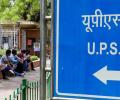
The Union Public Service Commission (UPSC) has announced mandatory face authentication for all candidates at examination centers and introduced stricter eligibility criteria for the Civil Services Examination (CSE) 2026.
Union Human Resource Development Minister Arjun Singh, the man who proposed the 27 per cent OBC quota, wants to implement the reservation from academic year 2008-2009.

Chaats are among India's most loved street food. The reason is simple: They represent the entire spectrum of much-loved Indian flavours and textures in a single bite -- spicy, tangy, chatpata, khara, meetha. That's what keeps people coming back for more.
