
Defence Secretary Mattis said he cannot certify that Islamabad has taken 'sufficient actions' against the dreaded Haqqani terror network.
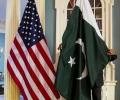
The Senate said that Pakistan should show that its taking demonstrable steps against the dreaded Haqqani Network terror outfit.

A senate panel has approved a legislation which blocks $300 million United States military aid to Pakistan.

Pakistan's close ties with China and its lack of democracy and disregard for human rights will not be overlooked, said Haqqani, who currently is a Senior Fellow at the Hudson Institute think-tank in Washington.

Defence Secretary Ashton Carter declined to give a certification to the Congress that Pakistan is taking sufficient action against the dreaded Haqqani network.
"Our expectations are straight forward: Taliban and Haqqani leadership and attack planners should no longer be able to find safe haven or conduct operations from Pakistani soil," Pentagon Press Secretary Army Col Rob Manning told reporters during an off-camera news conference.

Pakistan is not putting enough pressure on the Haqqani terror network and this is the reason that the United States Defence Secretary not giving the necessary certification for release of $300 million in coalition support funds to it, a top American general has said.

The Pentagon has notified the Congress about its decision to reimburse $688 million to Pakistan, under Coalition Support Fund (CSF), which is cost of providing support for some 140,000 troops stationed at the Afghan-Pak border.
Cash-strapped Pakistan is expected to receive $2.5 billion (about Rs 14,000 crore) as financial assistance from the United States during the current fiscal following the end of a standoff between the two sides on NATO supply routes to Afghanistan
Raising the issue of "drone strikes" and delay in payment of coalition support fund, Pakistani President Asif Ali Zardari, in his meeting with United States Secretary of State Hillary Clinton, has called for addressing the issue of trust deficit between the two nations.
The United States has held up a reimbursement of USD 400 million (approx Rs 2,080 cr) spent by Pakistan on the war against terror due to the strained relationship between the two countries, adding to the worries of financial managers in Islamabad, a media report said on Monday.
Pakistan's actual spending on defence during fiscal 2012-13 may be as high as Rs 913 billion, almost double the official allocation of Rs 545 billion.

K Alan Kronstadt, a specialist in South Asian affairs for the US Congressional Research Service, on how more US oversight on funding to fight terror in Pakistan could help both countries and even India.
The United States has delayed the release of 'war on terror' funds for Pakistan amid reports that Washington has threatened to cut off civil and military aid to Islamabad.
US President Barack Obama's Special Envoy for Afghanistan and Pakistan Richard Holbrooke has said that the US would be releasing $200 million for Pakistan under the Coalition Support Fund soon.
Concerned over reports regarding the misuse of aid being provided to Pakistan, the United States is planning to set up a separate office for auditors in the country to keep a tab on the financial assistance programmes under the Kerry-Lugar bill and the Coalition Support Fund.
The United States has rejected reimbursement claims under the Coalition Support Fund by Pakistan of over $400 million citing massive over billing and inadequate substantiation.
The legislation, the National Defense Authorisation Act-2019, gets rid of the certification requirements for Pakistan's action against the Haqqani Network and it also gets rid of the authority to reimburse Pakistan for counter-terrorism.

United States President Barack Obama has signed into law the $618 billion defence budget for 2017, which enhances security cooperation with India and conditions nearly half of the funding to Pakistan on a certification that it is taking demonstrable steps against the Haqqani Network.

With this, the DoD has reprogrammed USD 800 million CSF destined for Pakistan.

Two legislative amendments seeking a cut in the United States aid to Pakistan have been defeated in the House of Representatives with most lawmakers arguing that it is essential to maintain ties with a nuclear armed country despite it not doing enough in the war against terrorism.

The United States blocked $300 million military aid to Pakistan as it failed to get a Congressional certification for "satisfactory" action against the dreaded Haqqani network, the Pentagon has said.

Trump suggested a stronger military response is imminent.

In a blunt message to Pakistan, the United States has said that continued existence of terror safe havens in the country and its inability to take action against them affects their bilateral ties including security assistance.

A White House statement in this regard along with other objections of the administration to NDAA-2017 came as the bill made its way to the House of Representatives from House Armed Services Committee.

The United States has said that the threat from terrorist groups, in particular the Haqqani network, continues to emanate from inside Pakistan, dismissing top Pakistani diplomat's claim that the dreaded group responsible for audacious attacks in Afghanistan has been wiped out.

As the United States withdraws its forces from neighbouring Afghanistan, the Obama administration has armed Pakistan with 14 combat aircraft, 59 military trainer jets and 374 armoured personnel carriers, an internal Congressional report has said.
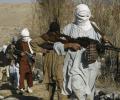
The US said that it sees positive indicators in Pakistan, but...
As a result, as per the House version of the Bill, the Obama administration must certify that Pakistan has met before releasing $450 million in aid.

'India's real concern is that cash-strapped Pakistan is keeping its military hardware well oiled on American money,' says Rajeev Sharma.

'There is a consensus within the Indian security establishment -- at least among those who draw their conclusions from data instead of speaking from nationalist sentiment -- that India lacks the offensive capability to defeat Pakistan in a short war.'
The US will not be delivering military equipment or transfer security-related funds to Pakistan unless it is required by law.
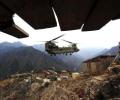
India should not have a large bilateral military training program in Afghanistan in the future because that would predictably exacerbate tensions, says Director of research, Brookings Institution Michael O'Hanlon.
 © 2026 Rediff.com - Investor Information - Advertise with us - Disclaimer - Privacy Policy - Sitemap - Feedback - About us - Terms of use - Grievances