
India's corporate sector is likely to report a slowdown in revenue growth and earnings for the July-September 2023 period (Q2FY24), according to earnings estimates by brokerages, after the country's top listed companies posted higher than expected profits for the first quarter. The combined net profit of Nifty50 companies, based on brokerage estimates, is expected to have grown by 19.6 per cent year-on-year (Y-o-Y) to Rs 1.75 trillion in Q2FY24 - a sharp deceleration from 37.6 per cent Y-o-Y growth in the combined earnings of index companies in the April-June 2023 period. According to estimates, the combined earnings in the second quarter would be down 8.8 per cent on a quarter-on-quarter (Q-o-Q) basis and the lowest in the past three quarters.

Metal and mining companies, such as Tata Steel, JSW Steel, Hindalco, and Coal India, have been among the top-performing sectors on the bourses in recent months. The S&P BSE Metal Index is up 13 per cent in the past three months, rallying 29 per cent in the past year, outperforming the broader market. For comparison, the benchmark S&P BSE Sensex has only seen a 1.7 per cent increase in the past three months, with a 15 per cent gain since the end of September last year.

Jio Financial Services, the demerged financial services unit of Reliance Industries, will be listed on bourses on August 21, according to an exchange notification. Jio Financial Services Ltd (JFSL) demerged from Reliance last month and is currently listed under a dummy ticker after its price discovery at Rs 261.85 but there is no trading happening in the scrip. The listing on BSE and NSE has been scheduled a day before FTSE Russell plans to drop JFSL from its indices.

Public-sector enterprise stocks have seen a good run thus far in 2023-24 (FY24), with the S&P BSE PSU Index surging by over 26 per cent during the period, compared to an 11 per cent increase in the benchmark S&P BSE Sensex.

This includes distancing themselves from the new and emerging super-critical technology.
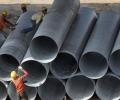
Industrial metals (ferrous and non-ferrous) suffered great volatility once the Ukraine War began in February 2022. First, there was a sharp price rise due to fears of supply disruption, followed by weak global demand. China's weakness and rolling lockdowns have hit production and demand.

As Indian Railways looks to avert the crisis like last summer, preparations are under way to stock up coal at thermal power plants. Much like February and March, thermal coal movement in April was 5 per cent higher than the previous year, data from the Ministry of Railways shows. While India prepares for a hot summer this year, 48.23 million tonnes (mt) of coal for thermal power plants was ferried by Indian Railways in April. The national transporter also moved about 500,000 tonnes--18.4 per cent-- more imported coal for power plants this April than it had done last year.

Analysts seem to be generally pessimistic about Bharat Heavy Electricals (BHEL). Out of 15 brokerages with recommendations since May this year, two have 'buy' while five have 'sell' and eight have 'underweight'/'reduce'/'underperform'/'hold' recommendations. The average target price of the public sector undertaking (PSU) is Rs 61. However, the stock has been consistently hitting new highs, which indicates that there is some kind of valuation mismatch.

With the markets scaling new highs, as many as 43 stocks from the Nifty50 index and 27 of the 30 scrips that are part of the S&P BSE Sensex are trading above their respective 200-day moving average (DMA). The 200-DMA is seen as one of the most relevant trend indicators by investors and traders, who believe that stocks and indices trading above this level possess strength and are likely to rally in the short to medium term, while the ones trading below this level are viewed as bearish and expected to see a sell-off. Wipro, UPL, Kotak Mahindra Bank, Hindalco, Infosys, Cipla, and Adani Enterprises are the only stocks from the Nifty50 pack that are still below their respective 200-DMA, the exchange data suggests.

Brokerages expect Nifty50 companies to have cumulatively witnessed strong double-digit growth in their earnings in the first quarter of FY24 (Q1FY24). This growth in the combined earnings is expected to have been driven by banks, automakers, and oil & gas companies. Other sectors may report muted profit growth.

'Inter-ministerial coordination, information on the proposed PSUs, and due diligence are taking longer than expected to conclude the process.'

10 high dividend paying stocks across sectors that are expected to maintain or even increase their pay-outs in FY23 thanks to faster earnings growth in the last four quarters.

There's a straightforward relationship between economic activity and power consumption. If economic activity increases, so does power consumption. Since the latest GDP (gross domestic product) data indicates India's growth rates exceeded expectations in the second half if the 2022-23 financial year (H2FY23) and GDP estimates of FY24 are strong, we would expect power consumption to rise as indeed it has. There is also a direct relationship between power consumption and National Thermal Power Corporation or NTPC's results since the public sector undertaking (PSU) is the largest power generator in India.

Tata Consultancy Services (TCS), the group's biggest cash generator, overtook Vedanta to become the highest dividend payer in India in FY23. The IT services major paid Rs 42,090 crore for FY23, up 167.4 per cent from Rs 15,738 crore for FY22. The 10 biggest payers together shelled out Rs 2.06 trillion for FY23, more than double the Rs 98,371 crore for FY22.

The reopening of China has led to an ongoing readjustment of the global metals and commodities markets. China has a massive production capacity surplus to its own domestic demand. At the same time, it also has high domestic demand. China is also becoming carbon sensitive.

All these male politicians are unlikely to risk their sinecures to speak up in support of a bunch of women wrestlers who have chosen to challenge a politician who appears to have the ruling regime in a stranglehold, points out Kanika Datta.

After extricating five bodies from an abandoned coal mine in Jharkhand's Dhanbad district, government authorities and the Eastern Coalfields limited Wednesday called off the rescue operation, while locals and leaders of political parties claimed more people were still trapped under the debris.

Given wild swings, investors are wondering where the metal market is going. There was a strong uptrend in industrial metal through much of the last three years due to fears of supply chain issues - first due to Covid-19 and then due to the Ukraine War. That uptrend broke down as it became apparent that global growth would moderate as inflation rose and Western Europe (the EU plus the UK) went into a near-recession and China was in a rolling lockdown.

Corporate India continues to be generous in rewarding its shareholders with big dividend payouts. This is especially true for shareholders of companies such as Tata Consultancy Services (TCS), Hindustan Zinc (HZL), and Coal India (CIL) which are seen as cash cows of large business groups and the government. Boosted by a big payout by these three companies, the combined equity dividend payout by listed companies was up 38 per cent year-on-year (YoY) to a record high of Rs 2.27 trillion in 2022-23 (FY23), compared with Rs 1.65 trillion in 2021-22 (FY22).

State-owned CIL on Monday said coal supply to the power sector rose 15.6 per cent to 49.7 million tonne last month in the wake of high demand of the dry fuel from electricity generating plants and stressed that it is planning to augment its dispatches further, especially to power plants in the coming months. The statement comes at a time when several parts of the country are grappling with power crisis. "With the intense demand for coal continuing unabated driven by an upward spiral in the electricity generation, CIL (Coal India) pushed up its supplies to power plants of the country to 49.7 million tonnes (MT) in April'22.
Corporate earnings grew in double digits during the April-June 2022 (Q1FY23) quarter but the momentum waned. Overall corporate earnings in the quarter were down sharply from their highs in FY22. The combined net profit of 2,981 listed companies across sectors in the Business Standard sample was up 22.4 per cent YoY to Rs 2.24 trillion in the June quarter, driven by a big jump in the earnings of banks, non-banking lenders, oil & producers, and FMCG companies. Also, earnings in the corresponding quarter a year ago were affected because of the second wave of the Covid pandemic, even though the numbers were a lot better than Q1FY21 when there was a nationwide lockdown.

'They will be able to ride over this immediate crisis and carry on, but they need to take corrective steps and these will have to be long term measures which must include working closely with state governments.'
State-owned CIL on Thursday said that it has floated its maiden tender to import 2.416 million tonnes of coal to ensure adequate supply of the fuel to power plants in the country. The development assumes significance in the wake of the government making all efforts to build up stock of coal to avoid the reoccurrence of power outages which happened in April on account of shortage of the fossil fuel. "In a first ever, Coal India Limited (CIL) on Wednesday floated an international competitive bidding e-tender, seeking bids for import of 2.416 million tonnes (MTs) of coal," the company said in a statement.

Adani Enterprises, which is launching India Inc's second-largest follow-on public offer worth Rs 20,000 crore next week, on Thursday said it is planning to enter the water segment as this is a key element of its core business of infrastructure. The group is into the entire gamut of infrastructure -- being its ports, airports, roads, expressways power generation & distribution, among others. In ports and airports, the group is the largest player in the private sector. Addressing media from Milan, group chief financial officer Jugeshinder Singh said the company has fixed the price band for the Rs 20,000-crore issue in the range of Rs 3,112-3,276 per share.

India is unlikely to see a repeat of the 2021 energy crisis this festive season as coal-fired power stations across the country have comfortable levels of the fuel stock to meet electricity demand of the world's fastest expanding major economy.
The current power crisis is mainly on account of sharp decline in electricity generation from different fuel sources and not due to non-availability of domestic coal, a top official said on Sunday. The above statement assumes significance in the wake of reports of many states, including Maharashtra, facing power outages due to shortage of coal. In an interview to PTI, Coal Secretary A K Jain attributed the low coal stocks at power plants to several factors such as heightened power demand due to the boom in the economy post COVID-19, early arrival of summer, rise in the price of gas and imported coal and sharp fall in electricity generation by coastal thermal power plants.
'This is a crisis which did not happen overnight. It was happening slowly.' 'Now we are mining very fast and this crisis won't last long.'

Paytm's Rs 18,300 crore IPO was oversubscribed 1.89 times on the last day of India's biggest share sale on Wednesday, making it one of the country's most valued companies. The initial public offering of Paytm's parent company One97 Communications Ltd received bids for 9.14 crore equity shares against the offer size of 4.83 crore shares, according to information available from stock exchanges. While the portion set aside for retail investors was oversubscribed early, institutional buyers including FIIs flooded the share sale with offers on Wednesday, seeking 2.79 times the number of shares reserved for them.

Ajit Mishra, vice president, research, Religare Broking, answers your queries.

The average top executive monthly compensation is Rs 1 crore. The median employee salary is now Rs 820,000.

After a turnaround in performance by Indian equity markets since July that has seen the S&P BSE Sensex and the Nifty50 wipe out the year-to-date losses, analysts suggest investors start nibbling into stocks that are focused on the domestic economy. While they say intermittent corrections, led by policies of global central banks and other economic data, cannot be ruled out, analysts expect India's relative outperformance among global equity markets to continue as it looks better placed with a healthy economic recovery, and remains one of the fastest growing major economies. In this backdrop, Neeraj Chadawar, head of quantitative equity strategy at Axis Securities, believes that amid global slowdown, aggressive tightening by the central banks, and preference for domestic interests first (by the local government), export-oriented themes are likely to be muted or will deliver conservative returns in the near-term.

LIC public offer, the country's biggest-ever IPO, on Wednesday opened for subscription for retail and institutional investors. The government aims to generate about Rs 21,000 crore by diluting its 3.5 per cent stake in the insurance behemoth. The LIC initial public offering (IPO), now open for retail and institutional investors, is set to close on May 9. LIC has fixed the price band at Rs 902-949 per equity share for the issue.

'The day I took charge, the PM told me you do the following -- stop imports, talk to all stakeholders and involve them to make mining more industry-friendly without affecting the environment.'
Eleven bidders, including Adani Enterprises, have shown interest in the first-ever coal import tender issued by national miner Coal India (CIL). Recently, state-owned NTPC awarded 6.25 million tonnes (mt) of imported coal tender worth Rs 8,300 crore to Adani Enterprises. CIL, in a public statement on Tuesday, said: "The prominent Indian agencies among them (11 coal importers) were Adani Enterprises, Mohit Minerals, and Chettinad Logistics. "A couple of coal exporting agencies from abroad, including one from Indonesia, have also shown interest," it said.

Digital payments and financial services firm Paytm is likely to allocate shares at the upper price band of Rs 2,150 apiece on November 16 after market regulator SEBI's approval which is expected to come on Monday, sources aware of the development said. Earlier the allocation was expected to take place on Monday and the Paytm Money app also displayed the same.
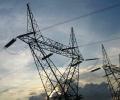
The statement comes in the wake of reports that warned of power crisis looming large due to the coal shortage in the country.
LIC's public offer, the country's biggest-ever IPO, witnessed full subscription of the retail portion on day three on Friday. The overall issue was subscribed 1.38 times, according to data posted on stock exchanges on 7 pm. Against 16,20,78,067 shares on offer, 22,36,98,915 bids were received. However, the Qualified Institutional Buyer (QIB) and Non-Institutional Investor (NII) portions are yet to be fully subscribed.

LIC's public offer, the country's biggest-ever IPO, was fully subscribed on the second day of bidding on Thursday. Against 16,20,78,067 shares on offer, 16,68,60,765 bids were received -- translating into a subscription of 1.03 times, as per data on stock exchanges as of 7 pm. However, the Qualified Institutional Buyer (QIB) and Non-Institutional Investor (NII) portions have received a tepid response so far.

Ajit Mishra, vice president, Research, Religare Broking, answers your queries.
The government has amended rules of the Foreign Exchange Management Act (FEMA), paving the way for up to 20 per cent foreign direct investment in the insurance behemoth LIC. The government is planning to dilute its stake in LIC through the the Initial Public Offering (IPO). LIC in February had filed the Draft Red Herring Prospectus (DRHP) before the markets regulator Sebi for the IPO.
