
After months of a bitter row over legalities of Indraprastha Gas Ltd's operations in the National Capital Territory, the oil regulator has authorised the company to retail CNG (compressed natural gas) to automobiles and piped gas to households.

The two firms are discussing bidding jointly for CGD projects in cities that would be put on offer by the sector regulator, Petroleum and Natural Gas Regulatory Board in the future.

Companies in the small-cap universe are having a dream run - the Nifty Smallcap 100 index has shot up more than 25 per cent on a year-to-date basis, even as the benchmark Nifty is up 7 per cent. This is the best start for the index since 2017 when the Nifty Smallcap 100 index surged 32.3 per cent between January 1 and May 10. However, in terms of outperformance to the Nifty, this year's performance is the best in more than a decade. A combination of sectoral tailwinds and lack of institutional selling pressure has helped small companies escape from the correction triggered by the second wave of Covid-19.

Two years after it was first constituted, the Petroleum and Natural Gas Regulatory Board continues to move ahead in a patchy manner -- it is inviting bids for 2,800 km of cross-country pipelines and 1,200 km of spurlines next week; it is in the process of fixing tariffs for the Mukesh Ambani-owned Reliance Gas Transportation India Limited pipeline. Its chairman L Mansingh spoke at length on several of these issues to Sunil Jain.
Policy air bubbles and implementation snags could block plans to connect India's cities to a clean fuel grid.
French oil and energy group Total has agreed to a $2.5 billion deal that includes buying a 20 per cent minority stake in Adani Green Energy Ltd (AGEL) from Adani Group, as it builds up its presence in the renewable energy sector. The deal involves Paris-based Total getting a board seat in the largest solar energy developer in the world, as well as a 50 per cent stake in a 2.35 gigawatts portfolio of operating solar assets, the two firms said in statements. Total had in 2018, agreed to buy a 37.4 per cent stake in Adani Gas Ltd - the city gas distribution firm of the Adani Group, and a 50 per cent stake in the billionaire Gautam Adani-run ports-to-energy conglomerate's under-construction Dhamra LNG project in Odisha.
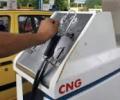
The Petroleum Ministry in an order on Wednesday said it has revised guidelines for allocation/supply of domestic natural gas to city gas distribution entities for CNG and piped cooking gas sector.

Privatisation-bound Bharat Petroleum Corporation (BPCL) may sell a part of its stake in Petronet LNG and Indraprastha Gas (IGL) to shed its promoter status to obviate the need for its new owner to make open offers for the two gas companies, sources said. BPCL holds 12.5 per cent of shareholding in India's largest liquefied natural gas importer, Petronet, and a 22.5 per cent stake in city gas retailer, IGL. It is a promoter of both the listed companies and holds board positions. As per the legal position evaluated by Department of Investment and Public Asset Management (DIPAM) - the department running the process for sale of government's entire 52.98 per cent stake in BPCL - the acquirer of BPCL will have to make an open offer to the minority shareholders of Petronet and IGL for acquisition of 26 per cent shares, three sources with knowledge of the matter said.
Indian Oil Corporation on Friday said it plans to invest about Rs 2,000 crore in a joint venture with Reliance Industries for retailing natural gas to households and automobiles.

In 2017, a consortium led by Russian state oil company Rosneft agreed to buy Essar Oil for $12.9 billion in India's biggest foreign acquisition of a homegrown company. Rosneft's buyout of Essar's assets was meant to herald a wave of energy investments in India - over six decades after Esso, Caltex and Shell invested in India's refining sector in the 1950s. But the government has tripped up in its efforts to sell Bharat Petroleum Corporation Ltd (BPCL), formerly Burmah Shell, a blue chip public sector company. Bidders include a couple of global funds and resources firm Vedanta.
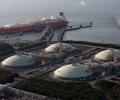
Around 15 years ago, when Reliance Industries (RIL) struck natural gas in the Krishna-Godavari (KG) basin off the east coast, the government made plans to supply that fuel cheaply to scores of generators that sprang up in India triggered by the discovery. Most of the plants, which account for 6 per cent of India's total generation capacity, operate sparsely after the KG-D6 area first failed to meet production targets, and then finally shut shop. Affordable domestic gas was why those thermal plants came up and the rate of the fuel today is why those generators hardly operate. Record liquefied natural gas (LNG) rates may yet again unravel India's ambitions to expand use of gas in industries, households and vehicles. Rates, while volatile, may stay strong this decade as developed nations with higher purchasing power embrace gas as the transition fuel.

10 stocks which are most popular with brokerages right now and are expected to deliver maximum upside over the next 12 months.

'He is positive and likes to get work done,' is how a retired bureaucrat described him. 'I assume he will push the reform agenda with strength.'

The government has received three preliminary bids for buying of controlling stake in India's second-largest fuel retailer Bharat Petroleum Corporation Ltd (BPCL), Oil Minister Dharmendra Pradhan said on Wednesday. Mining-to-oil conglomerate Vedanta had on November 18 confirmed putting in an expression of interest (EoI) for buying the government's 52.98 per cent stake in BPCL. The other two bidders are said to be global funds, one of them being Apollo Global Management.

Modi said the push towards a gas-based economy where the share of environment-friendly fuel in the energy basket will be increased from 6.2 per cent to 15 per cent by 2030, will create lakhs of jobs and help meet India's COP-21 commitment of cutting emission intensity by 33-35 per cent.

With the government's focus on environment-friendly fuel, Indraprastha Gas, Mahanagar Gas and Suzlon's earning prospects look bright

The Vedanta group on Wednesday confirmed putting in a preliminary expression of interest (EoI) for buying the government's stake in Bharat Petroleum Corp Ltd (BPCL).

Finance Minister Nirmala Sitharaman on Monday presented the Budget for 2021-22 in the Lok Sabha that is expected to provide relief to the pandemic-hit common man as well as focus more on driving economic recovery through higher spending on healthcare, infrastructure and defence amid rising tensions with neighbours, As India emerges from the COVID-19 crisis, the ninth Budget under the Modi government, including an interim one, is widely expected to focus on boosting spending on job creation and rural development, generous allocations for development schemes, putting more money in the hands of the average taxpayer and easing rules to attract foreign investments.
The group will be in a better position to now scale up most of its segments irrespective of government policy, but the bad news others add is its growing debt.
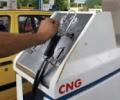
The Ministry recently issued an order saying 'no authorisation from Petroleum and Natural Gas Regulatory Board is required for setting up of a CNG station.' PNGRB has been since 2009 issuing licences to entities for city gas distribution networks, essentially for retailing compressed natural gas to automobiles and piped cooking gas (piped natural gas or PNG) to households.

CNG prices in Mumbai may have to be hiked by about Rs 16 per kg and piped cooking gas by Rs 10 after government decided to divert some of its cheaper domestic gas to Gujarat.

The Sensex and Nifty remained above their key levels of 36,000 and 10,900 throughout the session, indicating strong investor optimism after a prolonged spell of caution.
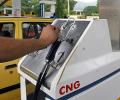
The cost of CNG, which will be reduced by up to Rs 15 per kg in the next few days following a rejig in natural gas allocation, will go up by Rs 10.6 a kg in April, when domestic gas prices almost double.

The likely solution that appears before the AAP government is to seek for a higher quota of domestic natural gas for Delhi, which would bring down auto and cooking gas prices.

RIL and BP completed the initial exploratory work on the 21 blocks, but decided to retain only four of them.

An empowered group of ministers headed by Defence Minister A K Antony is to consider an Oil Ministry proposal of abolishing the priority ranking according to which natural gas is first given to urea manufacturing fertiliser plants, then to LPG units, followed by power plants, city gas, steel and refineries.

In UK, France and Germany, the president and CEO of Edelweiss Securities, anticipates votes incrementally in favour of local protection and de-globalisation.
Lowering excise duty on petrol, diesel, and other fuels, branded fuels.
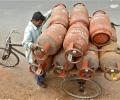
India's cities must switch over to piped gas leaving LPG cylinders.

Oil and gas players' wish list includes incentivising E&P investments and reintroduction of income tax holiday for exploration and production activities, among others.

With projects worth Rs 1,28,000-cr, the group hopes to become one of the country's biggest industrial houses.

Moving from pricing control to a free market means stiff competition.

Link between oil exploration and markets can be used by India to great advantage.

Re-instatement of 5% custom duty on crude imports will help.
 © 2026 Rediff.com - Advertise with us - Disclaimer - Privacy Policy - Sitemap - Feedback - About us - Terms of use - Grievances