
Pakistan's Foreign Minister Shah Mahmood Qureshi and his Chinese counterpart Wang Yi discussed ways to further strengthen the "iron-clad friendship" between the two countries as the two sides signed five agreements to deepen their bilateral cooperation in various fields, the foreign office said on Tuesday.
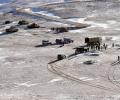
The MEA said the two sides agreed to continue discussions through diplomatic and military channels to resolve the remaining issues "at the earliest" so as to create conditions for the restoration of normalcy in the bilateral relations.
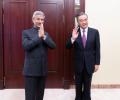
'We stress that the boundary issue shall not be linked with the overall bilateral relations. That is an important experience we have gathered through many years' effort to keep the ties moving forward

Making a strong pitch for deepening ties with India after the leadership changes in Beijing, China on Monday said that Sino-Indian ties should not be affected by 'noise' by 'some parties' intended to undermine bilateral ties which had improved despite the lingering border dispute.

A Chinese media report said Wei and Singh are attending the event in Moscow and they are likely to meet there over the border tension in eastern Ladakh. "Our Defence Minister would not be meeting the Chinese Defence Minister," Defence Ministry Spokesperson Bharat Bhushan Babu said when asked about the Chinese media report.

In the wake of China blocking United Nations Security Council's sanctions against Jaish-e-Mohammad chief Masood Azhar, India has provided detailed information to it about his involvement in terror activities, and hopes Beijing would support the move. The issue figured during the talks between special representatives -- National Security Adviser M K Narayanan and Chinese State Councilor Dai Bingguo in New Delhi last Friday and Saturday.
India and China failed to reach any specific agreements on their disputed boundary issue on Friday in the latest round of negotiations in Beijing but decided to pursue their goal for a "fair and reasonable" solution acceptable to both sides.
Chinese State Councilor Dai Bingguo spoke to India's National Security Adviser M K Narayanan over phone and briefed him on the 'violent crimes' in Lhasa and 'expounded' China's stance on and concerns over the Tibet issue. Narayanan stated that Tibet was part of the Chinese territory and that India does not allow Tibetans to conduct 'anti-China political activities' in the country, official Xinhua news agency said.
According to Jaishankar, much has changed, mostly to India's disadvantage, since November 1950, when Sardar Patel and Jawaharlal Nehru had a famous exchange of views on how to approach China.
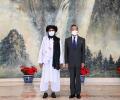
China may accord recognition to the new government in Kabul at an early opportunity, predicts Ambassador M K Bhadrakumar
External affairs minister S Jaishankar has told his Chinese counterpart Wang Yi that the two sides should work for an early resolution of the remaining issues along the LAC in eastern Ladakh to restore peace and tranquility in the border areas as this has been an essential basis for progress in Sino-India ties.

Chinese President Xi Jinping arrived in Chennai to a grand welcome on Friday, a visit that comes soon after the recent episode of turbulence in bilateral ties over India's decision to withdraw Jammu and Kashmir's special status and reorganise the state into two union territories.
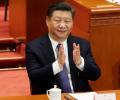
Xi ordered the military to think about worst-case scenarios, scale up training and battle preparedness, promptly and effectively deal with all sorts of complex situations and resolutely safeguard national sovereignty, security and development interests, state-run Xinhua news agency reported, without mentioning any specific issues that posed a threat to the country.
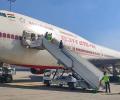
The flight arrived at Wuhan's Tianhe International Airport on Friday evening. While the official number of students to be airlifted in the two flights is not known, Indians who reached the Wuhan airport on Friday said they were told that 374 were expected to be airlifted by the Air India flight. India has taken an undertaking from the Indians travelling in the two flights that they would be quarantined for 14 days after their arrival, besides undergoing special checks at the Wuhan airport.
The effort made to define the larger picture by focussing on history and the wish not turn differences into disputes and conflicts is welcome. In the obtaining circumstances today, nothing more could have been possible, observes Ambassador T P Sreenivasan.
'It is advisable for Indian interlocutors to follow the Chinese tactic of repeating the Indian position, both for the record and to test the Chinese negotiator's resolve and intentions.' A riveting excerpt from former foreign secretary Vijay Gokhale's The Long Game: How the Chinese Negotiate With India.
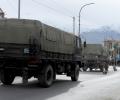
China is in no hurry to disengage at the border and the region and international community is moving on. The spectre of a long haul in Ladakh haunts India, points out Ambassador M K Bhadrakumar.
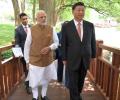
'India's preference today seems to be to exploit the deepening chill in relations with China to breathe new life into its meandering partnership with the US,' argues Ambassador M K Bhadrakumar.

This is a high-stakes strategic conflict between a power which wants to preserve the status quo in its favour and one which wants to usurp that throne. The rest is all theatre, says Harsh V Pant.
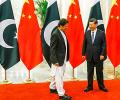
'If a 'two-front war' develops, Iron Brother may only turn out to be a drag on the PLA, since Pakistan is in no position to wage a war with India,' argues Ambassador M K Bhadrakumar.

'The US appears to think that Pakistan is highly vulnerable today due to its economic crisis and one more turn of the screw may bring about desired results,' says Ambassador M K Bhadrakumar.
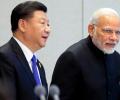
It is apparent that an easing of tensions at the border and a disengagement of troops is on the cards, observes Ambassador M K Bhadrakumar.

'The Indian version is that the two top diplomats merely exchanged pleasantries, while the Pakistani side characterised the encounter as an 'informal dialogue'.' 'The truth, as always in such piquant situations, is somewhere in between.' 'It stands to reason that ice has been broken,' says Ambassador M K Bhadrakumar.
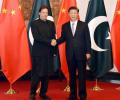
'The scheduling of Imran Khan's visit to Beijing and its focus on the J&K situation underscores that Beijing shares the Pakistani concern that tensions with India are only going to escalate further in the period ahead,' says Ambassador M K Bhadrakumar.
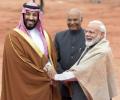
'No matter what Modi may boast about 'new India', the geopolitical reality is that India's stature diminishes when it needs a small country like Saudi Arabia under an autocratic ruler to help out with what is arguably one of the most critical templates of its diplomacy,' says Ambassador M K Bhadrakumar.

An MoU on sharing hydrological information of the Brahmaputra River by China to India and another pact on amendment of the protocol on phytosanitary requirements for exporting rice from India to China to include non-Basmati rice were signed after the Modi-Xi talks in the eastern Chinese port city.

'If an 'informal meeting' with Xi Jinping materialises before the SCO summit in June, that itself could be regarded as a significant breakthrough in India-China relations,' says Ambassador M K Bhadrakumar.

Important for Chinese President Xi Jinping will be Zhao's discussions on the issues of Tibet and the Dalai Lama and his assessment of the likely results of India's coming national elections, notes former senior RA&W officer and China expert Jayadeva Ranade.

Under the policy, the US recognises and has formal ties with China rather than the island of Taiwan, which China sees as a breakaway province to be reunified with the mainland one day.

'We should expect a cold-blooded, transactional relation that requires a lot of engagement and mutual trust to sustain,' says Constantino Xavier, Fellow, foreign policy, Brookings India.
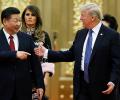
'What matters is that India's perspective on global issues -- climate change, intellectual property, free trade, trade routes being kept free, digital technology -- are listened to with respect,' says Ambassador B S Prakash.

China on Tuesday said border talks with India have yielded "initial results", enabling the two neighbours to properly handle their differences over the vexed boundary issue and maintain peace along the frontier.

New Delhi and Beijing are the only two regional capitals that have commented on US President Donald Trump's speech on August 21 outlining the way forward in Afghanistan. The Indian foreign ministry statement was effusive in praise, while the Chinese statement has been one of cautious and guarded hope. Delhi has identified itself with Trump's Afghan strategy, whereas the Chinese stance is calibrated -- observant and objective, keeping a distance, says Ambassador M K Bhadrakumar.
 © 2026 Rediff.com - Investor Information - Advertise with us - Disclaimer - Privacy Policy - Sitemap - Feedback - About us - Terms of use - Grievances