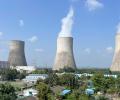
The Bill is likely to pave the way for amending two existing legislations -- the Atomic Energy Act 1962, and the Civil Liability for Nuclear Damage Act 2010.

The idea is to establish a robust and forward-looking legal framework that addresses the financial stress of power distribution companies, which are facing losses of over 6.9 trillion, while curbing high industrial tariffs that, according to the government, have affected competitiveness, constrained economic growth, and slowed the transition to clean energy.

'With technology advancing, we should go all out and put up solar, wind, pumped storage, and battery, and make India go green.'

Finance Minister Nirmala Sitharaman on Thursday said Pradhanmantri Suryodaya Yojana will enable one crore families to get up to 300 units of free electricity monthly and help them save up to Rs 18,000 annually. "There is provision of Rs 10,000 crore for rooftop solar (scheme) in the Budget," said finance secretary T V Somanathan in press conference on Budget later in the day. Earlier in the day Sitharaman in her interim Budget speech said through rooftop solarisation, one crore households will be enabled to obtain up to 300 units of free electricity each month.

In a first since the signing of the Indus Water Treaty between the two countries, three female officers will also be part of the Indian delegation, which will be advising the Indian Commissioner on various issues during the meeting, the official said.
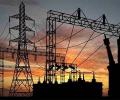
The current coal stock stands at 13.5 million tonnes at pithead power stations and 20.7 MT cumulatively at all power plants across the country.

India will need $223 billion of investment to meet its goal of wind and solar capacity installations by 2030, according to a new report by research company BloombergNEF (BNEF). The government has set a target of increasing non-fossil power capacity to 500 GW by 2030. It wants non-fossil fuel power sources to provide half of its electricity supply by 2030. "To achieve this target, India needs to massively scale up funding for renewables," the report said, adding that $223 billion is required over the next eight years just to meet the solar and wind capacity targets.

While the SECR has cancelled 22 mail or express trains and 12 passenger trains, the Northern Railways has cancelled four mail or express trains, and as many passenger services.

Coal shortage at thermal power plants is lingering on, with 59 non-pit head projects having the dry fuel stocks for less than four days as on Wednesday, according to official data. The number of such projects having less than four days of coal (supercritical stock) stood at 61 on October 19, the latest data from the Central Electricity Authority (CEA) showed. The count of the plants having supercritical stocks was at 64 on October 13.

All India electricity generation in the country during 2011-12 has been 876.89 BU, the report of the highlights of this review that was released by CEA recently, said.

Power generating companies (gencos) that use imported coal to produce electricity, may find it difficult to switch on their idle units immediately in the wake of high fuel costs, several players have told Business Standard. Recently, the Union power ministry had invoked Section 11 of the Electricity Act mandating all imported coal-based plants to generate power at full capacity. However, some generating companies that use imported coal, argue that it is simply unviable for them to produce power when the price of coal in the international market is high, while the per-unit price of power has been capped at Rs 12 per unit on the domestic power exchange.

The three-day meeting between the two commissioners of PCIW completed discussions on all agenda items on Wednesday.
India is unlikely to see a repeat of the 2021 energy crisis this festive season as coal-fired power stations across the country have comfortable levels of the fuel stock to meet electricity demand of the world's fastest expanding major economy.

Coal shortage crisis at thermal power projects does not seem to abate very soon as the number of non-pit head plants with less than four days of dry fuel stock (supercritical stock) has increased to 70 this Sunday compared to 64 a week ago on October 3, as per government data. According to the latest coal stock data of the 135 plants with over 165 GW of installed generation capacity monitored by the Central Electricity Authority (CEA), as many 70 plants are categorised as supercritical stock or having less than four days of fuel on October 10, 2021, compared to 64 a week ago on October 3, 2021. The data also showed that the number of non-pit head plants having less than seven days of fuel (critical stock) has also increased to 26 on Sunday from 25 such projects a week ago on October 3, 2021.

Way before the rains arrived at Talwandi Sabo Power plant in Punjab, the one check the coal ministry was carrying out was the availability of coal stock with the generator. Talwandi Sabo Power Limited (TSPL), the 1,980-Mw thermal power plant of Sterlite Energy, part of the Vedanta Group, which supplies about 15 per cent of Punjab's power, is one of the most difficult locations to manage coal supplies. It is nearly 1,700 km from the mines of Mahanadi Coalfields in Odisha, the longest coal route in India and possibly the trickiest as it cuts through the traffic heavy rail lines between Delhi and eastern India.

The strike notices were given by workers' unions of various sectors such as coal, steel, oil, telecom, postal, income tax, copper, banks and insurance.

As India builds its data centre capabilities, it is imperative that it is supported by green energy. This is because data centres are guzzlers of energy.
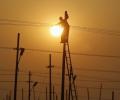
It is developing ash parks at Varanasi, Raipur, Pune and Cuttack, to make it available to ash-based product manufacturing units at these centres. It recently signed an agreement with NHAI for supply of ash for use in road construction.

The whole of India's electricity system was synchronised and started to function as one giant machine.
The talks as part of the annual Permanent Indus Commission meeting are being held after a gap of over two years.
It is human error, which cannot be completely avoided in complex data like the Index of Industrial Production (IIP), says T C A Anant.
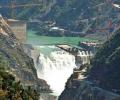
This will be the annual meeting of the Permanent Indus Commission. Under the provisions of the Indus Water Treaty, both the commissioners are required to meet at least once a year alternately in India and Pakistan.
Amid multiple sectoral woes, India is projected to see an electricity supply shortfall of 6.7 per cent in the current fiscal with the Southern region expected to be the worst hit.
According to the 18th Electric Power Survey conducted by the Central Electricity Authority , the mega cities with population above two million, apart from Delhi, are Mumbai, Kolkata, Chennai, Hyderabad, Bangalore, Pune, Ahmedabad, Surat, Kanpur, Lucknow, Jaipur, Nagpur and Indore.
A greater payment security mechanism for power generation companies to ensure timely payouts for supply of electricity will be in focus in 2022 as stricter rules are on the anvil for 24x7 power supply amid discoms' outstanding dues at a whopping Rs 1.56 lakh crore. Mounting outstanding dues of distribution companies (discoms) to electricity generation companies (gencos) have been a perennial issue affecting the entire value chain in the power sector and are also a hindrance for the ambitious goal of 24x7 power supply across the country even when the payment for coal is made in advance. The situation persists despite the fact that discoms' dues become overdue after 45 days of generating bills and they also have to pay penal interest on the overdue amount in most of the cases to gencos.

To offset the impact of high import costs, the Planning Commission has said that CIL should adopt a pooling formula on prices by combining rates of imported and domestic coal.
According to the apex power planning body, 47 power stations suffer scarcity of fuel with stocks that could not last more than a week.
From Jammu and Kashmir to Andhra Pradesh, consumers are facing power cuts ranging from 2 hours to 8 hours.
According to data from the Central Electricity Authority, the stock at 30 plants, with a total capacity of about 26,320 Mw, is at a critical level (would last less than seven days).

"The committee will work toward pooling of international and domestic coal prices so that the cost of production does not rise... as international coal is expensive and also domestic coal is not sufficient for the plants," a senior Power Ministry official said.

Thackeray held a meeting on the issue and instructed authorities concerned to ensure there is no recurrence of the episode, an official statement said.
The Central Electricity Authority (CEA) has projected an energy shortfall of 10.3 per cent and a peak shortage of 12.9 per cent in the country during the current financial year (2011-12).

This has happened despite an increase in peak demand of power.
Fresh power capacity addition has fallen short of target by nearly a third in the first half (April-September) of the current fiscal, owing to delays in the supply of critical components in thermal projects, delayed forest clearances and non-availability of fuel for a nuclear power project.

Assocham president Niranjan Hiranandani said his talks with government officials showed dues to industry and states were pending in the form of refunds of income tax, value-added tax, and GST, and compensation, payments to discoms in the power sector, fertiliser subsidies, etc.

Foreign investment firms, especially private equity, are jittery about the Indian market as uncertainty continues to shroud the energy sector.

The government has firmed up an investment of over Rs 840 billion (Rs 84,000 crore) for setting up hydel projects in the north-eastern region of the country by 2020, which will produce 14,000 MW of electricity
Power is one of the six major sectors contributing to the country's infrastructure in addition to cement, steel, coal, crude oil and petroleum products. The growth of these sectors account for more than a quarter in the IIP.
Anil Ambani-promoted Reliance Power (R-Power) has signed a supplementary power purchase agreement (PPA) with fourteen buyers from seven states for its upcoming 4,000-MW ultra mega power project (UMPP) in Sasan.

Three public sector companies are planning to set up 60-80 megawatt solar plants with an investment of Rs 1,000-1,200 crore (Rs 10-12 billion). The projects will come up in Rajasthan, Punjab and the Leh region of Jammu and Kashmir.
 © 2026 Rediff.com - Investor Information - Advertise with us - Disclaimer - Privacy Policy - Sitemap - Feedback - About us - Terms of use - Grievances