
Nitin Bhatnagar, a Maltese citizen and a former relationship manager of the Bank of Singapore, was taken into custody under the provisions of the Prevention of Money Laundering Act on Tuesday.

RBI Governor Shaktikanta Das on Friday called upon G20 nations to resolutely address the challenges, like threats to financial stability and debt distress that confront the global economy. Addressing the inaugural session of the meeting of G20 finance ministers and central bank governors, Das said although the outlook for the global economy has improved in recent months and there is now greater optimism that the world may avoid a deep recession and only experience slow growth or softer recession,"yet uncertainties lie ahead of us." "Together we must resolutely address the challenges that confront us, including those that are of medium to long-term nature such as threat to financial stability, debt distress, climate finance, fractures in global trade and strains on global value chains.

Get a new QR code from an alternative provider. PhonePe, Google Pay, Pine Labs, etc are some of the other service providers.

Prime Minister Narendra Modi on Friday expressed hope that G20 will draw inspiration from the vibrancy of the Indian economy and work towards bringing back stability, confidence and growth on the global landscape.


When a strong executive decides it wants something, even something that is dangerous and unconstitutional, there is little resistance from within to stop it, notes Aakar Patel.

The mutual fund industry continued with the positive momentum in the September quarter, attracting Rs 34,765 crore, although it was a massive reduction as against the Rs 1.85 lakh crore inflow in the preceding quarter, primarily due to withdrawal from debt segment. Most of the asset classes saw net inflows during the July-September period of the current financial year barring the fixed-income or debt segment, which witnessed net outflows. Overall, flows started on a strong note during the quarter under review, with net inflows of Rs 82,467 crore in July, which dipped to Rs 16,180 crore in August and ended with a disappointing Rs 63,882 crore of net outflows in September, according to a report by Morningstar India.

Pakistan's caretaker Prime Minister Anwaar-ul-Haq Kakar has included Mishaal Hussain Malik, wife of jailed terrorist and Jammu Kashmir Liberation Front (JKLF) chief Yasin Malik, in his cabinet.

Despite the objections raised by Reserve Bank of India and Election Commission, India's politics has been funded anonymously and it is time to end this, asserts Aakar Patel.

India's forex reserves have swelled by $12.74 billion to $609.02 billion in the week ended July 14, making it one of the strongest weekly surges in the kitty in recent times, the Reserve Bank of India said on Friday. In the previous reporting week, the overall reserves had risen by $1.23 billion to $596.28 billion. It can be noted that in October 2021, the country's forex kitty had reached an all-time high of $645 billion.

The Reserve Bank of India on Friday slashed the growth projection to 7 per cent for the current fiscal from the earlier forecast of 7.2 per cent, citing aggressive tightening of monetary policies globally and moderation in demand. Unveiling the fifth monetary policy for this fiscal, RBI Governor Shaktikanta Das said the central bank remains committed to price stability to put the country on the sustained path of growth.

The value of foreign portfolio investment (FPI) in Indian equities was at $542 billion in the March quarter of 2023, a decline of 11 per cent from the preceding year, largely due to the exodus of foreign money from the domestic market, according to a Morningstar report. In comparison, the value of FPI in Indian equities was $612 billion in the January-March quarter of 2022. On a quarter-on-quarter basis, the value of FPI in Indian equities fell by 7 per cent from $584 billion recorded in the three months ended December 2022.

All six members of the Reserve Bank of India's (RBI's) monetary policy committee (MPC) expressed caution over food inflation during the December review, while two external members warned about high real interest rates as headline inflation approaches its target of 4 per cent. The central bank continued to maintain the status quo on both the repo rate and the stance in the December monetary policy. India's retail inflation in November rose to 5.5 per cent - its fastest pace in three months - due to higher food prices.

Those who consider the rupee as a proxy for virility have started thumping their chests and dreaming of dethroning the dollar from its coveted position, observes Tamal Bandyopadhyay.

There hasn't been any dramatic moment in the first act (the Budget) but nobody would complain. It's par for the course as long as the figures don't change in the main Budget, which will be presented after general elections.

The Reserve Bank of Australia is embroiled in allegations of bribery to win foreign contracts. According to The Age, a Reserve Bank of Australia currency firm was willing to supply prostitutes and pay bribes to win contracts.

India's forex reserves dropped by $1.32 billion to $593.75 billion for the week ended June 9, the Reserve Bank of India said on Friday. The overall reserves had jumped by $5.93 billion to $595.07 billion for the previous reporting week. It can be noted that in October 2021, the country's forex kitty had reached an all-time high of $645 billion.

Winding down quantitative easing will be messy for the West and a big problem for India.

Concerned over the practice of banks and Non-Banking Financial Companies (NBFCs) using penal interest as a revenue enhancement tool, the Reserve Bank on Friday came out with modified norms, under which lenders would be able to levy only "reasonable" penal charges in case of default in repayment of loans. The banks and other lending institutions will not be allowed to levy penal interest with effect from January 1, 2024, the RBI said in its notification on 'Fair Lending Practice-Penal Charges in Loan Accounts'. "Penalty, if charged, for non-compliance of material terms and conditions of loan contract by the borrower shall be treated as 'penal charges' and shall not be levied in the form of 'penal interest' that is added to the rate of interest charged on the advances," RBI said in a notification.

'If rate cuts happen, bond yields will come down and investors will make mark-to-market capital gains on them.'
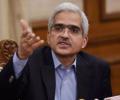
After hiking the repo rate by 0.50 per cent, RBI Governor Shaktikanta Das on Wednesday said future policy actions by the central bank will be guided by the evolving conditions. Addressing a press conference, the governor said the RBI has changed the policy stance to drop the phrase "remains accommodative", and instead opted for "withdrawal of accommodation" for guiding its future moves. The central bank did not hike the cash reserve ratio contrary to speculation, he said, adding that the liquidity withdrawal will be calibrated and measured.

The US Federal Reserve's interest rate decision, global market trends and trading activity of foreign investors are the major factors that would dictate terms in the equity markets in a holiday-shortened week ahead, analysts said. Equity markets will remain closed on Tuesday on account of Ganesh Chaturthi. From the global front, interest rate decisions from the Bank of England and Bank of Japan would also influence market trends.

Eleven companies have launched their initial public offerings (IPOs) in December 2023, making this month the second-best December for public offerings since 1996. Collectively, they are raising Rs 8,182.7 crore this month. In December 2021, 11 companies raised Rs 9,534 crore. However, excluding December 2021, this month marks the best December for IPOs since 1996.

'I don't think we have ever seen such alignment of everything that we need in the banking sector.'

Capital expenditure by Indian companies is likely to see an uptick in the upcoming quarters as capacity utilisation has surpassed the critical threshold of 75 per cent, and numerous companies have deleveraged their balance sheets, according to analysts. The first quarter of the current financial year has shown improved profitability, driven by a decrease in input prices. This, according to analysts at Care Ratings, should stimulate a revival in the private capex cycle.
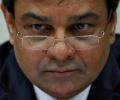
Under Urjit Patel, the then RBI Governor, the central bank had a habit of making complete about-turns on various issues, including electoral bonds and digital payments, former finance secretary Subash Chandra Garg said in his book titled 'We Also Make Policy: An Insider's Account of How the Finance Ministry Functions.' Citing some instances of about-turns by the then RBI Governor Patel, Garg in his book said, RBI had done so on the electoral bond issue and it had so in case of setting up of Payments Regulatory Board (PRB). RBI also made unilateral decisions like ordering complete data localization for participation in the payment system, Garg wrote in the book which will hit the stands on October 1.

The year 2022 saw the Reserve Bank of India (RBI) start acting on the policy repo rate after a gap of two years. The six-member monetary policy committee of the RBI reduced interest rate sharply - by 115 bps - when Covid-19 struck in 2020. In March 2020, days after the nationwide lockdown was announced, MPC in an unscheduled meeting reduced the repo rate by 75 bps, followed by another 40 bps in May. Status quo was maintained for the next two years since the May repo rate hike.

India's foreign exchange reserves jumped $4.53 billion to $588.78 billion for the week ended April 28, the Reserve Bank of India said on Friday. The overall reserves had dropped $2.16 billion to $584.25 billion in the previous reporting week. In October 2021, the country's forex reserves had touched an all-time high of $645 billion.
Falling for the second consecutive week, India's forex reserves dropped by $4.34 billion to $589.14 billion for the week ended May 26, the Reserve Bank said on Friday. In the previous reporting week, the reserves had declined by $6.05 billion to $593.48 billion. It can be noted that in October 2021, the country's forex kitty had reached an all-time high of $645 billion.
GDP growth of 7.7 per cent in the first half of this fiscal has "left sceptics gasping and woefully behind the curve", an RBI article said on Wednesday. It also stressed the buildup in the growth momentum is likely to be sustained. The article on the state of the economy published in the Reserve Bank's December Bulletin on Wednesday also said CPI-based retail inflation is expected to ease to 4.6 per cent in the first three quarters of 2024-25 from 5.6 per cent in November.

Investors' wealth fell by Rs 2.89 lakh crore in two days of market fall, with the BSE Sensex tumbling 796 points on Wednesday, amid weak global market trends ahead of the US Federal Reserve's interest rate decision. Fresh foreign fund outflows and caution ahead of a host of interest rate decisions from global central banks also added to the overall bearish trend. Besides, the US Fed meeting, the BoE (Bank of England) and the BoJ (Bank of Japan) are also scheduled to meet this week.

With the first quarter earnings season coming to an end, the domestic equity markets would be driven by global trends and trading activity of foreign investors this week, analysts said. The movement of global oil benchmark Brent crude and the rupee against the dollar would also drive trends in the market. "Macroeconomic indicators, trends in global stock markets and FII activities will be pivotal in shaping market trends in the coming days," Pravesh Gour, senior technical analyst at Swastika Investmart Ltd, said.
India's foreign exchange reserves dropped by $6.05 billion to $593.48 billion during the week ended May 19, RBI said on Friday. The drop in the kitty has snapped two consecutive weeks of increases. In the previous reporting week, the overall reserves had increased by $3.5 billion to take the overall quantum just shy of $600 billion.

The overall reserves had dropped by $4.53 billion to $588.78 billion in the previous reporting week. In October 2021, the country's forex reserve had reached an all-time high of $645 billion. The reserves have been declining as the central bank deployed the kitty to defend the rupee amid pressures caused majorly by global developments.
'We like certain stocks from banking, insurance, retail, hospitals and capital goods.' 'Though some of these stocks may seem expensive, they will compound well over the long term, thus justifying their current multiples.'

Debt fund managers are reassessing their strategies after the setback delivered by the Reserve Bank of India recently. While most are refraining from any knee-jerk reaction to the central bank's surprise open market operation (OMO) announcements, they are taking a re-look at the duration of their schemes. Sandeep Yadav, head of fixed income at DSP Mutual Fund, said it has trimmed the duration of some schemes, considering the hawkish stance by the RBI.

The overall reserves had jumped by $7.2 billion to $595.98 billion for the previous reporting week. It can be noted that in October 2021, the country's forex kitty had reached an all-time high of $645 billion.
The Reserve Bank of India has rejected three applications, including that of West End Housing Finance, for setting up small finance banks. These applications were found not suitable for granting of in-principle approval to set up small finance banks, it said in a statement on Tuesday. RBI had received about a dozen applications to set up banks under the guidelines for 'on tap' Licensing of Universal Banks and Small Finance Banks (SFBs).

The Reserve Bank of India (RBI) on Friday hiked repo rate by 50 basis points to 5.90 per cent in order to control the rising inflation, keeping in line with the aggressive policies of central banks and the volatile markets prevalent across economies. RBI Governor Shaktikanta Das announced the rate hike today. In the meeting of the Monetary Policy Committee (MPC) that started on Wednesday, five of the members of the MPC voted to hike the key lending rate, repo rate, by 50-basis points (bps).

Despite the demonetisation of 2016 and the rise in digital transactions that followed, the economy's dependence on cash has remained as high as ever. So when the Reserve Bank of India (RBI) introduced a pilot project of its version of digital cash - called the central bank digital currency (CBDC) - on December 1, many questions were asked. Can the CBDC replace physical cash, even partially? Can it match cash in terms of convenience? Are CBDC transactions truly anonymous?
