
Firodia talked about his plans for the EV-components business, and the components business at large for the group

10 largecaps stocks which stand to gain from the Budget.

The Centre's fiscal deficit touched 74.5 per cent of the annual target at the end of January 2025, according to the data released by Controller General of Accounts (CGA) on Friday.

Expenditure on new projects slowed down for the second quarter in a row amid an uncertain global environment and higher borrowing costs. There were new projects worth a cumulative Rs 3.26 trillion in the July-September period, according to data provided by project tracker Centre for Monitoring Indian Economy (CMIE). This figure is much less than Rs 4.39 trillion in the June quarter (Q1FY23) and Rs 8.46 trillion in the March quarter (Q4FY22).
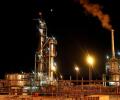
India, the world's third largest oil importing and consuming nation, is likely to save as much as Rs 1.8 lakh crore on import of crude oil and LNG if the trend of softening international energy rates continues, Icra said Wednesday. India, which meets over 85 per cent of its crude oil needs through imports, spent $242.4 billion on buying crude from overseas in the fiscal year ended March 31, 2025.

'Inflation is not good for industry. Nor for the economy as a whole.'

The risk-reward for the Indian markets, Morgan Stanley said, is turning favourable.

The Centre's capital expenditure (capex) outlay for the April-June quarter (first quarter, or Q1) of 2022-23 (FY23) could be close to Rs 1.5 trillion, Business Standard has learnt. As a percentage of full-year capex Budget Estimates (BE) of Rs 7.5 trillion, this could be at similar levels to the trends in the past few fiscal years. It is in the July-September quarter (Q2) of FY23 that capex is expected to pick up, when a bulk of the long-term capex loans to states are expected to be expended.

Fitch Ratings has removed energy infrastructure company Adani Energy Solutions Ltd (AESL) from its 'Ratings Watch Negative' list, the first upgrade by an international ratings agency since the US indictment. Fitch affirmed AESL long-term foreign and local-currency issuer default ratings (IDRs) at 'BBB-'.
Only 80.6 per cent of the Rs 6-trillion allocation has been spent by February, data from the Controller General of Accounts shows.

Public-sector enterprise stocks have seen a good run thus far in 2023-24 (FY24), with the S&P BSE PSU Index surging by over 26 per cent during the period, compared to an 11 per cent increase in the benchmark S&P BSE Sensex.
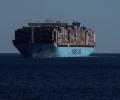
Adani Ports and JSW Infrastructure, India's leading private port operators, are expanding their logistics services to capture extra cargo while they run integrated transport services. "With incrementally less availability of lucrative port assets that can drive cargo volumes, port operators have naturally shifted their focus on deriving value in the upstream integration, i.e., the logistics space.

Professionals will be required to either learn new tech skills that focus on AI, cloud computing, or risk becoming obsolete, says Arun Prakash M.

'We have to retain some fiscal headroom without compromising on the promised fiscal consolidation roadmap.'

India's stock markets corrected recently but foreign money is likely to chase China rather than India in the short-to-medium term, said Chris Wood, global head of equity strategy at Jefferies, on Thursday. Wood told the Business Standard Manthan Summit in New Delhi he is bullish about Indian equities from a long-term perspective, but for the short term he is cautious given the quantum of foreign investor (FII) outflows and valuation woes.
The government will provide Rs 11.11 lakh crore for capital expenditure for 2024-25 and introduce viability gap funding to spur private investment in infrastructure, Finance Minister Nirmala Sitharaman said on Tuesday. Presenting the Union Budget for FY2024-25, she said that the government will endeavour to maintain strong fiscal support for infrastructure over the next five years, in conjunction with imperatives of other priorities and fiscal consolidation.

Mumbai International Airport (MIAL) has proposed a significant increase in User Development Fee (UDF) for international passengers, while domestic passengers will be charged a UDF for the first time. However, MIAL also proposed a 35% reduction in landing and parking charges, aiming to balance infrastructure development with cost-effective air travel for airlines. The new tariff structure is subject to approval by the Airport Economic Regulatory Authority (AERA).

The government on Tuesday notified the Rs 22,919 crore scheme to promote domestic manufacturing of electronics components, display and camera modules, non-surface mount devices, multi-layer printed circuit boards and lithium-ion cells for digital applications, among others. The scheme is likely to be operationalised in the next 2-3 weeks.

The Adani group has said it will have a capital expenditure of Rs 1.1 trillion in 2025-26 as against this financial year's Rs 92,000 crore, with a focus on core energy and infrastructure. Expenditure will be financed through an internal cash generation of Rs 60,000 crore, and the rest will be raised via equity and debt, according to senior officials.

'The finance minister has done as much as she can when you look into the fiscal constraints she had.'

The government may save over Rs 70,000 crore (Rs 700 billion) on capital and revenue expenditure allocated towards new schemes in the FY25 Budget that are yet to be implemented.

States are on track of fiscal consolidation with their total borrowings reaching Rs 5 trillion till October, which is 60 per cent of the projected borrowings of Rs 8.38 trillion till December 2024, according to data from official sources. Government officials said the lower-than-projected borrowings by states were a sign of prudent fiscal management by them. States announce their borrowing plans every quarter.
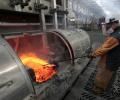
Novelis' Q3FY25 volume stood at 904,000 tonnes (down 1 per cent Y-o-Y, down 4 per cent Q-o-Q), due to lower VAP and automotive shipments. Revenue stood at $4.1 billion (+4 per cent Y-o-Y, down 5 per cent Q-o-Q).

'Nearly 10 million people will benefit from the increase in the rebate limit for those earning up to Rs 12 lakh.' 'We expect all that money will come back into the economy in either savings, consumption, or investments.'

Backing embattled Adani Group, rating agency CRISIL Ratings on Friday said the conglomerate has sufficient liquidity and operational cash flows to meet debt obligations and committed capex and that there has been no negative actions so far by lenders and investors following the US indictment of group founder chairman. The Adani Group, which has the flexibility to reduce certain discretionary capital expenditure (capex) depending on developments in financial markets and future capital availability, has a healthy Ebitda and cash balance that reduces its dependence on external debt to sustain operations, it said in a bulletin.

'The bull market cycle ran for five years. It's the end of that cycle.' 'The next cycle is a down cycle, and in that down cycle, you will see the Sensex falling from their highs of around 68,000 to maybe 40,000-50,000 at the bottom of the cycle.'

'If in our cities, all urban bus transport services are free, then the taxpayers are paying for it, or if electricity were to be made free, that's a huge cost to the rest of the people'

While this will incur a revenue loss amounting to 0.2 per cent of GDP, it will provide a strong boost to consumer sentiment and spending, points out Rajani Sinha.

Moody's Ratings on Wednesday said India's economic growth will exceed 6.5 per cent in the next fiscal, up from 6.3 per cent this year, on higher government capex and consumption boost from tax cuts and interest rate reduction. Projecting a stable outlook for the banking sector, Moody's said although the operating environment of Indian banks will remain favourable in the next fiscal, their asset quality will deteriorate moderately after substantial improvements in recent years, with some stress in unsecured retail loans, microfinance loans and small business loans.

Investors should tilt their portfolios towards domestic-facing defensive sectors, which should help provide stability and shield them from geopolitical and tariff risks.


Finance Minister Nirmala Sitharaman will present her 8th straight Budget and all eyes will be on the much-expected tax relief for the middle class. Sitharaman had in her first Budget in 2019 replaced the leather briefcase -- which had been in use for decades for carrying Budget documents -- with a traditional 'bahi-khata' wrapped in red cloth.

Leading chains plan Rs 40K crore infra revival to close capacity gap over next 3-5 years

Domestic rating agency ICRA on Monday said Indian companies are likely to clock 7-8 per cent revenue growth during the March quarter of the current fiscal year, led by revival in rural demand and uptick in government spending. ICRA expects the private capital expenditure (capex) cycle to remain measured in view of the uncertainties around geopolitical developments and relatively subdued outlook on merchandise exports from India.

The upcoming Union Budget to be presented on February 1 is likely to assume a nominal gross domestic product (GDP) growth between 10 and 10.5 per cent for FY26, a Business Standard poll of 10 economists showed. The first advance estimates released by the National Statistics Office (NSO) had estimated a nominal GDP growth of 9.7 per cent for FY25. Nominal GDP, calculated at current market prices, factors in the effect of inflation. It is used as the base to calculate crucial macroeconomic indicators, such as fiscal deficit, revenue deficit, and debt-to-GDP ratio.

'Entering India is exciting, but it's also challenging. You have to be prepared for long-term investment.'

Investors should avoid making drastic changes to their asset allocation during a market correction.

Siemens's share price has lost ground in the past few sessions following weak management commentary. The management indicated challenges to the growth outlook due to stagnant private capex and concerns over semiconductor shortages for digital industries. Government infra-spending may regain momentum from January 2025.

Logistics major Delhivery has had promising Q2FY25 results. The Q2FY25 consolidated revenue was Rs 2,190 crore (up 0.8 per cent quarter-on-quarter or Q-o-Q and 12.8 per cent year-on-year or Y-o-Y). Express parcel revenue was Rs 1,300 crore, (up 1.7 per cent Q-o-Q/7.3 per cent Y-o-Y) alongside better yield (+5 per cent Y-o-Y) in the segment.

The dividends for the economy from such a rapid rise in capital expenditure would be huge, observes A K Bhattacharya.
 © 2026 Rediff.com - Advertise with us - Disclaimer - Privacy Policy - Sitemap - Feedback - About us - Terms of use - Grievances