
Public sector banks' need for capital should be used to make fundamental reforms to their governance and management.

Analysts believe there could be some pressure on banks' margins in the interim.

Total income rose to Rs 20,163.25 crore during the quarter as compared to Rs 16,832.22 crore in the same period a year ago.

Market participants are hoping for a few tweaks on the taxation front which will encourage consumers and businesses to spend.

So far in 2019, India has been one of the highest recipients of foreign flows among Asian and Emerging Market (EM) economies

Loan defaults and restructuring to limit profits.

With their weak metrics and high bad loans, India's state-run banks have not been investor favourites

Heads of various public and private sector banks on Thursday sought to present a counter-narrative on RBI Governor Shaktikanta Das warning lenders about the perils of extreme risk aversion in the pandemic-stricken environment where credit demand is on the wane.

Bankers and government officials told Reuters Rajan's successor may be less aggressive in fighting bad loans, but the general direction will remain the same
The Indian banking sector faces the challenge of tackling rising defaults due to slowing economy, even as the banks in the country do not have toxic assets, which triggered financial crisis elsewhere, rating agency Moody's said.

Kapoor was among the founding team of Yes Bank, along with Ashok Kapur who died in 2008.

Traditionally, most PSUs have been cash-rich, which added to their value. However, the government has been tapping regularly into their cash resources to boost revenue for the exchequer

The coming years could be exciting for Bandhan Bank, IDBI Bank, IDFC First Bank, Federal Bank, and CSB Bank.
Moderate credit growth at around 22 per cent and relatively higher deposit growth has placed the liquidity situation of banks in more comfortable zone.

'The economy is expected to bounce back and things are expected to recover faster than what we previously thought.'

Mixed global cues and decline in crude oil prices further dent the sentiments.

Mark-to-market risks to the Indian banking sector are limited and manageable, says RBI

Bankers need to take a call on whether they will allow technology firms to run banks or banks themselves will turn into tech firms, says Tamal Bandyopadhyay.

The bad loans of public sector banks were at 4.4 per cent in March 2014 compared with 2.09 per cent in 2008-09, it said, adding, the gross NPA increased by almost four times from March 2010 (Rs 59,972 crore or Rs 599.72 billion) to March 2014 (Rs 2,04,249 crore or Rs 2,042.49 billion).

PSBs' gross NPA ratio may decline to 12 per cent by March 2019 in the baseline scenario, whereas private banks' gross NPA ratio may decline from 3.7 per cent to 3.2 per cent in March 2019.

Leaving behind the luxe life and dapper suits of foreign banks, Puri and his team at the upstart venture shared fizz drinks, wore a footwear brand popular among the middle class, shared a rat-infested space in a yet-to-be gentrified work space to plan and execute it.

In the aftermath of the PMC Bank mess which was in the RBI's highest rating of 'A' category, trustworthiness of these ratings may be up for a review.

The consolidated entity can target good growth FY18 onwards, analysts say.
The Union Budget 2008-09 has focused on farm credit.

As the clean-up has taken hold, loan growth slipped to 10.7 per cent in the last fiscal
HDFC Bank's track record of consistent growth with high profit margins and robust risk management systems bode well for the future.

Report points out corporate vulnerability indicators remain elevated.
Despite a significant improvement in asset quality, the country's banking industry might see its bad assets inching up in the months ahead, particularly in retail segment, global rating agency Fitch said.Rising bad loan assets had prompted many banks to sell their sticky assets to asset reconstruction companies, in order to transfer the risk and clean up their balance sheets.
In the April-June period, bond yields rose by 30 bps.

It has been a year since the Reserve Bank of India (RBI) initiated prompt corrective action (PCA), an exercise that puts weak banks under central bank scrutiny, against the 94-year-old Lakshmi Vilas Bank (LVB). But recently, this low-profile Chennai-headquartered bank found itself attracting some unwonted publicity when 60 per cent of its shareholders voted against a proposal to re-appoint seven directors, including one of the promoters, K R Pradeep (who holds around 2 per cent), and the company's managing director & chief executive officer S Sundar.

Unlike in the past, when old private banks compromised upon underwriting standards to take on the bulk, they've now realised that scaling up at the cost of quality isn't worth the while. These banks have also readjusted growth targets when required, and rebalanced books to preserve capital and asset quality.

Kolkata tops the list with 617 cancellations, New Delhi stands second with 203, followed by Mumbai at 190.
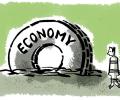
Moody's Investors Service on Friday projected India's growth at zero per cent for the current fiscal and said the negative outlook on sovereign rating reflects increasing risks that GDP growth will remain significantly lower than in the past. The outlook also partly shows weaker policy effectiveness to address economic and institutional issues, it noted in the update to its November 2019 rating forecast.

Collection dived to 75-80% in November-December from 99% after demonetisation.

These numbers show overall exposure and are not a reflection that all loans are going to be impacted.

With the stock coming under pressure, the MF holding value could have dropped to Rs 50 billion, back-of-the-envelope calculations show.

On a sequential basis, banks have had to set aside a substantial amount for bad loans, up 30 per cent from Rs 3,459 crore in the June quarter to Rs 4,508 crore.

Public banks face slowdown heat.

The government on Tuesday extended the deadline for filing income tax and GST returns, raised the threshold of default that could trigger insolvency of a company, and waived charges on cash withdrawals from ATMs of other banks as a precursor to a broader stimulus package for the economy distressed by the coronavirus outbreak.
