
Interest rates on all loans linked to MCLR stand reduced by 5 bps with effect from May 10, 2019: SBI

While banks are not as exposed as the corporate sector during the initial stage of the pandemic, the strain on lenders could ultimately be profound. Banks face a second-order hit compared with the corporate and household sectors.

Some banks have seen gross non-performing assets as high as 15 per cent in their education loan portfolios.

The non-performing assets of the banking sector rose sharply to 1.28 per cent in 2011-12 from 0.97 per cent a year ago due to high interest rate and slowdown in the economy.
Bankers are confident that unlike the last time, there would not be significant erosion in asset quality, since their expansion strategies are backed by rich information on borrowers' credit histories.

In Q1, India's GDP shrank by a staggering 24 per cent year-on-year amid the imposition of one of the most stringent global nationwide lockdowns.
International credit ratings agency Moody's Investors Service changed its outlook for India's banking system to negative from stable due to concerns that an increasingly challenging operating environment will adversely affect asset quality, capitalisation, and profitability.

Analysts had on average forecast a net profit of 23.21 billion rupees, according to Thomson Reuters data.

Rating agency Care Ratings said the gross non-performing assets ratio of domestic banks will increase to 4.5 per cent by March 2014 and impact the profitability by up to 30 per cent.

The protests came after Speaker Om Birla announced the end of Question Hour at noon as the designated time for it is 11 am to noon. While asking the first supplementary, Gandhi said he wanted to know the list of 50 top wilful defaulters, including funds given and the amount written off by banks but did not get a proper answer in the written reply.

In his address at a conference of state secretaries, Rajan stressed the need to strengthen state-level coordination committees by ensuring participation, conducting meetings more frequently and sharing quality information among all stakeholders, including state government agencies.

HDFC Bank met forecasts with a 30 per cent rise in quarterly profit led by higher loan growth, fee income and stable asset quality.
Gross non-performing assets in system have grown to 4.1 per cent in FY14 from 3.4 per cent a year ago

Bankers say amid the uncertain macroeconomic environment, their greatest worry is the stress on asset quality.

Bank credit growth declined to 8.5 per cent in January from 13.5 per cent in the year-ago period.

Axis Bank and ICICI Bank consumed 37-59 per cent of their operating profit for COVID-19 provisioning, while the figure is 24 per cent in case of Kotak Mahindra Bank and 10-12 per cent for IndusInd Bank and HDFC Bank.
Moody's cited a likely rise in the bank's non-performing assets in the near future as one of the reasons for the downgrade.

Earnings and financial condition of only a few companies influencing sentiment.

Axis Bank was the top laggard in the Sensex pack, plunging more than 5 per cent, followed by HDFC, Bajaj Finance, ICICI Bank, Tata Steel, Bajaj Auto, HDFC Bank and IndusInd Bank. On the other hand, M&M, Infosys, Asian Paints, UltraTech Cement and Tech Mahindra were among the gainers.

In a soon to be published book, 'Of Counsel: The Challenges of the Modi-Jaitley Economy,' former chief economic advisor Arvind Subramanian says though RBI has a good reputation, it does not mean it's always right, as for years, the RBI was unable to grasp the seriousness of the loan repayment problems or identify the prolonged frauds of Nirav Modi and the likes.

Breaking silence over the Rs 12,967 crore scam at Punjab National Bank, he said: "I have chosen to speak today to convey that we at the Reserve Bank of India also feel the anger, hurt and pain at the banking sector frauds and irregularities."

'In plain simple English, these practices amount to a looting of our country's future by some in the business community, in cahoots with some lenders,' says RBI Governor Dr Urjit R Patel.

Low home loan rates by banks could put large players in an advantageous position over smaller non-bank players, believe analysts.

While the government has infused huge capital into PSBs, the same has largely been used to mitigate losses and has failed to contribute meaningfully to credit growth.

The incoming government will have to encourage private investments, bring down cost of capital

HDFC Bank's 12-month forward price-to-book ratio is estimated to be the highest among 166 large and mid cap banks in Asia Pacific.

SBI's gross non-performing loans jump to 5.15 per cent from 4.19 per cent

Prefer proposal for airline to float bonds guaranteed by govt.

Rating agency Fitch on upgraded outlook of 10 financial institutionals, including SBI, ICICI Bank and EXIM Bank of India to 'stable' from 'negative' earlier following revision in the country's outlook.

NPA percentage in loans may touch 10% by March 2013, up from 5% in March 2011.

2019 appears a story of two halves for Indian equities - a more difficult first half might precede a stronger second half, said Abhiram Eleswarapu, bottom, left, Head of India Equity Research, BNP Paribas in an interview with Ashley Coutinho.
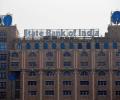
SBI chief Rajnish Kumar said the focus going forward will be on cost reduction, rationalisation and reskilling of workforce, improving staff productivity and redeployment of workforce from admin offices to sales roles.

A section of analysts feel now may not be a bad time to buy select PSBs.

More than one-third of this amount (Rs 6,000 crore or Rs 60 billion) is likely to go to the country's largest lender, State Bank of India, while the demand for most other banks is less than Rs 1,000 crore (Rs 10 billion) each.
Among the bank groups, under the baseline scenario, public sector banks' gross NPA ratios may increase to 13.2 per cent by September 2020 from 12.7 per cent in September 2019.

"The commitment to moderate levels of inflation has led to higher interest rates. In this environment, banks need to keep a strong vigil on their asset quality. These are turbulent times and we should watch every step that we take," Mukherjee said at 106th foundation day of Bank of India in New Delhi.

Banks, through the Indian Banks' Association, have urged RBI and credit information companies to maintain a database of wilful defaulters.

Such fixed-cum-floating housing loan schemes had disappeared from the market after the Reserve Bank of India expressed concerns that these products may affect banks' asset quality.
RBI said aggregate demand during the year so far suggests that the shock to consumption is severe, and it will take quite some time to mend and regain the pre-COVID-19 momentum.

While the rupee depreciation in 2012 persuaded many companies in taking hedges against their foreign currency loans, industry analysts feel it might not be sufficient to counter the swift slide in the value of the local currency.
