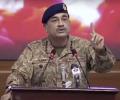
Asim Munir will have to find a well trusted aide to fill the crucial ISI post's when Asim Malik retires soon.

While Asim Malik's role in Pakistan's recent warming up of relations with the US is acknowledged, army watchers note a recent distancing, what with Asim Munir not wanting his DG, ISI to share the limelight during his subsequent sojourns to Tampa and Brussels, points out Rana Banerji, who headed the Pakistan desk at RA&W.
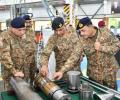
'Pakistan's army has got a streak of democracy. It is more democratic than the country.'

Pakistan is abuzz with rumours that the country's all-powerful military may topple the fragile government in Islamabad within next 48 hours.
Presenting some of the most scintillating pictures from around the globe in the last 24 hours
The timing and mode of the attack in which two Indian soldiers were killed unambiguously point towards the complicity of the Pakistan military leadership in this misadventure. After all just a few months back Pakistan Army chief General Ashfaq Kayani was all for peace. The solution to this riddle lies in the political developments within Pakistan, says Alok Bansal
Will India and Pakistan transform the crisis at Giari into an opportunity? Jyoti Malhotra analyses
Pakistani military leaders, including army chief General Ashfaq Kayani, were surprised to know that Osama bin Laden was hiding in their country when they were told about the American raid that killed the dreaded terrorist, according to an analysis of conversations conducted by the United States intelligence.
The Memogate scandal in Pakistan has taken a turn for the worse, with the central character in the controversy Manzoor Ijaz's refusal to appear before the judicial commission investigating the issue. Amir Mir reports from Islamabad.
We need to take the bull by its horns and confront the Pakistan Army directly. However blasphemous and anti-protocol it may seem we must insist that General Ashfaq Kayani be a part of the dialogue process, says Vivek Gumaste.
The Pentagon leadership has strongly denied reports that it has pressurised Pakistani army chief General Ashfaq Kayani to extend the military's anti-Taliban operations into North Waziristan, in the wake of the botched Times Square bombing attempt by Pakistani-American Faisal Shahzad, who received terror training in that region.
Seema Mustafa believes that Pakistan Army chief Ashfaq Kayani would not march his troops into Islamabad for it would only play to the advantage of an unpopular Yousaf Raza Gilani's government.
A carefully modulated exercise is evident from the reports emanating from Beijing on the current visit of Pakistan's army chief Ashfaq Kayani, says B Raman
First meeting in 3 years, with agenda of stalled items needing political push.

Pakistan Army Chief General Ashfaq Parvez Kayani has rubbished media reports of him organising a secret meeting between Afghan President Hamid Karzai and the Haqqani network commander Sirajuddin Haqqani in Kabul last month.
Pakistan's Chief of Army Staff General Ashfaq Kayani has promised jobs for former Taliban fighters.
The 'trust deficit' between the United States and Pakistan has seemingly evaporated after the strategic dialogue between Washington and Islamabad in March, that also featured Army chief General Ashfaq Kayani and Inter Services Intelligence director general Shujat Ahmad Pasha.If the remarks of Daniel Benjamin, the State Department's coordinator for counter-terrorism are anything to go by, the US no longer is suspicious of Pakistan playing a double game.
The international community, including India, must offer the Pakistan government all the help and encouragement that it needs to fight and root out the menace of radical extremism, or else the terrorists will spread their tentacles far and wide -- including, eventually, into India.
Insiders say that General Kayani's decision to extend Pasha's service has been made to ensure the continuity of the army's offensive against extremists in the troubled tribal regions of the country.
The United States has ruled out a military coup in Pakistan in the wake of the political chaos saying Army Chief General Ashfaq Kayani is a staunch supporter of democracy and doesn't want to take over like his predecessor Pervez Musharraf did in 1999.

General Raheel Sharif on Friday assumed charge as Pakistan's new army chief at a ceremony in Rawalpindi, where outgoing army chief general Ashfaq Parvez Kayani passed on the command stick to him.
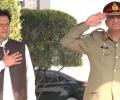
'With the extension issue settled clearly in his favour, Gen Bajwa would be free to fashion a more hardline policy against India. 'We could, therefore, expect a raising of the ante in Kashmir,' says Rana Banerji.

If General Asim Munir, Pakistan's new army chief, wants to help defuse the current polarised atmosphere and shepherd civilian politicians towards negotiations on an acceptable date for elections, he may need to distance himself from any perception of needless hostility to Imran Khan, explains Rana Banerji, who headed the Pakistan desk at RA&W, India's external intelligence agency.

Against the backdrop of Pakistan's opposition to American drone strikes, United Nations chief Ban Ki-moon on Tuesday said the pilotless aircraft should be used only for gathering intelligence.

Pervez Musharraf said that Pakistan tried to undermine the Afghan government led by ex-president Hamid Karzai for helping "India stab Pakistan in the back".
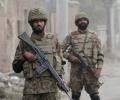
India must watch for signs after Peshawar that Pakistan is waking up to the dangers of Islamism, muses Ajai Shukla

In his latest book 'Playing to the Edge', Michael Hayden, the former CIA director said that Pasha had conceded that some of the powerful spy agency's retired members were engaged in training those involved in the heinous crime but refused to take action.
New Delhi's decision not to call for a flag meeting underlines its conviction that the military cost will soon become too high for Pakistan.
'After General Raheel Sharif took on the Tehrik-e-Taliban Pakistan, some sections of the military establishment may have felt unease as to whether the crackdown could be extended against friendlier 'non-State' actors like the Lashkar-e-Tayiba.'
'Over the last year, Bajwa has created the environment to support bold moves on India. The ball is in India's court,' a senior Pakistan military officer tells Ajai Shukla.

The US needs to do three things to help the newly elected Nawaz Sharif government in Pakistan, says Stanley A Weiss
Through its early days to the 1980s, Pakistan sought to expand its sphere of Islamic influence through Afghanistan to Central Asia and got Pakistani citizens recruited in the Afghan government institutions in the 1990s when the Taliban were power. Now, it is looking eastward through India to Bangladesh and Myanmar to establish an imaginary caliphate.

'General Bajwa is believed to consider the internal threats to Pakistan's security as far more serious than the bogey of the Indian threat.' 'This doesn't mean that he is soft on India, only that he is more rational and sensible than his predecessor who had a bit of a chip on his shoulder about India,' points out Pakistan expert Sushant Sareen.
.jpg)
Pundits in Pakistan and also some western diplomats are predicting that the next army chief will be forced, partly by institutional pressure and partly by circumstances, to indulge in some tough talking with the civilian leadership. How the civil-military equation settles in this sort of a situation is something that will determine the future of Pakistani politics, and also Pakistan's relations with rest of the world, says Sushant Sareen.
