
Lieutenant General J F R Jacob, Chief of Staff, Eastern Army Command during the 1971 war, reveals how, armed with only a draft surrender document and an aide, he made the Pakistani army led by Lieutenant General A A K Niazi surrender.

Lt Gen Bakshi announced 'full support' to the new chief and made it clear that he won't resign.

The Chinese have just one commander for all the forces confronting India. Commanders of all these forces answer to one man, and one headquarter. India, on the other hand, offers a diversity of options that is a military embarrassment in the 21st century. In Arunachal and Sikkim-Bhutan, the Eastern Army Commander is in charge. In the Uttarakhand (central) sector, it will be the Central Army Commander. The Himachal-Tibet border is the domain of the Western Army Commander. And all of Kashmir and Ladakh further on, the Northern Army's. Effectively, an array of at least eight 'three-star' commanders will be arrayed against one Chinese, says Shekhar Gupta.

Air Vice Marshal Arjun Subramaniam lists the major operational takeaways from the 1971 War in his new book 'India's Wars, A Military History, 1947-1971'.

'General Sam Manekshaw looked from left to right and said, "Gentlemen, I have come to have a look at you. I am taking a good look at your faces. When I come back after the war is over, some faces may not be here".'
'Not a single soldier should be left behind in enemy territory.' Nitin A Gokhale's fascinating account on how the Indian Army conducted the daring and successful cross-border operation last September.
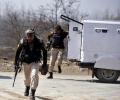
Brigadier Gurmeet Kanwal (retd) lists why India must not do away with AFSPA, but ensure enough transparency to avoid confrontation with human rights.

Rifleman Jaswant Singh Rawat, 21, received the Mahavir Chakra in the 1962 War with China. Such was his valour that a temple and museum stands on the land he died defending in the icy valley of Arunachal Pradesh.

'Pakistan thinks it is winning this low intensity conflict.' 'It is a serious observation. Half the battle is convincing your adversary that he cannot make headway.' 'A lot depends on how the internal professional management of the army and the handling of situations that are bound to rise sooner than later in his command, are done.'
