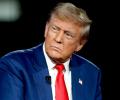
A leading expert predicts that the incoming Trump administration will likely continue its pro-India policies, including the Indo-Pacific strategy and Quad, but highlights potential challenges such as trade disagreements, immigration issues, and a possible quid pro quo for technology sharing. The expert also notes that the Trump 2.0 administration may prioritize great power politics over strategic altruism, potentially impacting human rights and religious freedom concerns.

Research Fellow and Director at Initiative on the Future of India and South Asia Aparna Pande, said that Beijing and Moscow will be keenly watching Prime Minister Narendra Modi's visit to the United States.

What drives Pakistani men to join its military, despite the toll it takes on them?


'The missile mounted near Kailash-Mansarovar is called DF-21. It is a medium-range, 2,200 kilometres ballistic missile. Its advantage is that it can cover all cities of north India, including New Delhi'
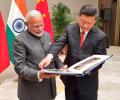
'In South Asia, unlike Southeast, East, or Central Asia, there is a natural hegemon: India. China cannot cast it aside easily'

To mark Prime Minister Modi's seventh meeting with Obama and his historic joint address to US Congress -- the sixth Indian PM to do so -- India Abroad, the newspaper published from New York and owned by rediff.com, reached out to diplomats and strategic thinkers in New Delhi and Washington, DC, to assess the current state of the US-India relationship and suggest a road map for the future.
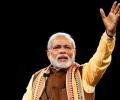
Two years of the NDA government have instituted significant reforms, including the passing of the GST bill in India but "cultural issues and saffronisation" have resulted in a slow incremental change instead of big bang reforms, according to a top American think-tank.

'Every time I step on stage, I feel like I'm performing the play for the first time,' Manoj Joshi tells Sadiya Updade.
 © 2026 Rediff.com - Investor Information - Advertise with us - Disclaimer - Privacy Policy - Sitemap - Feedback - About us - Terms of use - Grievances