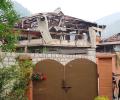
Markaz Taiba of Lashkar-e-Taiba (LeT) in Pakistan's Muridke, one of the nine terror camps struck by the Indian armed forces on Wednesday, is a site where terrorists including Ajmal Kasab involved in the 2008 Mumbai attack were trained, a senior military official said.

A multi-agency team has gone to the US and all paperwork and legal issues are being completed with US authorities to bring him to India, they said.
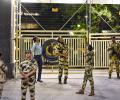
Tahawwur Hussain Rana, a Pakistani-born Canadian national accused of playing a role in the 2008 Mumbai terror attacks, has been extradited from the United States to India. Rana was arrested in the US in 2009 and convicted in 2011 for providing material support to the Lashkar-e-Taiba terror group, which carried out the Mumbai attacks. He had been fighting extradition since 2012, but the US Supreme Court ultimately denied his review petition, paving the way for his transfer to India. Rana will now face trial in India for his alleged role in the attacks, which killed 166 people.
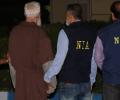
Tahawwur Hussain Rana, a Canadian national accused of involvement in the 2008 Mumbai terror attacks, has been extradited to India from the United States. Rana's interrogation is expected to shed light on the role of Pakistani state actors in the attacks, which claimed 166 lives. Indian authorities are particularly interested in his travels across India in the days leading up to the attacks, including visits to Hapur, Agra, Delhi, Kochi, Ahmedabad, and Mumbai. Rana's extradition follows a lengthy legal battle, with the US Supreme Court ultimately denying his application to challenge it. Rana is known to be associated with Pakistani-American terrorist David Coleman Headley, one of the main conspirators of the 26/11 attacks. The investigation into the Mumbai attacks has implicated senior members of terror outfits Lashkar-e-Taiba (LeT) and Harkat-ul Jihadi Islami (HuJI), as well as officials from Pakistan's Inter-Services Intelligence (ISI).
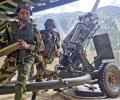
'Will this near-war, India's strongest military response so far, buy India another seven years of deterrence?' asks Shekhar Gupta.
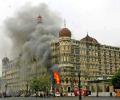
Tahawwur Rana, accused of involvement in the 2008 Mumbai terror attacks, is expected to be extradited to India from the United States soon. The US Supreme Court denied his last-ditch effort to stop his extradition, moving him closer to being handed over to Indian authorities. Rana's extradition is expected to help probe agencies expose the role of Pakistani state actors behind the attacks and shed new light on the investigation. He is associated with Pakistani-American terrorist David Coleman Headley, one of the main conspirators of the 26/11 attacks.
Tahawwur Hussain Rana, a key accused in the 26/11 Mumbai terror attacks, was brought to India on Thursday after being "successfully extradited " from the US, the National Investigation Agency (NIA) said. The 64-year-old Canadian citizen of Pakistani origin landed in Delhi in a special plane on Thursday evening, ending days of speculation of when and how he will be extradited, officials said. The NIA said in a statement that it had secured the successful extradition after years of sustained and concerted efforts to bring to justice the key conspirator behind the 2008 mayhem that claimed 166 lives. Rana is accused of conspiring with David Coleman Headley alias Daood Gilani, and operatives of designated terrorist organisations Lashkar-e-Taiba (LeT) and Harkat-ul-Jihadi Islami (HUJI) along with other Pakistan-based co-conspirators, to carry out the the three-day terror siege of India's financial capital.
Tahawwur Hussain Rana, a Pakistan-born Canadian national and close associate of David Coleman Headley, is set to be extradited to India from the US. Rana was involved in the planning and execution of the 2008 Mumbai terror attacks, which killed 166 people, including six Americans. He assisted Headley in obtaining a visa for India, established a front company in Mumbai, and helped in reconnaissance of targets in Mumbai and New Delhi. Rana was convicted in the US for providing material support to Lashkar-e-Taiba (LeT) and sentenced to 14 years in prison. His extradition to India will allow authorities to question him about his involvement in the Mumbai attacks and potentially uncover new information about the role of Pakistani state actors.
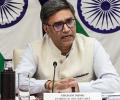
The United States has approved the extradition of Tahawwur Rana, accused of involvement in the 2008 Mumbai terror attacks, to India. The decision was announced by President Donald Trump during a joint press conference with Prime Minister Narendra Modi in the White House. India is currently working on the logistics of Rana's surrender and extradition, with several final steps to be completed before he is sent back to India. The joint statement issued by India and the US during Prime Minister Modi's visit reaffirmed their commitment to fighting terrorism and eliminating terrorist safe havens. The leaders also called on Pakistan to bring to justice the perpetrators of the 26/11 Mumbai and Pathankot attacks. Rana, a Canadian national of Pakistani origin, is currently lodged at a metropolitan detention center in Los Angeles. He is associated with Pakistani-American terrorist David Coleman Headley, one of the main conspirators of the 26/11 attacks.
'He is the key to unravel the 26/11 conspiracy.'

The Supreme Court on Monday stayed the execution of Pakistani terrorist Ajmal Amir Kasab.
Minister of State for Communications and Information Technology Milind Deora on why he wrote to the President asking that Kasab be executed soon.
Videos this week: News and Bollywood masala!
When Minister of State for Communications and Information Technology Milind Deora wrote to President Pranab Mukherjee asking Kasab be executed soon.
The Maharashtra government on Wednesday refuted the allegation of the sole convict in 26/11 Mumbai terror attack case, Mohammad Ajmal Amir Kasab, that he was not given fair trial and said death sentence awarded to him was a permissible means of punishment.
It was a routine day in prison for 26/11 convict Mohammed Ajmal Amir Kasab, who appeared unaware about the havoc created by him and nine other Pakistani terrorists in the city, three years ago.
The investigating officer in the 26/11 terror attack case, who had helped build a water-tight case against Pakistani terrorist Mohammed Ajmal Amir Kasab, has resigned, police sources said.
India on Wednesday said it has become increasingly clear that 'state actors' were involved in executing the 2008 Mumbai terror attacks and that without state support the terror control room could not have been established in Pakistan.
The Supreme Court on Wednesday reserved its order on Pakistani terrorist Mohammed Ajmal Amir Kasab's plea challenging his conviction and death sentence in the 26/11 Mumbai terror attacks.
The execution of Mohammad Ajmal Amir Kasab in the wee hours on Wednesday has been welcomed by people from all over India. After nearly a four-year-long legal battle, , the Supreme Court had confirmed the death penalty awarded to the Lashkar-e-Tayiba operative by the trial court and later upheld by the Bombay high court.

Following is the chronology of events leading to the execution of Lashkar-e-Tayiba terrorist Ajmal Amir Kasab

Mumbai terror attack convict Mohammed Ajmal Amir Kasab is suffering from fever and undergoing treatment in the high security Arthur Road jail, police said on Sunday.
Evidence in 26/11 Mumbai terror attack case involving Mohammad Ajmal Amir Kasab and nine slain terrorists clearly showed it to be a "pre-meditated" assault on the country's commercial capital by Pakistani terrorists, guided by their handlers from across the border, the Supreme Court was told on Thursday.
Reacting to the apex court verdict which upheld the death sentence awarded to Mohammed Ajmal Amir Kasab in the 26/11 Mumbai terror attack case, senior advocate Raju Ramachandran, who defended him in the apex court as amicus curiae, said he "bows down" to the ruling.
Following is the chronology of events in 26/11 terror attack case in which the Supreme Court on Wednesday upheld the death sentence of lone Pakistani terrorist Mohammed Ajmal Amir Kasab:
The Supreme Court on Wednesday upheld the death sentence of 26/11 Mumbai terror attack convict Mohammed Ajmal Amir Kasab, saying that waging war against the country was the primary and foremost offence committed by the Pakistani terrorist.
In a report tabled before an anti-terrorism court, Pakistani investigators said there is "sufficient incriminating evidence" against the arrested terrorist, including Lashkar-e-Taiba's operations chief Zakiur Rehman Lakhvi.
A Pakistani anti-terror court on Wednesday framed charges against Lashkar-e-Tayiba's operations commander Zakiur Rehman Lakhvi and six others for involvement in the Mumbai attacks and declared 16 people, including Ajmal Amir Kasab, as proclaimed offenders.
Videos this week: Kasab hanging and more
Here's what your favourite Bollywood celebrities are tweeting.
Israel Ansari and Sajida Khatoon were ecstatic on Wednesday morning after news broke that Ajmal Amir Kasab, convicted for his role in the 26/11 terrorist attacks in Mumbai was hanged to death at Pune's Yerwada Jail.

Maharashtra Home Minister R R Patil has confirmed the execution.
The mercy plea of Ajmal Amir Kasab, the lone surviving terrorist of the 26/11 Mumbai terror attack, has been rejected by the government which has sent its recommendation to the President. A top home ministry official said Kasab's mercy petition has been dismissed as he was involved in waging war against India that led to the killing of 166 people.
The intercepted conversation between the executors of 26/11 Mumbai terror attack and their Pakistani handlers during the carnage will be played in the Supreme Court on Thursday after the prosecution said it was an important evidence showing the strikes were "pre-planned".
The sole convict in the 26/11 Mumbai terror attack case, Mohammad Ajmal Amir Kasab, on Tuesday pleaded with the Supreme Court to commute his death sentence to life imprisonment.
In yet another indication of the involvement of Pakistani establishment in the 26/11 Mumbai attack, LeT operative David Headley has corroborated the statement of lone captured terrorist Ajmal Amir Kasab that the terrorists got training from Pakistan Navy.
Mumbai terror attack convict Mohammed Ajmal Amir Kasab has moved a mercy petition before the President, over a fortnight after the Supreme Court upheld his death sentence in the 26/11 case.
Mumbai terror attack convict Mohammed Ajmal Amir Kasab, who is lodged in a high-security jail in Mumbai, has been given a certified copy of the Supreme Court verdict confirming his death sentence. "Kasab was given the certified copy of his death sentence confirmation verdict three days ago, on which he had signed. One copy was given to him and the other was sent to the Supreme Court," an official of Arthur Road Jail said on Tuesday.
Over a dozen inmates of a jail in Bihar are eagerly waiting for the much sought demand to prepare a hangman's noose, made of the famous 'manila' rope, to hang Mohammed Ajmal Amir Kasab after the Supreme Court on Wednesday upheld the death sentence of the 26/11 Mumbai terror attacks convict.

Pakistan's Interior Minister Rehman Malik on Saturday asked India to provide access to Ajmal Amir Kasab, the lone terrorist arrested for the 2008 Mumbai attacks, to facilitate the trial in the country of seven suspects charged with involvement in the terrorist carnage.
 © 2026 Rediff.com - Investor Information - Advertise with us - Disclaimer - Privacy Policy - Sitemap - Feedback - About us - Terms of use - Grievances