
'New Delhi showed itself willing -- at least for a period -- to tolerate the risk of conflict and to withstand Beijing's implicit and explicit threats.' 'But it also continued to try to cut some kind of deal with China to reduce tensions.'
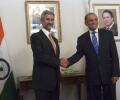
Pakistan's holy trinity -- its government, military establishment and the ISI -- differ on Pakistan's domestic and foreign policy issues. So when India talks to Pakistan's political leadership it can't be sure that the promises can be delivered, says Brigadier S K Chatterji (retd).

While Prime Minister Modi may pursue the laudable aim of building a cooperative relationship with Pakistan, he and his advisers should never think that concessions (and dialogue is a concession in itself) will change the Pakistan army's approach to India, says Vivek Katju.

The cascade of cordiality on both sides after the Modi-Sharif handshake in Paris was preceded by much planning and even goading from UK, US and Germany.
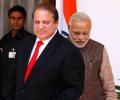
The government has returned to talks with Pakistan, but can it withstand pressure from a jingoistic press and a rabidly nationalistic social media.

Indian policymakers must incorporate in their nuclear doctrine a realistic response to tactical nuclear warheads, says Ajai Shukla.

The State Department and the White House too said that the US expects Pakistan to take decisive action against terrorists operating from its soil.

'India has to judge what Pakistan says to us, not what they say to a domestic audience,' a source tells Sheela Bhatt/Rediff.com, explaining why India-Pakistan talks remain on track despite discordant noises from across the border.
 © 2026 Rediff.com - Investor Information - Advertise with us - Disclaimer - Privacy Policy - Sitemap - Feedback - About us - Terms of use - Grievances