
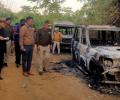
The first firing which killed six civilians, occurred when army personnel mistook coal mine workers returning home in a pick-up van singing songs on Saturday evening, to be insurgents belonging to the Yung Aung faction of the banned outfit National Socialist Council of Nagaland-Khaplang (NSCN-K), about whose movements they had been tipped-off.
The top court also issued notices to the Centre, Nagaland government and others on two pleas filed by the wives of Army officers named in the case.

Prohibitory orders under Section 144 of the CrPC have been clamped in Mon town, but the situation is tense.
The inquiry will focus on the "intelligence" and the "circumstances" on which Saturday's operation was based on.

Investigation has revealed that the Special Force Operation team had not followed the Standard Operating Procedure and the Rules of Engagement

Demand for repeal of the act found echoes in the nation's Parliament with National People's Party (NPP) MP Agatha Sangma, a former Minister in the United Progressive Alliance government, terming the act as 'the elephant in the room which (needs to) be addressed' and seeking the 'draconian' Act be repealed.
Now, the chief minister is under pressure to make good his promise after the December 4 incident in Nagaland's Mon, where 14 people were killedAFSPA has eclipsed all other achievements of the Biren Singh government.

The leadership of the NSCN-K is scheduled to join the peace negotiations in March as part of the Naga National Political Group with Government of India's Interlocutor R N Ravi, reports Sujit Kumar Chakraborty.
