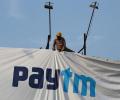
The One97 Communications stock saw a surge in interest as the company's operating performance update for August was considered positive by the Street. In addition, there was a news buzz as the company released a new hitech soundbox, which has longer battery life and processes all major cards. The performance indicates that the company, which is better known by its Paytm brandname, is still on course to achieve its guidance of going cashflow positive by the end of the 2023-24 financial year (FY24).

New business premium (NBP) growth of life insurers in March is expected to be weak owing to the high base effect in the year-ago period due to revision in taxation norms for high-value policies, insurers said. In the Budget, Finance Minister Nirmala Sitharaman proposed that insurance policies (excluding unit-linked insurance plans or Ulips) with an aggregate premium exceeding Rs 5 lakh would be taxed. This rule came into effect on April 1, 2023. In March 2023, the NBP of life insurance companies witnessed a strong growth after the tax announcement. Premiums rose by 14.45 per cent year-on-year (Y-o-Y) to Rs 59,608.83 crore in March 2023 from Rs 52,081.12 crore.

Clearly, some of the bullishness of the early days has gone missing. Ola's market share is slipping amid rising competition from incumbents like Bajaj Auto and TVS.

India's steel market is out of step with global trends. Global demand is weak with China at a huge supply surplus to its domestic demand, pushing down global steel prices. India's domestic demand for steel is strong, given the continuing infrastructure push and is likely to accelerate as urbanisation improves, and the auto sector continues to grow alongside the infrastructure push.

Industry experts believe that this deal will positively impact the Indian film industry, which is struggling with fewer movie releases.

Revenue rises 20.7% to Rs 36,854 crore.

On the exports front, Bajaj is under pressure in Bangladesh and Africa. On the domestic front, it could ride improvement in rural demand and new launches but it also has to cope with competitive intensity and a high base. The management projects 7-8 per cent volume growth in domestic 2W in financial year 2025 (FY25) with moderation in H2FY25 due to a high base Y-o-Y.

Kajaria Ceramics, the country's leading listed tile manufacturer, has seen its stock fall by 7 per cent over the past month amid concerns about rising input costs and sluggish domestic demand. Other listed stocks also experienced weakness in September, although there was some recovery in October. While strong exports are expected to help stabilise domestic market prices, the surge in gas prices over the past couple of months may have impacted margins in the second half of FY24.

Oil-to-telecom conglomerate Reliance Industries Ltd (RIL) has surprised the street with a better than expected performance in its oil-to-chemicals (O2C) division in October-December 2024 (Q3FY25). RIL executives attributed it to favourable feedstock sourcing and higher volumes. However, they also listed cost optimisation and other measures.

Sales of fast-moving consumer goods (FMCG) witnessed significant recovery in September after enduring a double-digit decline in August, according to data furnished by Bizom. Kirana stores in rural areas stocked up in preparation for the festival season, which began in September. This, combined with rainfall reaching 113 per cent of the long-perid average for the month, contributed to a boost in sales.

After a strong show during the September quarter (Q2FY25) and favourable demand conditions, going ahead, the country's largest player in the room air conditioner segment, Voltas is well placed to improve its market share. Expectations of record volumes in FY25 for the sector and the company's strategy of prioritising market share over margins could help the leader expand share in the room AC segment.

Tata Consultancy Services (TCS), the group's biggest cash generator, overtook Vedanta to become the highest dividend payer in India in FY23. The IT services major paid Rs 42,090 crore for FY23, up 167.4 per cent from Rs 15,738 crore for FY22. The 10 biggest payers together shelled out Rs 2.06 trillion for FY23, more than double the Rs 98,371 crore for FY22.

'Now we have one of the best asset qualities in the industry.'

Maruti Suzuki India (MSIL) will hold discussions with the Centre and state governments on how the production of compressed biogas (CBG), which can be used in vehicles that run on compressed natural gas (CNG), can be expanded in the country, its majority shareholder Suzuki Motor Corporation (SMC) said. The demand for CNG vehicles has been rising significantly in the country. MSIL sold 145,000 CNG vehicles in the first quarter of 2024-25, marking a 28.3 per cent year-on-year (Y-o-Y) growth.

The news of Dixon Technologies (India)'s tie-up with HP in addition to its existing Lenovo and Acer partnerships has led to a 5 per cent stock uptick since the start of the week. Dixon can target roughly 60 per cent of India's addressable IT hardware market with these contracts. Dixon targets Rs 48,000 crore in revenue from IT hardware under the PLI scheme over the next six years.

With the recent launch of smartwatches, home-grown smartphone maker Lava is looking to secure a strong foothold in the Indian wearables market. The company aims to capture up to 20 per cent of this segment over the next few years, according to a senior executive.

Domestic rating agency Icra on Wednesday said India's real GDP growth for the September quarter is likely to decline to 6.5 per cent due to heavy rains and weaker corporate performance. The agency, however, maintained its FY25 growth estimate at 7 per cent on expectations of a pick up in economic activity in the second half of the fiscal.

The net profit of the listed Adani group companies more than doubled year-on-year (Y-o-Y) in the first half of 2023-24 (H1FY24), even as their revenue declined in this period. The nine firms posted a 107.7 per cent jump in net profit at Rs 23,929 crore in April-September compared to the year-ago period. Net sales, on the other hand, were down 14 per cent to Rs 1.49 trillion in H1FY24, data collated by Business Standard showed.

Fresh order wins for capital goods and industrial companies may have seen a major slump due to Lok Sabha polls in the first quarter of the current financial year (Q1FY25). At the same time, revenue and profit growth trajectory is expected to have stayed the course, according to brokerage firms. Elara Capital, Motilal Oswal, and InCred Equities expect this sector universe to report a 12- 21 per cent growth in revenue, 21 -36 per cent growth in Ebitda and 24-38 per cent growth in profit on a year-on-year (Y-oY) basis.

From its lows this month, the stock of Sona BLW Precision Forgings is up 10 per cent on better-than-expected results. The stock rose by 4 per cent in the trading session on Tuesday after Japan's Nikkei Group said the Indian automotive component major has topped its rankings in terms of competitive advantage. The rankings are based on sales, profit margin, capital expenditure, research and development, and market capitalisation.

Capital expenditure by Indian companies is likely to see an uptick in the upcoming quarters as capacity utilisation has surpassed the critical threshold of 75 per cent, and numerous companies have deleveraged their balance sheets, according to analysts. The first quarter of the current financial year has shown improved profitability, driven by a decrease in input prices. This, according to analysts at Care Ratings, should stimulate a revival in the private capex cycle.

The share of Ahmedabad in the total value of trades on both the BSE and NSE is set to touch double digits for the third year in a row.

'Higher interest rates make gold less attractive as it doesn't generate yield.' 'However, with rates set to fall, the tables are turning for gold.'

Shares of real estate firms have been outperforming over the past year. The rally, analysts say, may hit roadblocks in the near term amid stretched valuations, even as the long-term prospects for the sector remain ebullient. "Most of the positive news flow is already in the price. Hence, investors sitting on hefty profits may partially cash out at current levels," suggests V K Vijayakumar, chief investment strategist at Geojit Financial Services.

If growth reverts to the pre-Covid level, a lot of people may have to temper their rosy optimism, points out Debashis Basu.

Hotel companies, which have experienced substantial share price gains in the past six months, are not only expected to post robust revenue growth in the seasonally weak July-September quarter (second quarter, or Q2) of 2023-24 (FY24), with the trend continuing in the second half (H2) of FY24, but according to some analysts, they will also benefit from a structural uptrend in progress. To begin with, larger players in the listed hotel sector are expected to report strong growth in Q2 compared to the year-ago quarter. Led by higher demand from the business segment, the sector is expected to achieve a growth rate of 15-30 per cent.

This is a good opportunity for long-term investors to pick quality small and midcap stocks at reasonable valuations.

Telecom operator Bharti Airtel reported more than 2.5 times jump in its consolidated profit to Rs 4,160 crore in the April-June quarter of 2024-25 compared to the year-ago period driven by an improvement in average revenue per user and an exceptional gain of Rs 735 crore. The company had posted a profit of Rs 1,612.5 crore in the same period a year ago. The consolidated revenue from operations of Bharti Airtel increased by 2.8 per cent to Rs 38,506.4 crore during the reported quarter from Rs 37,440 crore in the June quarter of the last year.

The Street's optimism on India's largest listed automotive maker by market capitalisation is not misplaced, given the robust wholesale performance in recent months and the strong 2023-24 (FY24) October-December (Q3) results.

For India to transform into a high-income country with a projected gross domestic product (GDP) of $23-35 trillion, will need a sustained annual growth of 8 per cent to 10 per cent. This will be powered by India's demographic dividend, technological innovation, and sectoral transformation, according to the "India@2047: Transforming India Into A Tech-Driven Economy" report by Bain & Company and Nasscom. By 2047, the services sector is expected to contribute 60 per cent of India's GDP, while manufacturing will account for 32 per cent, both playing a pivotal role in economic expansion.

Shares of auto component major, Samvardhana Motherson International, has gained 11.5 per cent on the bourses after the company approved the qualified institutions placement (QIP) issue and announced the calculation methodology for its compulsorily convertible debentures, or CCDs, into equity shares. Analysts cite strong investor response to the issue that has kept the sentiment positive for the stock. Brokerages, however, have a mixed view on the outlook for the auto parts supplier.

Notwithstanding record revenues in certain media sectors like film exhibition in the July-September quarter (second quarter, or Q2), the operational performance of the broadcasting business remained subdued. Zee Entertainment Enterprises and Sun TV are expected to experience a year-on-year (Y-o-Y) decline in advertising (ad) revenues during this period. Conversely, box office (BO) collections are anticipated to exceed Rs 3,000 crore in the quarter, propelled by a series of successful movie releases.

New Delhi-based pharmaceutical major Mankind Pharma is poised to take pole position in women's health portfolio in the India Pharma Market (IPM) after completing the Rs 13,630 crore deal to acquire Bharat Serums and Vaccines (BSV), senior company officials said. The deal potentially opens doors for Mankind Pharma to the overseas markets, which currently draws 92 per cent of its revenues from India. The combined entity will draw around 13 per cent revenues from the international market, with the remaining coming from the domestic market.

Mumbai-based developers Macrotech Developers (Lodha) and Oberoi Realty have emerged as top gainers among largecap realty stocks over the past month, with gains ranging from 29 per cent to 33 per cent. Strong ongoing sales trends in Mumbai's core market, record bookings in the January-March quarter, and healthy guidance for 2024-25 (FY25) have propelled these companies, which derive the majority of their revenues from India's financial capital.

Domestic steel prices have seen an increase over the past couple of months in anticipation of a safeguard duty, but a looming global trade war is likely to weigh as threat of import rises and prospect of export flounders. Data from BigMint showed that in March 2025, hot rolled coil (HRC) prices ex-Mumbai increased by Rs 600 per tonne month-on-month (M-o-M), rising from Rs 48,400 per tonne in February to Rs 49,000 per tonne.

The stock of Mahindra & Mahindra (M&M) has been touching successive all-time highs on the bourses and, over the past year, gained 81 per cent. While the S&P BSE Auto Index has not performed poorly, registering gains of 73 per cent, it still trails the company by 800 basis points (bps) during this period. There are multiple reasons why investors are beating a path to M&M's counter.

A weaker-than-expected sales performance, concerns about higher competitive intensity in the current year, and earning cuts by some brokerages have weighed on the stock of the country's largest paint maker, Asian Paints. While the Q3 volume show was slightly below expectations, the company's operational and bottom line beat estimates, benefiting from the falling raw material costs. The stock ended the day with a decline of over 2 per cent at Rs 3,175 apiece.
The Reserve Bank on Monday said asset quality of banks improved further and their gross non-performing assets (GNPA) or bad loans ratio declined to a 12-year low of 2.6 per cent in September 2024 on the back of falling slippages and steady credit demand. The RBI also flagged concern over a sharp rise in write-offs, especially among private sector banks (PVBs), which could be partly masking worsening asset quality in unsecured lending segment and dilution in underwriting standards.

Higher inflation has again become a matter of concern for fast-moving consumer goods (FMCG) companies. After prices of commodities like sugar and wheat moved higher and stabilised at those levels, the crude oil too surged, adding to FMCG firms' worries. Besides, a dry spell in August in the ongoing monsoon season impacted rural demand.

Latest GDP growth numbers a one-off development and not the beginning of a trend, says CEA V Anantha Nageswaran.
