
Nearly one in two luxury cars sold in India in the first three months of 2024 was a Mercedes Benz, which achieved its best ever quarter (January-March), selling 5,412 units, up 15 per cent year-on-year (Y-o-Y) from 4,697 units in the previous year.

Siemens's share price has lost ground in the past few sessions following weak management commentary. The management indicated challenges to the growth outlook due to stagnant private capex and concerns over semiconductor shortages for digital industries. Government infra-spending may regain momentum from January 2025.

The Centre's fiscal deficit touched 74.5 per cent of the annual target at the end of January 2025, according to the data released by Controller General of Accounts (CGA) on Friday.

Bajaj Auto, India's leading two-wheeler (2W) and three-wheeler (3W) maker, is scaling up its wholly owned finance subsidiary, Bajaj Auto Credit Ltd (BACL), with an investment of more than Rs 3,000 crore planned over the next two financial years, company's managing director Rajiv Bajaj said. BACL has already started commercial operations, Bajaj recently said on the sidelines of the group's CSR identity event. According to rating agency CRISIL, BACL's operations began on January 1 after receiving its licence from the Reserve Bank of India (RBI) in August last year.

As milk prices rise, analysts have an optimistic view on dairy stocks such as Heritage Foods and Dodla Dairy, hoping the companies' margins will grow in the near to medium term. From a long-term perspective, they believe that a growing population, increasing disposable income and health consciousness will strengthen dairy consumption in India.

Stocks of alcoholic beverage makers have corrected over the last few trading sessions on worries that taxes, competition and costs will hurt sales and profitability. The recent trigger for the decline is Karnataka, which accounts for 15 per cent of overall liquor consumption, increasing duties. The state increased by 20 per cent the additional excise duty on Indian-made foreign liquor (IMFL) on all slabs.

77 per cent of all transactions in the January-March 2025 period took place digitally, indicating continued preference for online car purchases.

The headline for corporate profit growth has been very encouraging in the July-September quarter (Q2) of 2023-24 (FY24), with the combined net profit of listed companies up by 38 per cent year-on-year. However, the earnings distribution has been very lopsided, with most of the growth coming from public-sector oil-marketing companies (OMCs), banks, non-bank lenders, automobile (auto) companies, and cement producers. By comparison, companies from information technology services, fast-moving consumer goods (FMCG), retail, and consumer durables were disappointed, experiencing a sharp slowdown in net sales growth and a relatively muted increase in reported net profit.

India's smartphone shipment grew by 11.5 per cent in the first quarter of calendar year (CY) 2024 on a year-on-year basis to 34 million units. This is the third consecutive quarter of growth in shipments, International Data Corporation's (IDC) Worldwide Quarterly Mobile Phone Tracker said.

Coal India looks set to achieve its 2024-25 (FY25) production targets. If it can achieve its aim of ramping up Fuel Supply Agreement (FSA) and e-auction volumes, along with cost-saving, evacuation and infrastructure-improvement projects, the company could maintain its momentum as a critical infrastructure and core industry performer. Analysts estimate e-auction volumes of 108 million tonnes (MT) in FY25 and 120 MT for FY26, which is encouraging given the premium of e-auction prices which are consistently over 50 per cent higher than FSA.

...But sales of domestic passenger vehicles dropped 2% to 3% year-on-year in August owing to low demand.

Tata Power declared encouraging results for the April-June quarter (Q1) of the 2023-23 financial year (FY24). The firm's revenue rose 5 per cent year-on-year (Y-o-Y) to Rs 15,210 crore. It was driven by higher sales to distribution companies (discoms) and capacity addition in renewables. Company's adjusted profit after tax (PAT) rose 3 per cent to Rs 906 crore with reported PAT at Rs 1,100 crore on a one-time gain of Rs 235 crore.

The hospitality industry has seen plenty of interest since the catastrophic impact of the pandemic, which led to losses in FY21. The hotel industry market cap has more than tripled since 2019 on the combination of a strong earnings rebound and positive surprises, as well as three recent listings. The industry has good tailwinds. The anticipation is, demand for rooms will outrun supply for a few years despite capacity expansions.

Investors shunned shares of Bajaj Finance on Friday, a day after the non-banking financial company (NBFC) reported a sharp contraction in its net interest margin (NIM) for the March quarter of the financial year 2023-24 (Q4FY24). The losses accounted for a fifth of the benchmark S&P BSE Sensex's 609-point loss. Most brokerages have tamed their earnings expectations for the next couple of quarters, after the management said it expected the pressure on NIMs to continue in the near term.

Capital goods companies in their Q2FY24 results are expected to report another steady quarter of earnings growth as order inflows and execution remain healthy, according to analysts. An upward revision in order inflow targets and a margin improvement due to lower raw material costs are also anticipated. "We expect the execution of all capital goods companies and most EPC (engineering, procurement, and construction) companies to remain healthy Y-o-Y (year-on-year), led by strong order book accretion in the past 5-6 quarters," wrote analysts at Kotak Securities in a note, estimating revenue growth of 32 per cent for India's largest company in the capital goods space -- Larsen & Toubro.

ICICI Lombard General Insurance Company reported financial improvement and optimistic commentary in Q4FY24. It reported 17 per cent year-on-year (YoY) growth in Gross Written Premium (GWP) and 115 bps improvement in the Combined Ratio (COR) in FY24, and improved COR guidance with COR going from 104.5 per cent in FY23 to 103.3 per cent in FY24, 102.4 per cent in FY25 and 102.0 per cent in FY26.

Tata Consultancy Services (TCS), the country's largest player in information-technology (IT) export, has seen a sharp decline in its contribution to the Tata group's market capitalisation in recent years though it remains the most valuable company in the conglomerate. Its 44.8 per cent share in the combined market capitalisation of the listed Tata group companies is the lowest since March 2009 and is down sharply from the all-time high contribution of 74.4 per cent at the end of March 2020.

The power sector is always strongly correlated to economic activity and is receiving its share of investor attention as India's post-Covid-19 recovery continues. India's leading integrated power producer, the public sector undertaking (PSU) NTPC controls around 25 per cent of India's power capacity. It continues to increase installed capacity, in thermal as well as renewables (solar, wind, green hydrogen) and hydropower and pumped hydro, and also has backward integration into coal mining, and explored nuclear.

Private players continued to show strong momentum in the life insurance individual new business segment during August, 2023. On an aggregate, the industry registered 14 per cent growth year-on-year (Y-o-Y) compared to 15 per cent in July '23. Private players were up 21 per cent Y-o-Y, up from 16 per cent Y-o-Y in July '23, while public insurers' growth was muted at 3 per cent.

Profits of India's top listed companies have been growing at a faster pace than those of their American peers, but when it comes to revenue growth, the order has reversed recently. The combined net profit of the S&P 500 companies was up 14.1 per cent year-on-year (Y-o-Y) during the trailing 12 months (TTM) ended December 2023, as against 17.4 per cent profit growth logged by the BSE 500 companies in the same period. This is the second consecutive year of faster profit growth for the BSE 500 companies.
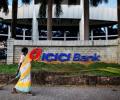
An in-line ICICI Bank result for the quarter ended March 31, 2024, has led to analysts raising target price and earnings per share (EPS) forecast on the stock. ICICI Bank, they said, appeared least vulnerable to regulatory action on its digital offerings or for risk monitoring lapses.

India's three-wheeler exports, which have been on a downhill trajectory over the past few years, are showing no signs of recovery in FY25, with key markets like Sri Lanka, Bangladesh, Nigeria, and Egypt witnessing subdued demand. In May, the country's exports plummeted 11.3 per cent year-on-year (Y-o-Y).

In response to the panic triggered by Trump's trade policies, the RBI net sold approximately $43 billion in the second half of FY25 to curb volatility, as the rupee plunged to a low of 87.95 per dollar in February this year.

Adani Group's portfolio companies posted their highest-ever pre-tax profit (EBITDA) of about Rs 90,000 crore in the fiscal year ended March 31 and had a cash balance to cover 21 months of debt servicing, the ports-to-energy conglomerate said on Thursday. The Earnings Before Interest, Taxes, Depreciation, and Amortisation (EBITDA) has more than tripled in six years - from Rs 24,870 crore in 2018-19 to Rs 89,806 crore in 2024-25 (April 2024 to March 2025).

High frequency indicators, like vehicles sales, air traffic, steel consumption and GST E-way bills, point towards a sequential pickup in momentum of economic activity during the second half of the fiscal 2024-25 and sustain moving forward, RBI Bulletin said on Wednesday. However, a strong dollar, driven by US economic resilience and trade policy pivots, could exacerbate capital outflows from emerging economies, push risk premiums higher, and intensify external vulnerabilities, said an article on 'State of the Economy' published in RBI's February bulletin.

'Consider your household's financial health and all your other goals.' 'Buying a house might seem like an urgent goal, but it is rarely the only one.'

Fresh meat and seafood delivery unicorn Licious is intensifying its talent acquisition endeavours as it pursues profitability and readies for an initial public offering (IPO) within the next 24 months. Delightful Gourmet, Licious' parent company, has named 39-year-old Karishma Gupta as its new chief financial officer (CFO). Her appointment aligns with Licious' drive for profitable growth through an omnichannel strategy.

Core retail segments like motor and health continue to report strong growth of 19-20 per cent with competitive intensity still visible in the motor OD (owner driven) segment. Commercial lines reported muted growth. Group health remains a key driver. Among the listed companies, ICICI Lombard continues to trail in the motor section while Star Health has lost its Y-o-Y retail market share although its better on a sequential basis.
MMFS is looking at a compounded annual growth rate (CAGR) of 18 per cent in assets under management (AUM) during FY23 to FY26 on the back of the strong recovery. The company has initiated risk-mitigating initiatives, including diversification into non-vehicle loans, building digital capacity and re-classification of customer profiles into affluent and mass-affluent in semi-urban segments to better target marketing.

From its highs over the past month, the stock of Procter & Gamble Hygiene and Healthcare fell 7 per cent before recovering this week. The stock has been an underperformer over the last year and has traded flat over this period.

The paint sector is seeing heightened competition with the entry of deep-pocketed groups like Aditya Birla and JSW. However, some brokerages see an opportunity in select stocks.

The K-shaped economic recovery in India from the pandemic slowdown shows in corporate results as well. The automobile sector, which represents big-ticket consumption, continues to do well and has increased its share in corporate revenues and profits while fast-moving consumer goods (FMCG) companies that sell low-ticket consumer goods are struggling with poor sales and earnings growth. The share of the automobile sector, including makers of auto ancillaries, in corporate net sales rose to a 10-quarter high of 10.05 per cent during July-September 2023 (Q2FY24) from 8.94 per cent a year earlier and 9.75 per cent in Q1FY24.
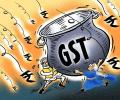
The gross GST collection rose 7.3 per cent year-on-year to Rs 1.77 lakh crore in December. The Central GST collection stood at Rs 32,836 crore, State GST at Rs 40,499 crore, Integrated IGST at Rs 47,783 crore and Cess at Rs 11,471 crore, according to government data released on Wednesday.

Despite steady loan growth, the banking sector is expected to report subdued margins in the quarter ending June 2024 (Q1FY25), driven by high demand for deposits amidst tight liquidity conditions. However, according to Bloomberg analysts, listed banks are forecasted to see a 14.5 per cent year-on-year (Y-o-Y) increase in net profit. Estimates showed that banks' net interest income (NII), and revenues from interest minus interest expenses might grow 11.9 per cent Y-o-Y.

Automobile, apparel and electronics are among sectors that see a sales boost during the festival season, a time when investors expect gains in related stocks. This year could be different: Analysts have factored in all positives and do not expect such stocks to deliver lucrative returns. "Indian households spend across sectors like automobiles, consumer durables, and consumer staples during the festival season.

Overall profitability in the agriculture sector is expected to be marginally higher at the pan-India level in the 2024-25 kharif season, driven largely by higher production and low input cost, but offset by the declining price of some produce, according to a report released by Motilal Oswal Financial Services Ltd on Wednesday. The report said that region-wise farm profitability in the northern belt was expected to be relatively better than in the southern belt, while the eastern and western belts presented a mixed bag.

Metal and mining companies, such as Tata Steel, JSW Steel, Hindalco, and Coal India, have been among the top-performing sectors on the bourses in recent months. The S&P BSE Metal Index is up 13 per cent in the past three months, rallying 29 per cent in the past year, outperforming the broader market. For comparison, the benchmark S&P BSE Sensex has only seen a 1.7 per cent increase in the past three months, with a 15 per cent gain since the end of September last year.


Larger listed domestic-focused tyre companies have underperformed the benchmarks in the last three months but exporter Balkrishna Industries has bucked the trend. The company, which exports off-highway tyres, has generated 43 per cent returns in this time compared to MRF and Apollo Tyres, which are down 5-10 per cent. In addition to better-than-expected performance in the March quarter, exports and market share gains have helped Balkrishna pull ahead of peers.

India's current account deficit declined sharply to 1 per cent of the GDP or $8.3 billion in the second quarter of this financial year, mainly due to lower merchandise trade deficit and growth in services exports, according to a RBI data released on Tuesday. The current account deficit (CAD), which represents the difference between the total amount of money sent abroad and money received from overseas across the economy, was 3.8 per cent of GDP or $30.9 billion in the July-September quarter in 2022-23. CAD was $9.2 billion or 1.1 per cent of GDP in the first quarter (April-June) of the current financial year 2023-24.
