
The majority of crypto investors in the country have invested in mainstream virtual digital assets (VDAs) such as Bitcoins, altcoins like Dogecoin, Shiba Inu, and Ethereum, followed by non-fungible tokens (NFTs) and stablecoins, a compilation of year-end reports of crypto majors CoinDCX and CoinSwitch revealed. The crypto exchange platform CoinDCX reported that 14.6 per cent of total investments on its platform were allocated to Bitcoin, while CoinSwitch saw the share of the VDA at 7 per cent.

The stock of United Spirits, the country's largest liquor company by market capitalisation (mcap), has gained 11 per cent over the past week on double-digit growth guidance, rising premiumisation trend, operationally in-line performance in the March (Q4FY24) quarter and a rally in consumer stocks. The revenue growth of the company came in at 7 per cent year-on-year (Y-o-Y) mirroring the growth of the prestige and above (P&A) segment. This segment comprising premium brands accounts for 88 per cent of the revenues.

A grooming branch network for servicing HNIs is a stepping stone for a full-fledged wealth management business.

During this summer, Indian travel buffs are opting for destinations that provide an escape from the ominous heat, along with coastal regions within the country and countries offering visa-free travel.

Health insurance premium growth has slowed after touching record highs during the Covid-19 pandemic due to tapering demand from retail consumers amid affordability issues. According to General Insurance Council data, health insurance premiums grew by 10.44 per cent year-on-year (Y-o-Y) in the Apr-Jan period of FY25 in comparison with 20.79 per cent in the year-ago period. It was around 23.57 per cent in FY23, and 25.89 per cent in FY22.

Tata Group remained India's largest business conglomerate in market capitalisation in calendar year 2023 while the Mukesh Ambani camp raced ahead of the Adani businesses to become the second-largest. The Tata companies ended 2023 with a combined group market capitalisation of Rs 28.68 trillion, up 35 per cent from the Rs 21.2 trillion at the end of December 2022. Ambani's group mcap is Rs 19.42 trillion at the end of CY23, up 10.7 per cent from the Rs 17.6 trillion a year ago.

India's used car market, which has been growing steadily at 10-12 per cent over the last 2-3 years, is expected to reach $40 billion in FY26.

Hero MotoCorp anticipates a big rebound in two-wheeler (2W) sales in rural India over the next four to eight quarters, driven by favourable factors such as a decent monsoon, rising crop prices, improved employment conditions, and increasing consumer confidence, its chief executive officer (CEO) Niranjan Gupta said on Wednesday. Amid tepid rural sales, he stated that there is a "strong case" for GST (goods and services tax) on entry-level two-wheelers, which are under 125 CC, to be moved down from 28 per cent to 18 per cent as they are used by "masses".

The stock of Voltas, the country's largest room air- conditioner (RAC) maker, is up 22 per cent in the past three months. Robust demand on the back of a sweltering summer, distribution expansion, slew of launches and backward integration are expected to forge a good operating performance for the company. In the core RAC segment, there are multiple triggers for the company.
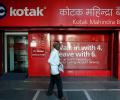
Kotak Mahindra Bank's net interest margin is likely to swell after the Reserve Bank of India (RBI) lifted its restrictions on the private lender that barred it from issuing fresh credit cards and onboarding new customers through digital mode, brokerages said on Thursday. The bank's net interest margin (NIM) has seen a decline of over 35 basis points (bps) since the restrictions were imposed by the regulator in April 2024.

'A cutback in hiring and compensation growth by IT companies will have a significant impact on consumer demand, especially in the urban sector of the economy.'
GST collections in October stood at Rs 1.72 lakh crore, the second highest-ever, the finance ministry said on Wednesday. The collections are 13 per cent higher than the Rs 1.52 lakh crore collected in October 2022.

Max Life Insurance plans to hire 30,000 agents and open 50 to 100 new offices in the financial year 2024-25 (FY25) to drive premium growth, said Prashant Tripathy, managing director and chief executive officer of the company. The private insurer's total agent count will rise to 1,30,000 in FY25. It added 47,957 agents in FY24, 54 per cent more than the year before.

'In the second half of 2024, about 60% of startup jobs will be taken by entry-level candidates with 0-3 years of experience.'

How is it that tomatoes recorded a price fall in official statistics when it remained unaffordable for the common person in June?

Amid slowing volume sales among India's major automakers, Toyota Kirloskar Motor (TKM) has defied the trend with strong growth, driven by demand for hybrid vehicles and a reliable product line up. The company expects this momentum to continue in 2025. "The overall response to our cars has been fabulous. So, we foresee the same momentum in 2025 as well," Sabari Manohar, vice-president, sales-service-used car business, TKM, said.

'We added a significant number of freshers in Q1. You will see a good number of hiring in Q2 as well.'

India is likely to grow by 7.5 per cent in the first quarter of the current financial year, driven by rising aggregate demand and non-food spending in the rural economy, according to an article in the RBI's May Bulletin released on Tuesday. The Indian economy has demonstrated marked resilience in the face of geopolitical headwinds impacting the supply chain, said an article on the state of the economy published in the May Bulletin.

About 99,165 electric cars were sold in India in 2024, but electric car penetration -- share of electric car sales in total sales -- was just about 2.5 per cent.

The Nifty IT index, data shows, has outperformed the markets in each of the last four election years post the result. announcement.

Ola Electric share price strategy: The meteoric rise of Ola Electric share price has left analysts and investors bewildered. Yet, they suggest investors hold on to the stock as it remains a pure "momentum" play. Since its listing on August 9, the stock has surged 92 per cent (till August 19) over its issue price of Rs 76, taking its market capitalisation to a little over Rs 63,000 crore.


Amid low growth elsewhere, gross value added (GVA) growth in agriculture and allied activities recovered during the second quarter of the current financial year (Q2FY25) to 3.5 per cent year-on-year (Y-o-Y) due to strong monsoon. Experts feel that the rains have laid the foundation of an even better GVA performance in subsequent quarters. GVA growth in the first quarter of FY25 was 2.0 per cent.

Exports to eight out of India's top 10 destinations, including the Netherlands, the United States (US) and the United Kingdom (UK), witnessed positive growth during the first six months of FY25, despite muted global demand amid geopolitical challenges, commerce department data showed.

With crude palm oil prices on the rise, companies have started to jack up rates of soaps and edible oils in order to pass on the hike to consumers. Crude palm oil, one of the main ingredients in the manufacture of some consumer goods, saw a price rise of 45.2 per cent in the last three months. One of the country's largest consumer companies, Hindustan Unilever, said it has already started to take price increases in the skin cleansing category.

'Each state is unique, but when it comes to finance, the fundamentals cannot be different.'

As the fight for deposits intensifies, the cost of money will rise and the margin will be under further pressure, points out Tamal Bandyopadhyay.

'Currently, EVs are about 30-50 per cent more expensive than ICE vehicles. I believe the inflection point for EVs will come when this price gap narrows to 20-25 per cent. That's when people will start coming in.'

Even though Bharat Forge's performance in the July-September quarter broadly met Street estimates and defence orders are on the rise, the subdued outlook for its global business has prompted some brokerages to adopt a cautious stance on the company. Analysts have reduced the company's earnings per share (EPS) estimates to account for the slow recovery of its overseas subsidiaries. Valuations are also trading at long-term averages, which could limit potential upsides.

Weighed down by the oil-to-chemicals (O2C) business, Reliance Industries (RIL) results for the April-June quarter (Q1) of 2024-25 (FY25) missed Street estimates. A 14 per cent fall in the O2C segment's operating profit compared to the year-ago quarter and a 22 per cent sequential decline pulled down the consolidated performance. The O2C segment accounts for a third of the overall operating profit and about 60 per cent of the attributable consolidated profit.
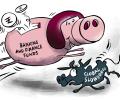
Even as banks and finance companies are reporting record-high earnings, their weighting in the benchmark National Stock Exchange Nifty50 Index has seen a downward trajectory. Investors expect a stronger performance from other sectors in the new year. Currently, banking, financial services and insurance (BFSI) companies collectively hold a weighting of 34.5 per cent, down from 36.7 per cent at the end of December 2022 and a record high of 40.6 per cent at the end of December 2019. This represents the sector's lowest weighting in the index since December 2021 when it stood at 33.7 per cent.

After a successful tie up in traditional ICE and strong hybrid models, Suzuki and Toyota are now set to take their partnership to the next level: the electric vehicle segment. Both the Japanese auto giants recently announced a plan to produce Suzuki eVX-based SUV which will be sold under Toyota brand across the globe. This electric SUV, bearing Toyota's logo, will go for production at Suzuki Motor Group (SMG) facility in Hansalpur, Gujarat beginning the spring of 2025, marking the first EV launch for both companies in India.

However, while Splendor's annual sales surged 31.7 per cent to 3.638 million units between 2019 and 2024, Hero's other models suffered sharp drops.

Indian smartphone sales, traditionally dominated by the entry and mid-range segments, are set to change as high-end and super-premium devices capture consumer attention. The premium category is expected to grow by more than 20 per cent in calendar year (CY) 2024 compared to the previous year. While the overall smartphone market is expected to w

Tata Motors reported a consolidated net profit of Rs 17,483 crore (adjusted for exceptional gains and losses) for Q4FY24, surpassing TCS' consolidated net earnings of Rs 12,434 crore. For the automotive major, this marked a 213.7 per cent year-on-year increase in the bottom line, from Rs 5,573.8 crore a year ago. In contrast, India's biggest IT firm saw a more modest Y-o-Y growth of 9.1 per cent in net profit, from Rs 11,392 crore.

Fast-moving consumer goods (FMCG) companies anticipate sustained volume pressures in the January-March quarter (Q4) coupled with sluggish rural growth during the period. Brokerages estimate top-line growth to be in low single digits in the quarter. Also, the late onset of winter had an impact on demand for winter products which range from moisturisers to hot beverages.

Nearly 200 of the 789 aircraft of Indian carriers are expected to be grounded by the end of March due to ongoing supply chain issues, according to the report released on Monday by CAPA India. At present, 161-166 aircraft are grounded. "More aircraft will be on the ground than expected due to serious supply chain issues, which were supposed to improve but actually deteriorated," it noted.

There has been no change in Tata Steel's strategy on operations in the United Kingdom (UK), company chairman N Chandrasekaran has told shareholders. The statement comes amid growing concern about the restructuring plan in the face of change in government in the UK. Tata Steel's plan for the UK entailed a 1.25 billion investment plan agreed upon by the Conservative party-led government in September last year.

Airlines will report losses in FY16 but 35% less Y-o-Y

SBI Q3FY24 result review: A higher-than-factored weakness in the October-to-December quarter (Q3) results of State Bank of India (SBI), for financial year 2023-24 (FY24), has prompted brokerages to cut earnings estimates for the ongoing financial year. They, however, have maintained 'Buy' ratings on the stock, revising target price upwards in some cases, owing to the stock's recent underperformance relative to its peers.
