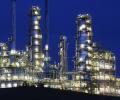
BPCL's impending privatisation and RIL's stake sale to Saudi Aramco raise questions about the future of the West Coast Refinery, once touted as the world's largest.

Historically, India was a major buyer of Iranian crude, importing significant volumes of Iranian light and heavy grades due to strong refinery compatibility and favourable commercial terms.

A US-sanctioned tanker carrying Iranian crude oil is heading to India, marking the resumption of oil imports from Iran after seven years.

24 Indian-flagged vessels with 677 Indian seafarers were currently located west of the Strait of Hormuz, and four vessels with 101 Indian seafarers were stationed east of the strategic waterway.

The United States has announced it will not renew sanctions exemptions for the purchase of Russian and Iranian oil, ending a 30-day waiver that allowed some countries, including India, to continue importing Russian oil despite sanctions related to the Ukraine war.

The Kremlin has announced it will not disclose data on crude oil exports to India, citing concerns about 'ill-wishers'. This decision follows reports of increased Russian oil supplies to India and China amid geopolitical tensions.

The tanker reportedly switched off its Automatic Identification System (AIS) transponder while navigating the high-risk stretch of the strait and reappeared on tracking systems on March 9.

India is well-stocked with inventories of crude oil and key petroleum products, including petrol, diesel, and aviation turbine fuel (ATF), to deal with short-term disruptions as the war intensifies in West Asia, Union Minister of Petroleum and Natural Gas Hardeep Singh Puri said on Tuesday.
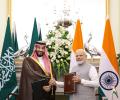
India and Saudi Arabia on Monday decided to expedite implementation of the $50 billion West Coast refinery project, and identified energy, defence, semiconductor and space as areas for intensified cooperation during talks between Prime Minister Narendra Modi and Saudi Crown Prince Mohammed Bin Salman Bin Abdulaziz Al-Saud.

When everyone has footage and no one can verify it, the loudest voice wins, notes Prem Panicker who begins a daily blog on the War in the Middle East.
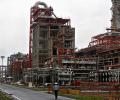
The Rs 3-trillion West Coast or Nanar refinery has all the potential to become India's flagship petrochemicals project, with the planet's largest oil producer Saudi Aramco as its biggest shareholder. Yet the locals don't see the plant as a harbinger of better times.
Estimated to cost $44 billion, the project was expected to be commissioned by 2025.

India and Saudi Arabia on Monday called on states to reject the use of terrorism against other countries and prevent access to weapons, including missiles and drones, to commit acts of terror.

Shiv Sena has so far expressed concerns over car shed for the city's planned metro network, the bullet train and the West Coast refinery projects.
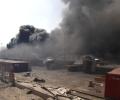
At least four people were killed and 516 others were injured on Saturday in a massive explosion and fire at the Iranian port city of Bandar Abbas, more than 1,000km south of capital Tehran, according to officials and state media, Al Jazeera reported.
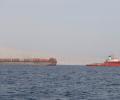
US strikes on Iran's three main nuclear facilities have once again raised concerns that Tehran might shut down the Strait of Hormuz - one of the world's most critical chokepoints, through which a fifth of global oil and gas supply flows.

Indian Oil Corporation may expand its Haldia refinery in West Bengal to 7.4 million tonnes from 6 million tonnes, IOC chairman M S Ramachandran said on Monday.
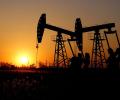
India plans to release about 5 million barrels of crude oil from its emergency stockpile in tandem with the US, Japan and other major economies to cool prices, a top government official said on Tuesday. India stores about 38 million barrels of crude oil in underground caverns at three locations on the east and west coast. Of this, about 5 million barrels will be released, starting as early as 7-10 days, the official, who wished not to be named said.
State-owned Indian Strategic Petroleum Reserves Ltd (ISPRL), which operates India's strategic crude oil storage, will make awards by December to lease around 1 million tons of crude oil storage space (7.3 million barrels) at two of the country's three existing Strategic Petroleum Reserves (SPRs), around a fifth of the total SPR capacity. This will enable the refilling of crude caverns even as escalating hostilities in the Gulf threaten disruptions in crude supplies, two industry sources said.

With the investment, the company's refining capacity will rise 60 per cent from the present 65.7 million tonnes per annum (mtpa) to 105 mtpa by 2022.

Billionaire Mukesh Ambani on Thursday unveiled the next phase of growth at Reliance Industries Ltd, with retail and telecom worth over $100 billion each, doubling revenues and pre-tax profit in 3-4 years, new energy business becoming profitable by 2031, and core oil and chemical business continuing to be the robust growth engine. The sprawling conglomerate with interests in refining, oil and gas, petrochemicals, telecom, retail, and media is on track to more than double in size before the end of the decade, Ambani, chairman and managing director of Reliance, told company shareholders.

Aramco also plans to invest in building India's largest oil refinery on the country's west coast.

According to data shared with the Lok Sabha, 19 road projects awarded after May 2014 were facing delays

The unexpected missile attack on a second India-bound ship carrying Russian crude, just three weeks after the first, has complicated matters for domestic refiners. India now counts the Vladimir Putin-led nation as its biggest oil supplier, according to Paris-based market intelligence agency Kpler, and these attacks come on top of US sanctions since December, where vessels that bring crude to India are facing heightened scrutiny. Panama-registered Pollux, which loaded crude at the Sheshkaris oil terminal in the Russian port of Novorossiysk on January 24, was scheduled to deliver the medium, sour Urals grade to Paradip port on February 28.
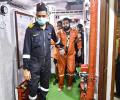
Faced with high-speed wind and swelling sea, the ill-fated barge Pappa-305, with 261 crew onboard, lost anchors and smashed into an unmanned platform before sinking in the Arabian Sea after its captain ignored weather warnings and chose not to move the vessel away from the path of severe cyclonic storm Tauktae, a survivor recounted.

'It will be important strategically and geographically because there is no port in India which is as close to the international shipping route as Vizhinjam.'

Prime Minister Modi arrived in Riyadh late Monday night on a two-day visit to Saudi Arabia to participate in the high-profile financial summit Future Investment Initiative, dubbed "Davos in the desert", an initiative of Saudi Crown Prince Mohammed bin Salman.
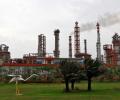
The agreement came in after the Ruias agreed to clear most of the Rs 26,000-crore dues to the lenders on completion of the transaction.

India is the 4th largest oil consumer after the US, China and Japan.
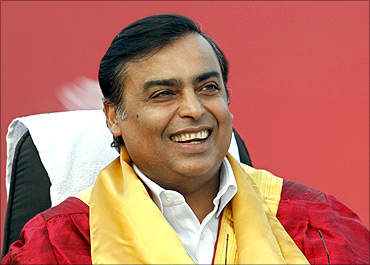
The company had received a loan restructuring package from banks under the 5/25 scheme last year.
Experts say local demand, government policies in retail and refining sector are attracting foreign players.
India has already pipped Japan as the world's third-largest oil consumer.

India and the US had on July 17 signed a preliminary agreement for cooperating on emergency crude oil reserves, including the possibility of India storing oil in the US emergency stockpile.

India expects to remain unscathed this time, mainly because it is in a sweet spot as the world's third largest oil consumer, after the US and China, says Subhomoy Bhattacharjee.

According to the SRC, the evacuation of eight lakh people is the largest-ever evacuation operation in the country.
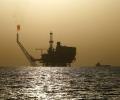
Both crude benchmarks are now down around 20 per cent since their last peak in June

Central Industrial Security Force chief OP Singh briefed Union Home Minister Rajnath Singh on the heightened arrangements at airports, ports and other vital installations guarded by the central force.
 © 2026 Rediff.com - Advertise with us - Disclaimer - Privacy Policy - Sitemap - Feedback - About us - Terms of use - Grievances