
India Ratings on Mondy projected a 7.7 per cent growth this fiscal driven by consumption demand.
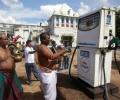
The change from wholesale to retail inflation as an anchor means that the weightage of diesel in inflation has decreased

If you have indeed chosen your company wisely and have not paid too high a price to buy a part of it, you can indeed expect compounding to work in your favour and a great overall return over the long term. Inflation or no inflation, that would surely be a good position to be in!

The Whole Price Index inflation figure for June is slated to be released tomorrow. "The WPI forecast is 11.12 per cent for June. . .the RBI is slowly withdrawing from its low policy rates regime and the trend is going to continue, given the inflationary pressure in the economy," IEG said in its monthly bulletin.

The Planning Commission on Friday said that high inflation, primarily driven by rising food prices, is likely to ease in the next few months on the back of an expected good rabi crop.

Data on primary and fuel items would continue to be released on weekly basis.

The new wholesale price-based inflation basket will have as many as 676 products, including LCD TVs, mobile phones, and packaged drinking water among others, and is likely to be rolled out in June or July.

The Reserve Bank of India (RBI), in its quarterly monetary and macroeconomic review, has expressed concerns on the existing high levels of inflation rate when based on the consumer price index (CPI).
The worst of recession could coincide with the run-up to the elections.

The country saw two straight years of deficient monsoons.
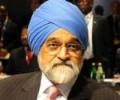
The Planning Commission on said food prices will come down in the next two months easing the overall inflation, which is currently at over 8.5 per cent.
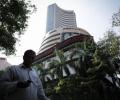
The 50-issue Nifty fell 29.60 points or 0.34 per cent to close at 8,642.55

The WPI inflation currently is ruling around 8.6 per cent. He said the duties like 5 per cent import duty on crude oil was abolished when international crude price touched a record high of $147 a barrel.

Terming the RBI action on Wednesday as a "pleasant surprise", analysts today cautioned that possibility of a rate hike in the future cannot be ruled out. Urijit Patel committee's report on monetary policy would clear the air on RBI's future stand, they added.
However, some analysts say RBI Governor Raghuram Rajan may delay the rate cuts amid mounting concerns over the government's fiscal health.
If the difference between provisional and final wholesale price index (WPI) numbers is taken as a leading indicator, the headline inflation rate, which is hovering around zero, is unlikely to change direction.

With the advancement of the base year and probably a revision of commodities in the index and their weights, it is expected that the index would provide a better picture of the current scenario of prices. The finance minister said information on weekly prices of manufactured products is highly meagre.
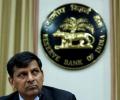
Here is some background on the candidates seen as potential successors to Rajan at the RBI
Recent estimates show that foodgrain production in 2016-17 has touched a new record of 273.4 million tonnes or 8.7 per cent higher as compared to last year.

Experts pointed out that the government's poor planning and lack of investment in farm infrastructure have led to food shortage in the country, which is been capitalised by traders.
Already witnessing a sharp decline in inflation, India would see deflation or reduction in general price level from next month due to slackening demand, financial services firm Goldman Sachs said on Monday.

In May, price growth for drugs was in negative territory at (-)1 per cent
"This year (2009-10), our WPI is low and I don't see any problem on the horizon which could destabilise us except oil prices which remain a question," said Rajya Sabha MP and former Reserve Bank Governor Bimal Jalan. On the high fiscal deficit, Jalan said he did not think stimulus packages posed a problem. On taxation, he said it would not be good for the country not to have a reasonable rate of tax on profit and dividend.
.jpg)
The rupee is set to breach the Rs 60-a-dollar mark again this week as the Street expects foreign institutional investors to continue pulling out of domestic markets. According to the street, this would result in government bond yields rising.
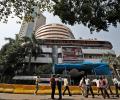
Participants are keeping an eye on the Winter Session of Parliament, which started today, and US fiscal policies to be followed by President-elect Donald Trump
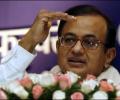
The Economic Survey has acknowledged the measures taken by the UPA government on the macro stabilisation front and the successes achieved in containing the current account deficit and reducing the fiscal deficit.
The move aimed at blunting Finance Ministry, RBI's opposition to monthly reporting.
While inflation dropped to 0.44 per cent for the week ended March 7, the BPLR of the top five Indian banks was in the range of 12.25-16.75 per cent. In the corresponding period last year, inflation was estimated at 7.78 per cent, while lending rates were in the range of 12.25-12.75 per cent. Real interest rate is the difference between WPI-based inflation and the prevailing benchmark prime lending rate.
The finance ministry and Reserve Bank of India have reservations on the computation of inflation data on a monthly basis, a senior government official said on Thursday. Finance Minister P Chidambaram will have to meet the Reserve Bank to reach a consensus on the committee's suggestions to have a new series of WPI on a monthly basis, he said on the sidelines of a function to release the results of the Fifth Economic Census.

The WPI inflation stood at negative 2.4% in May 2015, compared with a negative 2.65% in April 2015.

Global banking major, HSBC has retained its India GDP growth forecast of 6.2 per cent in FY10 but hiked the outlook for next fiscal by 0.5 per cent to 8.5 per cent given the economic recovery.

This is a terrible situation for a growing economy to be in, and the central bank would be expected to act to correct the situation.
While third quarter results do not reflect it, the sector's reluctance to cut interest rates points towards either high NPAs or wrong strategies.
While the finance minister is in favour of sacrificing some growth to curb inflation, the problem lies in inflation being more a supply-side than a demand-led problem.

Rising prices of food items and industrial goods are likely to push inflation to eight per cent in the next six months, much above the RBI's projection of 5 per cent, global financial services firm Nomura has said.
Inflation is far too important a problem to have to rely on an inadequate and, ultimately, unreliable database for solutions.
Finance Minister Chidambaram said rising prices of primary food articles was worrying him. High food prices the world over and a supply-demand mismatch were behind the high prices, he said, adding this was beyond the influence of the monetary policy.
The Reserve Bank of India may soon be given the job of both collecting and processing inflation data.

The 30-share Sensex ended down 66 points at 28,438 and the Nifty ended down 15 points at 8,633.
Food inflation in April stood at 6.08 per cent, while the overall WPI inflation fell to a three-year low of 4.89 per cent.
