
The recent softening of inflation is purely a base effect at play.

The S&P BSE Sensex dropped 1 points to end at 26,396 and the Nifty50 slipped 2 points to end at 8,109.

It may begin that way with, say, supply shortages in farm products due to adverse weather, but if monetary policy is eased to accomodate this, the effects become permanent.

The agriculture sector has witnessed feeble growth on account of drought for two successive years

Earning woes drag markets lower; TCS, HUL lead fall.

Zero inflation will pave way for rate cuts in the next RBI policy.

Food prices saw a sharp rise of 3.12 per cent in March compared to 2.69 per cent in the previous month

What differentiates Rajan from his predecessors is his proactive steps in anticipating a problem and coming up with out-of-the-box solutions

BSE Auto was the top sectoral loser with a 4.6% fall followed by realty sector down 3.7% and consumer durables 3.6% post disappointing IIP numbers

It is the six per cent target RBI is more concerned about.
Credit as a proportion of GDP is low in India by international standards.
The rupee and a BMW both move fast. So will a rise in the rupee make the BMW move even faster?

Fifty per cent of bank restructured assets were in infrastructure, steel, power and telecom sectors.

In December, the index fell a provisional 0.73 per cent.
There is considerable evidence to suggest that the Indian inflation problem is a has-been problem, a problem that has ceased to be.

RBI recently cut repo by 0.25 percentage point, taking the rate to 7.25 per cent in three reductions since January.
Inflation fell for the second consecutive week to 7.02 per cent for the week ended December 4, mainly due to cheaper primary and fuel products.

In December 2014, it was (-)0.50 per cent.

The report further noted that inflation is expected to fall to 4.5 per cent by quarter ended March 2017.

A host of factors including the reform measures taken by the government and decline in global oil and commodity prices have led to lower inflation, the Finance Ministry said on Wednesday.

In spite of Governor Raghuram Rajan's repeated concerns about inflation, many think there may still be a loosening of stance.
In industrialised countries inflation is less than 2 per cent, while most of the developing countries experience nearly double-digit or more inflation
Inflation rose to 4.77 per cent for the week ended September 23 from 4.56 per cent in the previous week, mainly due to spurt in prices of pulses, wheat and iron ore.

"The poor will not suffer disproportionately due to bouts of sharp inflation, and the middle class will not see its savings eroded," Raghuram Rajan said.
Amid spiralling prices of essential commodities in the country, the government is planning to revamp the method for measuring inflation with the help of World Bank's technical assistance.
Inflation rose marginally to 3.75 per cent during week ended September 17 from 3.53 per cent a week ago, mainly due to increase in the prices of minerals, manufactured products and non-food essential items.
High oil prices are expected to push up inflation to 3.9 per cent in the next three months, hardening interest rates, economic think-tank IEG has said.
The Value Added Tax system has no adverse impact on consumer prices, and revenue earnings under the new regime have shot up by 15.3 per cent during the first quarter of the current fiscal, Finance Minister P Chidambaram told the Rajya Sabha on Tuesda
Inflation declined for the fourth consecutive week ended May 21 to 5.38 percent mainly due to cheaper primary articles, including food and fuel products, even as fears that it could spurt looms large over an imminent price hike in fuels.
Inflation revised upwards to 7.91% for week ended July 24 from provisional level of 7.51%.
Inflation touched 5.48 per cent for the week ended April 9, mainly due to costlier vegetables, fruits, cooking gas and edible oils.
Inflation breached the 5.0 per cent figure with price level rising for the second consecutive week by 0.30 per cent to 5.3 per cent in the week ended March five despite cheaper fruits and vegetables.

Infrastructure and inflation targeting are expected to be top priorities for the new Reserve Bank of India governor, says A V Rajwade.
Inflation fell for the tenth consecutive week to 5.01 per cent in the week ended February 5, touching the lowest level after the UPA came into power, due to cheaper vegetables, fruits and edible oils.
Inflation shed another 0.12 per cent to tick eight months' low of 5.25 per cent for the week ended January 29, despite costlier fruits and vegetables.
Inflation dropped by 0.05 per cent to 5.37 per cent, touching a 34-week low, for the week ended January 22, mainly due to cheaper vegetables, fruits, edible oils, minerals, fuel and manufactured products.
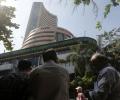
Brokers said a flurry of buying by investors in blue-chips mainly influenced the sentiment.
Inflation stood unchanged for the second consecutive week at 4.4 per cent for the week ended April 17 despite vegetables and tea prices skyrocketing and a marginal hike in some of the manufactured products, including cement.
Inflation remained static at 7.1 per cent during the week ended October 16 despite rise in prices of fuel and manufactured products.

Sensex has shed over 150 points in afternoon trade.
