
The latest numbers are the lowest since December 2009 when headline inflation was at 7.15 per cent.
The common man will get no respite from rising prices for another six months, with the government on Wednesday saying that inflation, currently hovering above 9 per cent, will continue to remain high till December.
Overall, vegetables were 47.06 per cent cheaper during the week under review, from the same period last year.
Food inflation is back in double digits after a gap of a month-and-a-half and stood at 10.60 per cent for the week ending October 8 on the back of costlier vegetables, fruits, milk and protein-based items.
Food inflation remained in the negative zone for the third straight week, at (-)0.42 per cent for the week ended January 7, mainly due to fall in prices of onion and vegetables.

Inflation, as measured by the Wholesale Price Index, was 7.55 per cent in May. In June last year, it was 9.51 per cent.

RBI Governor Raghuram Rajan is regarded as credible by global financiers.
Food prices fell for the second consecutive week as food inflation remained in the negative zone at (-)2.90 per cent for the week ended December 31, 2011.

After fighting inflation for more than two years, Reserve Bank of India (RBI) Governor Duvvuri Subbarao finally managed to bring it below the five per cent level - the tolerance level of the central bank - in FY14.
Food inflation fell sharply to a near four-year low of 1.81 per cent for the week ended December 10 as prices of essential items like vegetables, onion, potato and wheat declined.
Tata Motors was the top Sensex loser, down nearly 5%
Overall food inflation rose to 10.74 per cent in May, from 10.49 per cent in the previous month. Food articles have 14.3 per cent share in the WPI basket.
Eggs, meat and fish also became 13.36 per cent more expensive on an annual basis, while cereal prices were up 4.13 per cent.

There are glaring anomalies with Indian data and that could lead to wrong policy prescriptions.
During the week ended August 13, fruits became dearer by 27.01 per cent and eggs, meat and fish by 13.37 per cent on an annual basis.
On an annual basis, prices of food articles went up by 8.19 per cent in July, which is lower than the 8.38 per cent inflation recorded in June.

RBI's unique focus on WPI inflation is misguided even as demand-driven factors have become relatively less important.

Ahead of the monetary policy review on May 3, Reserve Bank of India (RBI) Deputy Governor Shyamala Gopinath said inflation was a concern, mainly on account of the high prices of non-food manufacturing goods.
Headline inflation rose to 9.44 per cent in June on the back of rising prices of fuel and manufactured products, which may prompt the Reserve Bank to raise key rates again in its quarterly policy review later this month.
As per data released by the government on Thursday, pulses became over 9 per cent cheaper year-on-year during the period under review.
The whole price index, used to measure rise in prices of a range of products in a consumer basket, stood at 9.06 per cent in May.

The Reserve Bank of India (RBI) kept its key policy repo rate unchanged at 8.0 percent on Tuesday, as widely expected, while expressing concerns about risks to its target to bring consumer inflation down to 6 percent by January 2016.
An appropriate policy response always warrants a correct diagnosis of the problem. That is why the recent trend in inflation and its causes, and the inflation outlook take on exceptional importance ahead of the RBI's policy review on January 25.

The finance ministry and RBI must get less conservative and improve co-ordination.

The March Wholesale Price Index-based inflation was at (-) 0.85 per cent.
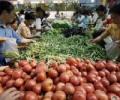
The Economic Survey tabled today in the Lok Sabha by the Finance Minister Shri Pranab Mukherjee, says that the whole sale price index (WPI) of food inflation rose to 13.6 per cent in December 2010 on account of unfavourable agricultural supply conditions coupled with the waning of base effects.

In a surprise move, the Reserve Bank on Wednesday left the repo rate unchanged at 7.75 per cent, while the cash reserve ratio too is retained at 4 per cent.

RBI is closely monitoring monsoon.

Food and fuel are two perennial areas of concern.
As per data released by government on Thursday, price of pulses became cheaper by 5.63 per cent year-on-year.

Infosys, Tata Motors, ONGC, TCS and GAIL are the top 5 losers.
Food inflation surged to a four-and-a-half month high of 9.90 per cent during the week ended July 30 on the back of costlier onions, fruits, vegetables and protein-based items.
The empowered group of ministers on fuel pricing is to meet this week to take a view on the price of diesel.

Benchmark share indices opened lower on Monday, amid weak global cues, as investors turned cautious ahead of the US Federal Reserve stance on interest rate.
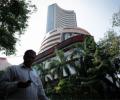
Profit-booking and selling pressure on below-normal monsoon forecast, marred sentiments, traders said.
The latest numbers likely to be seen by the government as a silver lining after the slowdown in economic growth during the first quarter.

In a major decision to bring petroleum products in line with market rates, the government on Friday freed petrol from all pricing controls and hiked diesel prices by Rs 2 a litre.

Unabated buying by domestic institutional investors and wholesale price inflation falling to 2.60 per cent in September, helped both the key indices to scale new highs.

The wholesale price index inflation is projected at 6.4 per cent for 2017-18.

Overall inflation, which has been in double digits for the last five months, was 10.55 per cent in June.
