
The Supreme Court, while hearing a bail plea in a murder case, made significant observations about the changing nature of society, the vulnerability of the modern generation, the impact of nuclear families, and the role of technology in child-rearing.
The Supreme Court has set aside the bail granted to Sonam Raghuvanshi, accused of murdering her husband Raja Raghuvanshi during their honeymoon in Meghalaya. The court ordered her to surrender within three weeks, allowing for a fresh bail application if the trial does not conclude within six months.

The Supreme Court has asked the Rajasthan government for an update on the health of self-styled godman Asaram, who is seeking interim bail on medical grounds. The court expressed concern about his well-being, stating "We don't want any untoward thing to happen." Asaram's counsel claims he is a high-risk patient, while the Solicitor General noted he was recently seen walking in Ayodhya and Kashi Vishwanath. The apex court is hearing his plea challenging the Rajasthan High Court's decision to uphold his conviction and life sentence for the rape of a minor.
The Supreme Court will hear a plea from the Meghalaya government challenging the bail granted to Sonam Raghuvanshi, accused of murdering her husband during their honeymoon. The case hinges on a legal question regarding a typographical error in the arrest memo and whether it justifies bail in a murder case.
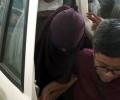
The Supreme Court has questioned the conduct of Sonam Raghuvanshi, accused of killing her husband during their honeymoon in Meghalaya, suggesting she surrender and face trial. The court is also examining whether a typographical error in the arrest memo justifies her bail.
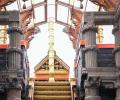
The Supreme Court observed that Hinduism is a way of life, stating that mandatory temple visits or rituals are not necessary to be considered a Hindu; even lighting a lamp at home suffices.
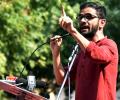
The Supreme Court granted interim bail to two Delhi riots accused, while addressing concerns about conflicting views on bail under the Unlawful Activities Prevention Act (UAPA). The court referred the question of law on whether prolonged incarceration can override UAPA restrictions to a larger bench.

A nine-judge Supreme Court bench has reserved its order on petitions related to discrimination against women at religious places, including the Sabarimala temple, and the scope of religious freedom.
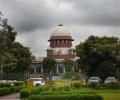
The Supreme Court of India has observed that the practice of excommunicating Parsi women for entering into interfaith marriages is prima facie discriminatory, emphasising that the right of conscience is a birthright.

The Supreme Court of India has voiced concerns about the potential consequences of individuals questioning religious practices in constitutional courts, warning it could lead to the fragmentation of religions and civilisation. A nine-judge Constitution bench is hearing petitions related to discrimination against women at religious places and the scope of religious freedom.

The Supreme Court of India has stated that religious institutions must have structure and norms for their functioning, emphasising that the right to manage a religious institution does not imply an absence of order.
The Supreme Court of India has dismissed the use of information from 'WhatsApp University' as evidence in a case concerning religious freedom and discrimination against women at religious sites, including the Sabarimala Temple.
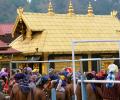
The Shabari story in the Ramayana found mention before a nine-judge constitution bench of the Supreme Court on Wednesday while hearing petitions related to discrimination against women at religious places, including the Sabarimala temple in Kerala.
The Supreme Court of India is hearing petitions related to discrimination against women at religious places, including the Sabarimala temple in Kerala, and the scope of religious freedom practised by multiple faiths.

The Centre has supported the restriction on women of menstruating age entering Kerala's Sabarimala temple, arguing that the Supreme Court's 2018 judgement assumes male superiority.
The Supreme Court has stated that roads cannot be blocked for religious activities and that while religious denominations have autonomy in worship, the government can interfere if secular activities are affected.
The Travancore Devaswom Board (TDB), managing the Sabarimala temple, argued in the Supreme Court that religious beliefs should be judged subjectively by the community, as the court hears petitions related to discrimination against women at religious places.
The Supreme Court is hearing petitions related to discrimination against women at religious places, including the Sabarimala temple. A nine-judge bench is examining the scope of religious freedom and the exclusion of women based on age and menstrual status.

The Supreme Court questioned the chief priest of the Sabarimala Ayyappa Temple regarding the constitutionality of preventing believers from touching the deity, during hearings on discrimination against women at religious sites.

The Supreme Court of India granted bail to a Punjab resident accused of attempt to murder, emphasising that incarceration without trial is a form of punishment. The court noted the accused had been in jail for two years without the trial commencing.
The Supreme Court of India has asserted its jurisdiction to determine what constitutes a superstitious practice within a religion, during a hearing on petitions related to discrimination against women at religious sites.

The Supreme Court is reviewing the detention of climate activist Sonam Wangchuk under the National Security Act, considering his health condition and allegations of inciting unrest in Ladakh.
A nine-judge Supreme Court bench has commenced hearing on petitions related to discrimination against women at religious places, including the Sabarimala temple, and the scope of religious freedom across faiths.
The Supreme Court of India questioned the Centre regarding the eligibility of non-devotees to challenge the customs of the Sabarimala temple in Kerala, during a hearing on religious freedom and discrimination against women at religious sites.

The Centre has informed the Supreme Court that the restriction on women of menstruating age entering Kerala's Sabarimala temple is a matter of religious faith and denominational autonomy, falling outside the purview of judicial review. Solicitor General Tushar Mehta argued that courts should not apply 'secular standards of reason' to religious practices.
The Centre has asked the Supreme Court to reconsider its judgements decriminalising adultery and same-sex relationships, arguing they were based on a subjective application of 'constitutional morality'.

The Supreme Court of India has emphasised the importance of open access to all temples and 'maths' for everyone, warning that excluding any denomination would negatively impact Hinduism and divide society. This statement was made during hearings on petitions related to discrimination against women at religious sites and the scope of religious freedom.
The Supreme Court has directed the central government to provide accurate transcripts of videos related to climate activist Sonam Wangchuk's detention, emphasizing the need for precision in translations, especially with the advent of Artificial Intelligence.
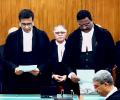
Karnataka high court Chief Justice P B Varale was on Thursday administered the oath of office as a Supreme Court judge by Chief Justice of India Justice D Y Chandrachud in New Delhi.
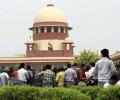
The Supreme Court has upheld a Madras High Court decision prohibiting animal sacrifice and granting limited prayer rights to Muslim devotees on the Thiruparankundram hills in Tamil Nadu.

Activist and scientist Sonam Wangchuk, currently lodged in Jodhpur Central Jail, was taken to AIIMS Jodhpur for a medical examination following concerns about his declining health. The Supreme Court has requested his medical report.
The Supreme Court is reviewing the detention of climate activist Sonam Wangchuk after his wife, Gitanjali J Angmo, alleged that key video evidence used to justify his detention was not properly presented to him.
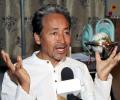
Climate activist Sonam Wangchuk, detained under the National Security Act, denied allegations in the Supreme Court that he incited sedition. His lawyer argued that the police selectively used video evidence to mislead authorities.
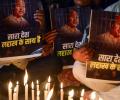
The Supreme Court addressed concerns regarding the detention of climate activist Sonam Wangchuk under the National Security Act, examining his health and the grounds for his detention.
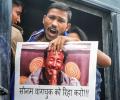
The Centre and the Union Territory of Ladakh administration have accused jailed climate activist Sonam Wangchuk of attempting to instigate Gen Z for protests, drawing parallels to unrest in Nepal, Bangladesh, and the Arab Spring.

The Supreme Court has stated it will intervene to resolve the deadlock over the selection of vice chancellors for two technical universities in Kerala if the Chief Minister and Governor do not reach a consensus.

Reliance Foundation's Vantara has pledged full cooperation with the Supreme Court-appointed SIT investigating allegations of legal non-compliance and animal acquisition irregularities.
The Supreme Court acknowledged a clean chit from a special investigation team (SIT) regarding the Vantara zoological rescue and rehabilitation centre in Gujarat's Jamnagar, following allegations of irregularities.
The top court said an accused has a right to voluntarily undergo a narco-analysis test at an appropriate stage.
The Supreme Court of India has formed a Special Investigation Team (SIT) to investigate allegations of non-compliance with laws and irregularities at Vantara, a Green Zoological Rescue and Rehabilitation Centre in Gujarat. The SIT will examine the acquisition of animals, compliance with wildlife protection laws, and other related issues.
