

The Supreme Court has affirmed the Madras high court's ruling to prohibit animal sacrifice and regulate prayer rights on Thiruparankundram hills, balancing religious freedom with the preservation of Hindu traditions.
Key Points
- The Supreme Court upheld the Madras high court's balanced order regarding religious practices on Thiruparankundram hills.
- The high court order prohibits animal sacrifice on the hills, aiming to maintain peace and order.
- Muslim devotees are granted limited prayer rights during Bakrid and Ramzan, respecting the Subramaniya Swamy temple's traditions.
- The Supreme Court declined to interfere with the high court's decision, emphasising its balanced approach to religious rights and traditions.
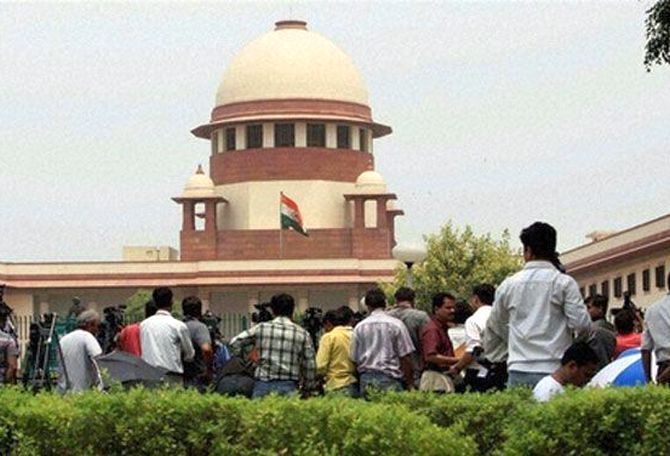
The Supreme Court on Monday upheld a Madras high court's decision prohibiting animal sacrifice and granting Muslim devotees limited rights to prayers on the Thiruparankundram hills in Tamil Nadu's Madurai.
SC bench refuses to interfere with HC order
Underlining that the October 2025 order of the high court was balanced, a bench of Justices Aravind Kumar and P B Varale declined to interfere with it.
The apex court was hearing a plea which challenged the high court's order, claiming that it violated the fundamental right to freedom of religion.
Senior advocate Prashant Bhushan, appearing for the petitioner, said there had never been a law and order problem in the area, to which the bench said that there would not have been a peace committee meeting in the absence of such a problem.
Balanced order, says SC
"It seems to be a very balanced order... We do not propose to interfere with the order. Without expressing any opinion on the rights of the parties, the impugned order stands upheld," the bench said.
The Madras high court had permitted prayers and gatherings in the Nellithoppu area during Bakrid and Ramzan, subject to the condition that it did not affect the traditional footsteps belonging to the Subramaniya Swamy temple.
It had, however, said that animal sacrifice, cooking, carrying and serving of non-vegetarian food cannot be permitted until a decision was made by the competent civil court.






 © 2026