
Rediff.com's Prasanna Zore visits ground zero at the Union Carbide plant in Bhopal.
The civil suit was filed on behalf of the victims of the Bhopal gas tragedy, which killed thousands in 1984.

Activists burnt the US flag and logos of Union Carbide and Dow Chemicals - as they have done nothing to end the sufferings of the victims for the last 32 years.

A rally marking the 41st anniversary of the Bhopal gas tragedy was disrupted by a controversy over an effigy allegedly depicting an RSS 'sevak,' leading to an FIR against organizers.

The Indian government has approved two major manufacturing initiatives worth nearly Rs 1.9 lakh crore (USD 22 billion) to expand the country's semiconductor ecosystem and scale up mobile phone production, aiming to strengthen its position as a global electronics manufacturing hub.
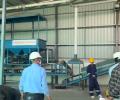
Nearly 900 tonnes of ash generated from the incineration of toxic waste linked to the Bhopal gas tragedy remains undispensed after the Madhya Pradesh High Court directed the state government to find an alternative disposal site.

Madhya Pradesh police have registered five cases against protesters in Pithampur who opposed the planned disposal of 337 tonnes of toxic waste linked to the Bhopal gas tragedy. Protests erupted on Friday after the waste reached Ramky Enviro company, where the incineration is to be carried out. Authorities imposed prohibitory orders, and police dispersed a mob that marched to the company premises. Two people attempted self-immolation during the protests, but were prevented by the crowd. Chief Minister Mohan Yadav said the state government only transported the waste with safety parameters in compliance with court orders.
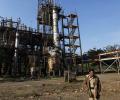
Just months before the deadly gas leak in Bhopal killed 15,000 people, journalist Rajkumar Keswani -- who passed into the ages on Friday, May 21, 2021 -- had warned that the 'city stood on the edge of a volcano'.
The court also ordered notices to be served to Union Carbide of the US and Eveready India Limited. The two firms have to file replies on March 17, the court said.

The Supreme Court on Tuesday asked the Centre to clarify its stand on whether it wants to go ahead with its curative petition seeking Rs 7,844 crore as additional funds from successor firms of the US-based Union Carbide Corporation (UCC) for giving compensation to victims of the 1984 Bhopal gas tragedy.
The Dow Chemical Company, which owns Union Carbide Corporation, on Tuesday said the Indian government had "fully released" UCC and its subsidiary in Bhopal from any civil liability for the 1984 gas tragedy.
A synergy of the 'very worst' of American and Indian cultures led to the Bhopal gas tragedy in 1984, a local court has held, adding that Union Carbide cynically used a third world country to escape from the strict safety standards imposed at home."The tragedy was caused by the synergy of the very worst of American and Indian cultures. An American corporation cynically used a third world country to escape from the strict safety standards imposed at home," said the judge.
Twenty-six years after one of the worst industrial disasters in the world -- the Bhopal gas tragedy -- claimed thousands of lives, a local court found all the eight accused guilty of criminal negligence in the case.

The Union Carbide Corporation gave a compensation of $470 million (Rs 715 crore) after the toxic gas leak from the Union Carbide factory on the intervening night of December 2-3, 1984, killed over 3,000 people and affected 1.02 lakh others.

Over the past decade, a change in consumer choice swept through the battery industry - the walkman lost its mojo, smartphones took over cameras and batteries were tucked away in remotes and wall clocks that hardly needed frequent call-ups. The result: Brand Eveready lost mind space. And the company's attempt to stick to the on-ground marketing activities didn't quite help. But Eveready, now at the cusp of change, is putting things right - a new Give Me Red television commercial has been launched after a gap of 7 years featuring an empowered bride ski-diving to her wedding venue. The creative, according to Eveready sources, is in sync with the brand doctrine.
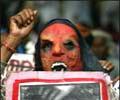
If the Bhopal judgment results in independent directors and CEOs/plant managers waking up to their responsibilities, that can only be a good thing.
An Indian-origin Opposition Labour Party MP secured a debate in Westminster Hall of the UK parliament to call for justice for the victims of Bhopal gas tragedy, which will mark its 38th anniversary early next month.

Amid strong public reaction to the judgement in the Union Carbide case, the government is understood to be looking at legal position to check if Carbide India's non executive Chairman Keshub Mahindra could be barred from taking directorship in any company.

The top court said that a sum of Rs 50 crore lying with the RBI for the victims shall be utilised by the Union of India to satisfy pending claims of victims.
NGOs working for the rights of the survivors of the 1984 Bhopal gas disaster on Wednesday alleged that various governments in Madhya Pradesh and at the Centre have failed to bring the culprits of the world's biggest industrial tragedy to justice even after 37 years.

At least 3,787 people were killed and more than five lakh were affected physically after a toxic gas leaked from the pesticide factory on the intervening night of December 2 and 3, 1984.

Twenty-six years after one of the worst industrial disasters, Bhopal Gas Tragedy, which claimed thousands of lives occurred, a local court trying the case would pronounce its verdict on June 7.
Former Union Carbide India chairman Keshub Mahindra and four others, who were convicted on June 7 in the Bhopal gas leak case, were on Tuesday granted bail by a local court. UCIL former managing director Vijay Gokhle, former vice president Kishore Kamdar, former works manager J Mukund and former production manager S P Choudhry were granted bail by Chief Judicial Magistrate R V Singh.
The Supreme Court on Monday pulled up the Centre for not being serious on disposal of toxic waste lying in the defunct Union Carbide India Ltd plant, now represented by DOW Chemical Company, in Bhopal for the last 28 years and asked it to take a final decision on it soon.
The development comes at a time when Eveready is on the lookout for strategic investors, including a possible stake sale in its battery business.
The two issues that remain are whether Dow inherited Union Carbide's liabilities and why the government never cleaned up Bhopal after settling with Carbide

Even as the 30th anniversary of the Bhopal gas disaster is being observed in the city on Tuesday, its victims continue to be plagued with a number of problems that have not been resolved over the years.
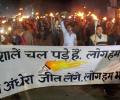
Families of the deceased and people who bore the brunt of the industrial disaster are now signing a petition, to be sent to the Supreme Court, requesting it to start hearing a curative petition of the government filed in December 2010 for more compensation.
Indifferent parent, dithering states and a lethargic Centre have allowed Union Carbide's deadly waste to poison the soil and groundwater in Bhopal.
Dow Chemical Co hoped an Olympic sponsorship would boost its global cache, but the company's link to a gas leak tragedy 28 years ago threatens to curb some of the benefits from the $100 million advertising deal.
A nation angered may spur the the Bhopal gas victims in their seemingly endless battle to get justce, writes Sheela Bhatt.
According to the sources in the government, in a major U-turn, the Union law ministry has submitted a note to the Group of Ministers headed by Home Minister P Chidambaram on the Bhopal gas tragedy, where it has, reportedly, recommended that the government of India should undertake the cleanup operation of the site of Union Carbide.
A TV channel reproduced Anderson and Arjun Singh's bytes, before the Union Carbide chief left the country on December 7, 1984, three days after the world's worst industrial disaster. "House arrest or no arrest or bail, no bail, I am free to go home...There is a law of the United States...India, bye, bye, Thank you," Anderson had said.
Victims of the Bhopal gas tragedy and their families held a rally outside the Union Carbide Factory to mark the 25th anniversary of the world's most deadly industrial disaster.

Back in September 2002, Shakti Bhatt/Rediff.com located the former Union Carbide chairman's luxury home in New York, declared unknown by the American and Indian governments. Rediff.com reproduces the feature about his life in hiding.

Former Union Carbide chief Warren Anderson, wanted in India in connection with the 1984 Bhopal gas tragedy which claimed over 3,000 lives in one of the world's most lethal industrial accidents, died in Florida, US. He was 92.
US Congressman Frank Pallone, the founder and former co-chairman of the Congressional Caucus on India and Indian Americans has slammed the Bhopal court's verdict of just a two year jail term for those responsible for the Bhopal tragedy as "outrageous" and said that erstwhile Union Carbide chief executive Warren Anderson should stand trial in India along with the others culpable for this carnage and receive the maximum punishment for the worst industrial disaster in the world.
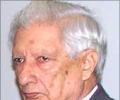
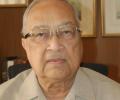
Maharaja Krishna Rasgotra, was India's foreign secretary at the time of the Bhopal gas disaster in 1984. speaks on whether Union Carbide Corporation chief Warren Anderson asked for and received safe passage, and did Anderson meet senior officials of the government of India while he was in the country.
With the June 7 Bhopal judgment, India has been reduced to a Fourth World country. This story of shame can only end if the government appeals against the judgment, gets proper criminal liability restored and seriously pursues the case against all the accused.
