
Indra Nooyi joins several prominent persons of Indian-origin who have donated generously to US universities.

Asserting that it has been a strong champion of equity, India on Thursday said developed countries should compensate developing nations for the effects their greenhouse gas emissions have had on climate.
Senior journalist Darryl D'Monte reports exclusively for Rediff.com from Paris.

India and the United States settled a dispute on Thursday that had paralysed the World Trade Organization and risked derailing a $1 trillion package of reforms.
.jpg)
The decision of the Directorate General of Civil Aviation comes at a time when the UN-body International Civil Aviation Organisation is working on global market-based measures to check aviation emissions.

'Our thrust would be on basic facilities first like sanitation'.

Saurabh Mukherjea, CEO, Ambit Capital, says he is advising clients to either take a genuinely long-term view on stocks or diversify the portfolio with stocks, bonds and gold for those with a short-term view.

Next week, US Secretary of State John Kerry travels to India for the fourth annual US-India Strategic Dialogue

Claude Arpi, who spent 10 days in the Land of the Dragon, tells us how Bhutan is different from the rest of the world.
Claude Arpi, who spent 10 days in the Land of the Dragon, tells us how Bhutan is different from the rest of the world.

Theoretically, there is an inverse relationship, but other factors need to fall in place for it to work well this time

'There were assurances that Jaish-e-Mohammad was being reined in as was the Lashkar-e-Tayiba, but Pakistan's security forces could not risk opening too many dangerous new fronts,' notes former foreign secretary Ambassador Shyam Saran, who has just returned from a visit to Lahore.

For a rising country like China with its sights set on global and regional power, any coming together of the US and India is the worst case scenario. Hence, China is concerned with the emerging equations between New Delhi and Washington, says Srikanth Kondapalli.

'India alone cannot walk the path of peace. It also has to be Pakistan's journey to make,' says Prime Minister Narendra Modi at the government's geo-political flagship initiative "Raisina Dialogue-II".

In the lead up to this week Indo-US Strategic Dialogue, for which United States Secretary of State, John Kerry, will be coming to Delhi, the Indo-US defence engagement is even more intense than usual.

The report '2014 International Piracy Watch List,' by International Creativity and Theft-Prevention Caucus highlights the high levels of piracy and the lack of legal protections for copyright in China, Russia, Switzerland and India.

52 world leaders, including Narendra Modi, will attend this week's Nuclear Security Summit in Washington, DC. Obama will meet separately only with the Chinese president.

Instead the Chinese IT firms focussed more on the local markets where they are well entrenched.
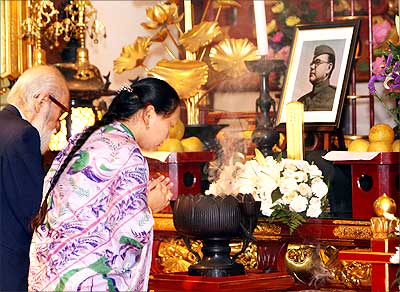
'The extended Bose family is insisting that the Japanese government must release all the information they have on Bose's ashes. It cannot be forgotten that Bose was in Japanese care when his 'death' occurred. Ultimately, it is the Japanese who hold the secret about what happened to him.'

As Afghanistan gradually realises that there can be no long-term stability in the country as long as Pakistan is involved, the time has come for India to register its solidarity when it would be most appreciated, says former foreign secretary Shyam Saran.
Delhi concedes one climate issue on Obama's agenda

It seems China is ready to cooperate with India in the central Asian region through the SCO framework, the reasons for which are manifold, says Sana Hashmi.

Prime Minister Narendra Modi on Friday said his government has carried out major reforms -- including labour reforms and reforms in insurance and defence sectors -- 'in less than 100 days' and stopped reversals Indian economy had been facing.

Prime Minister Narendra Modi had gone to China with a bagful of initiatives, but not all seems to have been fulfilled given China's reluctance to go the whole hog with him

Aseem Chhabra tell us how he watched 302 films in 365 days on airplanes, on Netflix, Amazon, iTunes, Google, Hulu, DVDs and even on YouTube.
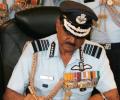
India and the United States discussed a host of issues, including the security situation in South Asia, East China Sea, anti-piracy operations and America's help in developing two new commands -- space and cyber, during a recent visit of Air Chief Marshal N A K Browne in Washington.

A global group of government anti-money-laundering agencies said that financial institutions have not done enough to police suspicious financial activity by officials at soccer's global governing body FIFA.
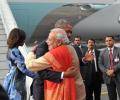
'A three generation US-Pakistan relationship is not likely to be snapped any time soon. All this presents an irritant to an India that wishes to concentrate on economic development,' says Colonel Anil A Athale (retd).

'I couldn't think of a more visible strategic form of cooperation than both of our armed serves using a similar weaponry jointly developed together.' Aziz Haniffa/Rediff.com reports from Washington, DC on what is expected in the India-US defence relationship during Prime Minister Modi's visit.

Since multilateral trade creates a stable, peaceful world, normalisation of bilateral trade between India and Pakistan will start a series of peace building measures, especially along the bordering areas of both states which is the worst affected from the on-going conflict, say Riya Sinha and Shehzad Poonawalla.

While RBI is yet to come out with a clear regulatory framework for bitcoins, which have been gaining currency across the world over the past few months, it has issued an advisory cautioning general public against use of bitcoins and other virtual currencies.

'If the dimensions of the strategic partnership worked out by India and the US seem like a grand alliance targeted at you-know-who, China had better realise that it has fathered it,' says B S Raghavan, a long time observer of China.

Higher growth, reform bets have boosted returns but leave limited room for error.

The visit of Park Geun-Hye to India, though a symbolic one, will certainly give a further impetus to the strategic partnership between the two countries says Rup Narayan Das.

'The ISI has given a stunning display of its capacity to do with impunity what it likes within Kabul. Incensed over the triumphalism of the hardliners in Kabul, the ISI has hit out; it is a typical ISI reflex action that Indians are familiar with,' says Ambassador M K Bhadrakumar.

PM Modi seems to be gradually ending India's strategic ambiguity

The government must justify why we need to buy foreign reactors when we have developed up to 700 MWe unit-size pressurised heavy water reactors, a design which can be easily extended to 900 to 1000 MWe unit size. Why can't the 'Make in India' philosophy apply to indigenous nuclear reactors, more than 18 of which have been designed, built, and being operated by Indian engineers, asks Dr A Gopalakrishnan.

'India is no longer the India of the '70s and the '80s.' 'It's a large country with the fastest growing economy.' 'In working with India, you just can't go and humiliate the nation publicly.' USIBC President Mukesh Aghi tells Aziz Haniffa/Rediff.com about how he advises American companies to do business with India, what he thinks of Modi's government and the way forward for the India-US relationship.
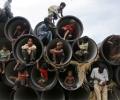
India is poorer than the world average and so naturally has a greater percentage of poor people and a lower percentage of rich people. Yet using absolute numbers, India has more of almost everything, which is misleading, says Debraj Ray and Maitreesh Ghatak.

It is not without reason that Japanese consumer electronics companies such as Sony, Panasonic, Hitachi, Daikin and Sharp are investing significant sums in India.
