
India has not accepted the demand of the UK for inclusion of a 'data exclusivity' provision in the free trade agreement, announced on May 6, in a bid to protect the interests of the domestic generic drugs industry, an official said. During the negotiations, the UK had asked to include this provision in the trade pact.

US President Donald Trump's plan to sign an executive order to cut prescription drug prices by 30-80 per cent could lead to a global price adjustment with pharma firms pushing lower-cost countries like India to raise prices, according to the economic think tank GTRI. The US move could push prices in lower-cost countries like India as manufacturers would seek to recover losses and R&D costs from these nations.

'Even if tariffs are reduced, non-tariff may still remain a challenge.'

The change of mind among Indian experts is based on a recent decision of the UK high court.

The government of Switzerland will not be taking up the allegation by Novartis that Indian patent law is incompatible with the Trade-Related Aspects of Intellectual Property Rights agreement at the dispute settlement board of the WTO.
Let's look at the major provisions that will have lasting effect on the industry, both domestic and exports.
While the innovators see data protection as an essential step to spur R&D, generics deem it as ploy to ensure monopoly by yet another name.

India is not so keen to co-operate with the US on IPR related probe.

The USTR has placed India on its "priority watch" list for two years in a row, saying the country's patent laws unfairly favour local drug makers.
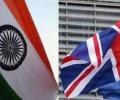
Negotiations for a trade deal between India and the UK have run into fresh controversy, after the proposals under a leaked chapter of the deal on intellectual property (IP) are believed to put access to affordable, lifesaving generic medicines from India at risk. According to the draft IP chapter put out by an international trade portal bilaterals.org, the UK is seeking continuous extension of patent period and rights through small tweaks in the drug, known as evergreening. This may prevent patents from expiring, impacting cheaper drug availability and its production by Indian generic drug manufacturers.
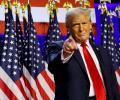
American President Donald Trump has announced imposing reciprocal tariffs on its major trading partners including China that levy higher import duties on goods shipped from the United States. He has already announced a 25 per cent duty on steel and aluminium imports, which will come into effect from March 12.

The United States 'is leading the world in the use of compulsory licenses, and is hypocritical in voicing indignance when developing countries issue compulsory licenses for essential drugs,' Washington-based Knowledge Ecology International, with its offices in Geneva, has alleged.

Delegation visit ahead of patent law report.
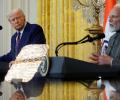
'But I don't think the government is in a great hurry to sign the BTA.'

Communications between the USTR and the world's most powerful pharmaceutical and trade lobbying groups reveal that many raised concerns about India's push to exempt Covid vaccines from intellectual property.
Adverse IPR report expected this week;Poor labelling could take fight to WTO

Prime Minister Narendra Modi on Thursday called for reforming the World Health Organisation and streamlining its approval process for vaccines and therapeutics, and favoured making flexible the WTO's rules relating to trade-related aspects of intellectual property rights.

The Andhra Pradesh government is now the registered proprietor of the GI tag for the mango variety often hailed as "the king of fruits".

India's IPR framework and enforcement were comparable to those in developed countries

In 2010, Abbott acquired both the pharmaceutical business of Solvay, which had a presence in India, and Piramal Healthcare Solutions, which was part of Piramal Group.

India had been engaged in a contentious battle with the US over the issue, especially in the pharmaceutical sector.

Prime Minister Narendra Modi on Saturday called for following a 'one earth, one health' approach to effectively deal with the coronavirus pandemic globally, and sought the support of the G7 grouping to lift patent protections for COVID-19 vaccines, during a virtual address at an outreach session of a summit of the bloc.

The five-nation grouping BRICS on Tuesday resolved to combat terrorism in all its forms and manifestations, including the cross-border movement of terrorists, and vowed to step up joint efforts in building support for an India-backed global framework to effectively deal with the menace.
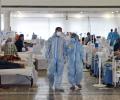
'Both the Centre and the states cannot say that they have been taking good care of public health.'
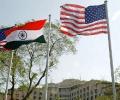
Flaring of tempers comes atop much simmering trouble on clashing views; these stands might now get frozen.
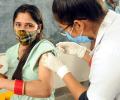
'The vaccine policy should be such that all people should get the vaccine free.'
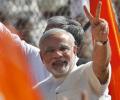
Even as India continues on the priority watch list of the Office of the US Trade Representative, strong voices from Washington, DC, have spoken out in favour of India, reports Aziz Haniffa/Rediff.com.

The rules, the first ever for software applications in the country, were recently issued by the patent office and mandate each new software to be 'machine-specific' and packaged with 'new hardware' to qualify for a licence.

Both Obama and Modi have taken bold steps towards laying the groundwork to give a big push to Indo-US trade, and now it's time to execute, says Bikash Mohapatra.

'It is in the interest of both sides that the visit of the US President is seen as being successful. Both sides have invested considerable political capital in it. This rapid exchange of visits and the decisions taken have to be justified, beyond the symbolism, which is no doubt important in itself. This opportunity to impart a fresh momentum to ties should not be missed,' says former foreign secretary Kanwal Sibal.
From Rafale relief to heat on realtors, 10 landmark Supreme Court judgments in 2018.
'India is part of our strategic and economic future,' says Richard Rahul Verma, the first Indian American to be appointed US Ambassador to India.
'It is in electronics that the gap between where we are and where we need to be is most obvious and most persistent.' 'It is not only a national security issue, but also a commercial issue,' argues Rajeev Srinivasan.

Reserve Bank of India Governor Shaktikanta Das tells Anup Roy, Raghu Mohan and Niraj Bhatt that it is time for banks to lower interest rates and start lending to cash-starved finance companies after due credit appraisal and proper risk assessment.

'India is no longer the India of the '70s and the '80s.' 'It's a large country with the fastest growing economy.' 'In working with India, you just can't go and humiliate the nation publicly.' USIBC President Mukesh Aghi tells Aziz Haniffa/Rediff.com about how he advises American companies to do business with India, what he thinks of Modi's government and the way forward for the India-US relationship.

On the occasion of Chinese New Year, we bring you a look at what 2015, the Year of the Sheep has in store for you!
 © 2026 Rediff.com - Advertise with us - Disclaimer - Privacy Policy - Sitemap - Feedback - About us - Terms of use - Grievances