
Will open radio access network technology (O-RAN) disrupt the way 5G networks roll out in the country? After all, it promises to offer a substantially lower capital cost, enables the choice of an array of vendors, and provides more network flexibility - all very important for telcos who expect to invest over Rs 60,000 crore to roll out a pan-India 5G network and that's without spectrum costs. But more importantly, it counters the stranglehold of global telecom gear makers such as Ericsson, Nokia, and Samsung over telcos to whom they sell propriety technology and bundled hardware and software.

Eleven telcos, whose licences will expire between 2014 and 2021, will have to pay this 13-figure sum if the government accepts the telecom regulator's proposal of pricing second generation radio airwaves on the basis of prices determined at the just-concluded auction of third generation spectrum.

The Department of Telecom has slashed performance and financial bank guarantee requirement of telecom operators by 80 per cent, according to a licence amendment note issued on Wednesday. Under the amended norms, telecom operators will be required to provide a performance bank guarantee of up to Rs 44 crore for each service for the telecom licence compared to Rs 220 crore mandated under the old rule.

DoT has undertaken a study in one of the metros to see how the spectrum could be used better with the same level of equipment employed by operators. It already has completed a similar study in rural and semi-urban areas.

UV Asset Reconstruction Company Ltd has made the highest bid of Rs 16,000 crore to buy Anil Ambani group's Reliance Communications and Reliance Telecom, which are in the National Company Law Tribunal (NCLT). Last year it was the highest bidder for taking over Aircel's assets for an upfront payment of Rs 150 crore. Surajeet Das Gupta and Dev Chatterjee dig deeper to find out more about this little known company.

With India rolling out 5G services, can telcos get the sizeable 350-400 million 2G customers to upgrade to 4G, or even better -- but very improbably -- straight to 5G?

The figure is based on the base price of spectrum for the upcoming auction fixed by the TRAI and on the assumption that there will be no bidding war.

Falling revenues, increased capex, and first full year of spectrum debt may make things worse

Lt Governor says discoms must cooperate or face cancellation of licences. Ficci cries interference.
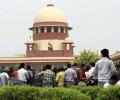
The Supreme Court on Friday directed the managing directors and directors of telcos and other firms to explain why contempt action be not taken against them for non-compliance of its order to pay adjusted gross revenue (AGR) of Rs 1.47 lakh crore to the department of telecommunications.

Telecom gear makers, who are in talks with telcos, say that if all goes well, they are ready to roll out the first phase of 5G services from October this year and cover the country's top 30-50 cities (in limited areas) by March 2023. The gear makers expect the telecom companies to give them a heads-up about their plans as well as the equipment required by July, and have promised deployment in three to four months after that. India's main telecom gear suppliers are Nokia, Ericsson and Samsung.

Consumers can expect a 5G launch in the country soon. Telecom companies (telcos) say if auctions take place on time - the target is July - they would be able to offer some services in a few cities by the end of this year and a full roll-out from 2023. But the question is: will 5G turn the tables for telcos financially? Will average revenue per user (ARPU) improve? Will mobile consumers upgrade to 5G quickly and pay more? Will the expanded functions that 5G enables drum up sufficient revenues? In simple terms, will telcos make more money?

Telecom companies that bought spectrum in the 2G auction of November last year would lose around Rs 4,000 crore

Despite a largely stable December quarter, investors booked profit in shares of IndusInd Bank (IIB) as an increase in slippages took them by surprise. Analysts, on their part, believe investors may, now, wait for actual delivery on slippage decline, potentially limiting near-term upside. "The management has indicated that corporate slippages (from legacy stressed book) have ended and inch up in consumer finance slippages was more one-off, and should meaningfully improve Q4FY24 onwards.

Xiaomi India on Tuesday announced its partnership with Reliance Jio to offer the telco's 'True 5G' experience to its consumers. Smartphone models supporting the Standalone (SA) network have received a software update to work seamlessly on Reliance Jio's network, according to a statement. The enabled devices include Mi 11 Ultra 5G, Xiaomi 12 Pro 5G, Xiaomi 11T Pro 5G, Redmi Note 11 Pro+ 5G, Xiaomi 11 Lite NE 5G, Redmi Note 11T 5G, Redmi 11 Prime 5G, Redmi Note 10T 5G, Mi 11X 5G, Mi 11X Pro 5G, Redmi K50i 5G, Xiaomi 11i 5G and Xiaomi 11i HyperCharge 5G.

With Chinese companies Huawei and ZTE excluded from participating in the 5G roll out, their absence leaves a vacuum in the market which will have to be filled by three vendors: Ericsson, Nokia and Samsung.

While in all, 15 entities owe the government Rs 1.47 lakh crore -- Rs 92,642 crore in unpaid licence fee and another Rs 55,054 crore in outstanding spectrum usage charges, it is not immediately clear just how much of that has been sought by the government by midnight.
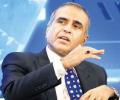
Telecom operator Bharti Airtel Chairman Sunil Mittal on Wednesday said the telecom sector reforms approved by the Cabinet will ensure that the industry is able to invest fearlessly, and the company will respond to Prime Minister Narendra Modi's call to invest and accelerate the country's growth. Among a series of breathers for the stressed telecom sector, the Cabinet has approved the inclusion of revenues earned only from telecom services in the adjusted gross revenue (AGR), and the removal of penalty on dues to be paid to the government prospectively. Mittal congratulated and thanked the government for undertaking these seminal reforms to lift an industry that is at the core of his Digital India vision.

The Department of Telecommunications (DOT) on Wednesday received over Rs 17,873 crore from companies towards 5G spectrum dues. Nearly half the amount (Rs 8312.4 crore) was paid by Bharti Airtel, which made advance payments for four years to free up cash for future investments. Reliance Jio and Vodafone Idea paid Rs 7,864 crore and Rs 1,680 crore, respectively.
The government is engaged in talks with telecom firms for a launch of commercial 5G services in some cities by Independence Day and has assured them that spectrum auction will take place in April-May, providing them a three to four-month window for the rollout. A top executive of a leading telecom gear company said the deadline was feasible in some cases. "It can be achieved in some cities as it will take us 4-6 weeks to deploy a network, once the equipment or components have reached India.
With the Adanis submitting an earnest money deposit (EMD) of just Rs 100 crore on Monday for the upcoming 5G spectrum auction, the apprehension among the rivals that the group is nursing ambitions of being an all-India mobile player has been allayed at least for now. Based on its EMD, analysts say it can buy spectrum worth just Rs 900 crore, whose use will be limited to enterprises and captive networks -- that too is likely only in a few circles where it has its infrastructure like ports, airports, and power stations. While getting all-India millimetre band spectrum of 400 MHz (which costs Rs 2,800 crore) is ruled out, it might choose circles like Gujarat and Mumbai to start with.

Telecom gear makers say will take six to eight months for the top 10 cities to have some reasonable coverage of 5G network services.

Telecom Secretary J S Deepak has resolved the toughest issues facing the sector, but his real test will be in delivering on the govt's Digital India dream

'Every telecom user wishes to know who is calling. This will help in preventing cyber frauds using telecom services.'

The company has reportedly been in the process of shutting its CDMA business and shifting its subscribers to 2G, 3G and 4G networks.

Apart from other things, this would have put a spanner in the government's Digital India campaign.

As Ayodhya readies itself for the glittering, much-awaited consecration ceremony of the Ram Mandir on January 22, and as millions of pilgrims and devotees pour into the holy city for the momentous event, companies are rushing to do their bit and be a part of the mega celebrations. Some are offering a part of their profits as donations, telcos are beefing up the number of cellular towers to ensure better connectivity, and there are those distributing jalebis and food platters.

Akash Ambani's first big job as he takes over as chairman of Reliance Jio, the group's telecom arm, is a no-brainer - he has to get his company through the long-awaited 5G auctions that are a few weeks away. But his bigger job, analysts said, will be to lead the transformation of the telecom company into a tech giant, a process that is underway as it seeks to list in the US. Insiders said there has been plenty of debate within the company's top executives on the auction strategy.

'When an enemy country is looking for information to sabotage a system from a remote location, they can access your data, they can stop the functioning of our power plants, they can stop the functioning of critical systems in the network.' 'It is very important that we should have full control of everything in the network.' 'Most Indian companies buy from China only because of the kind of incentive they are getting.' 'By doing so, these Indian companies are exposing themselves to dangers in the coming years.'

Mobile operators with the exception of Reliance Jio are in a much worse financial condition than expected earlier. The combined borrowing of the four incumbent operators - Bharti Airtel, Vodafone Idea, Bharat Sanchar Nigam (BSNL), and Mahanagar Telephone Nigam (MTNL) - reached an all-time high of Rs 3.85 trillion at the end of March this year. The companies' combined debt was up 22.4 per cent year-on-year last financial year against 8.3 per cent growth in their borrowing in the previous year. As a result, the incumbent operators' debt-equity ratio shot up to an unsustainably high level of 6.83X at the end of March this year from 2.3X at the end of March 2020. This was largely due to big losses reported by all these companies last financial year. The four incumbent operators racked up combined net losses of Rs 70,000 crore in FY21.

The announcement quells fears among some telcos that Chinese players might be banned from participating in 5G trials and roll outs.
It came as a surprise to all stakeholders - competing telecom companies (telcos), most analysts and even the government's internal projections on revenues from the 5G auctions. Reliance Jio disrupted all calculations by paying a stiff Rs 40,000 crore to buy 10 MHz of spectrum in the 700-MHz band, globally considered a key band for efficient 5G service coverage, along with the default 3.5 GHz band and the ultra-high speed and low-latency millimetre band of 26 GHz band. So what made Jio pay almost 45 per cent of its total spend in this auction for the 700 MHz band - much more than what it rustled up even for the 3.5 GHz band?

Sector experts have, however, indicated that a large part of the airwaves in the upcoming auction will remain unsold.
Reliance Jio has paid about Rs 10,700 crore to the telecom department towards outstanding amount for spectrum acquired in 2016 auction, sources said. The payment was made by Jio last week, sources added. With this, the company has made full payment with regard to spectrum bought in 2016 auction, and the outstandings now pertain to 2014, 2015 and 2021 auction.

The election agent of the candidate, Brahmanand Netam, said he has submitted a reply to the Jharkhand police on the leader's behalf stating Netam is busy with electioneering.

The Vivad Se Vishwas scheme provides for settlement of disputed tax, disputed interests, disputed penalty or disputed fees in relation to an assessment or reassessment order on payment of 100 per cent of the disputed tax and 25 per cent of the disputed penalty or interest or fee.

Tata Consultancy Services (TCS) is set to secure a $2 billion deal from Bharat Sanchar Nigam (BSNL) to roll out its 4G and 5G services across the country. However, the final approvals from the publicly-owned telco may take a couple of months, sources in the know said. As part of the deal, TCS will develop 4G core and Radio Access Network (RAN) technology for BSNL's telecom services.

Telcos have stopped bidding for the 900-MHz spectrum since Monday.

On September 4, Trai issued a consultation paper on call drops.

The operators say that the move to have an India-specific standard will raise the costs not only of telecom networks but of chipsets for mobile devices because they will have to be made for the local market and, as such, will not enjoy global economies of scale.
