
Trai said the reports that compensation was not feasible were based on wrong inputs.

Eleven telcos, whose licences will expire between 2014 and 2021, will have to pay this 13-figure sum if the government accepts the telecom regulator's proposal of pricing second generation radio airwaves on the basis of prices determined at the just-concluded auction of third generation spectrum.

DoT has undertaken a study in one of the metros to see how the spectrum could be used better with the same level of equipment employed by operators. It already has completed a similar study in rural and semi-urban areas.

Most brokerages are betting that the new government will shift to a policy focussing on boosting rural incomes and consumption since that has clearly been a pain point.

There were certainly qualities adhering to the Tata Group, which emanated from the persona of Ratan Tata. Most notable of these would be the low profile he maintained, which sharply contrasted the in-your-face celebrity status, celebration of wealth and pursuit of importance many of liberalised India's rich, love, notes Shyam G Menon.

'The hiring in India will be primarily around skills in data engineering, AI, and product engineering.'

Lt Governor says discoms must cooperate or face cancellation of licences. Ficci cries interference.

Falling revenues, increased capex, and first full year of spectrum debt may make things worse

Tata Consultancy Services-led consortium has bagged a Rs 15,000-crore contract from BSNL to deploy 4G network for the state-run telco. In a statement, TCS said it has received an "advance purchase order" valued over Rs 15,000 crore from BSNL.

UV Asset Reconstruction Company Ltd has made the highest bid of Rs 16,000 crore to buy Anil Ambani group's Reliance Communications and Reliance Telecom, which are in the National Company Law Tribunal (NCLT). Last year it was the highest bidder for taking over Aircel's assets for an upfront payment of Rs 150 crore. Surajeet Das Gupta and Dev Chatterjee dig deeper to find out more about this little known company.

From its lows this month, the stock of Bharti Airtel is up 14 per cent. The gains for the telco have come on the back of expectations that market share consolidation, tariff hike and lower capex should boost margins and profits. While the company is a key player in the Indian market, it also has a leadership position in major markets of Africa.

The merits and demerits of the telcos' 5G strategy however is clearly dependent on the financial muscle of players, reports Surajeet Das Gupta.

Telecom companies that bought spectrum in the 2G auction of November last year would lose around Rs 4,000 crore

We asked colleagues, present and past, to reflect on a man who has made such a difference to their lives and careers. Here it is then, a rich collection of memories that offer enchanting glimpses of the enigmatic Ajit Balakrishnan.

Telecom operators will need to shut down 5G services in high-frequency bands in and around airports following restrictions imposed by the Department of Telecom at the request of the civil aviation ministry, according to sources. Based on buffer and safety zone details provided by the aviation ministry, the DoT has asked telecom operators to not install 5G base stations in the 3.3-3.6 Ghz band in the area of 2.1 kilometres from both ends of the runway and 910 meters from the centre line of the runway of Indian airports with immediate effect. "Telecom operators will need to shut down 5G service in the 3.3-3.6 Ghz band only in and around airports based on the order.

The figure is based on the base price of spectrum for the upcoming auction fixed by the TRAI and on the assumption that there will be no bidding war.
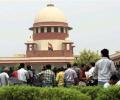
The Supreme Court on Friday directed the managing directors and directors of telcos and other firms to explain why contempt action be not taken against them for non-compliance of its order to pay adjusted gross revenue (AGR) of Rs 1.47 lakh crore to the department of telecommunications.

The Department of Telecom has slashed performance and financial bank guarantee requirement of telecom operators by 80 per cent, according to a licence amendment note issued on Wednesday. Under the amended norms, telecom operators will be required to provide a performance bank guarantee of up to Rs 44 crore for each service for the telecom licence compared to Rs 220 crore mandated under the old rule.

Will open radio access network technology (O-RAN) disrupt the way 5G networks roll out in the country? After all, it promises to offer a substantially lower capital cost, enables the choice of an array of vendors, and provides more network flexibility - all very important for telcos who expect to invest over Rs 60,000 crore to roll out a pan-India 5G network and that's without spectrum costs. But more importantly, it counters the stranglehold of global telecom gear makers such as Ericsson, Nokia, and Samsung over telcos to whom they sell propriety technology and bundled hardware and software.

Analyst are cautious about the performance of IT services sector from January to March quarter (Q4) of FY24 and the first half (H1) of FY25. While the Bloomberg consensus on revenue implies the market is expecting 2-3 per cent growth on a quarter-on-quarter (Q-o-Q) basis for the IT majors through FY25, the H1FY25 is likely to see even flatter returns, and Q4FY24 is likely to be poor. There is likely to be some recovery in the second half (H2FY25) but even so, there's a chance that the market will be overall disappointed.

While in all, 15 entities owe the government Rs 1.47 lakh crore -- Rs 92,642 crore in unpaid licence fee and another Rs 55,054 crore in outstanding spectrum usage charges, it is not immediately clear just how much of that has been sought by the government by midnight.

With India rolling out 5G services, can telcos get the sizeable 350-400 million 2G customers to upgrade to 4G, or even better -- but very improbably -- straight to 5G?

Telecom Secretary J S Deepak has resolved the toughest issues facing the sector, but his real test will be in delivering on the govt's Digital India dream

Telecom gear makers, who are in talks with telcos, say that if all goes well, they are ready to roll out the first phase of 5G services from October this year and cover the country's top 30-50 cities (in limited areas) by March 2023. The gear makers expect the telecom companies to give them a heads-up about their plans as well as the equipment required by July, and have promised deployment in three to four months after that. India's main telecom gear suppliers are Nokia, Ericsson and Samsung.

Consumers can expect a 5G launch in the country soon. Telecom companies (telcos) say if auctions take place on time - the target is July - they would be able to offer some services in a few cities by the end of this year and a full roll-out from 2023. But the question is: will 5G turn the tables for telcos financially? Will average revenue per user (ARPU) improve? Will mobile consumers upgrade to 5G quickly and pay more? Will the expanded functions that 5G enables drum up sufficient revenues? In simple terms, will telcos make more money?

The company has reportedly been in the process of shutting its CDMA business and shifting its subscribers to 2G, 3G and 4G networks.
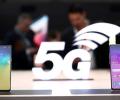
With Chinese companies Huawei and ZTE excluded from participating in the 5G roll out, their absence leaves a vacuum in the market which will have to be filled by three vendors: Ericsson, Nokia and Samsung.
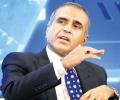
Telecom operator Bharti Airtel Chairman Sunil Mittal on Wednesday said the telecom sector reforms approved by the Cabinet will ensure that the industry is able to invest fearlessly, and the company will respond to Prime Minister Narendra Modi's call to invest and accelerate the country's growth. Among a series of breathers for the stressed telecom sector, the Cabinet has approved the inclusion of revenues earned only from telecom services in the adjusted gross revenue (AGR), and the removal of penalty on dues to be paid to the government prospectively. Mittal congratulated and thanked the government for undertaking these seminal reforms to lift an industry that is at the core of his Digital India vision.
Apart from other things, this would have put a spanner in the government's Digital India campaign.

Xiaomi India on Tuesday announced its partnership with Reliance Jio to offer the telco's 'True 5G' experience to its consumers. Smartphone models supporting the Standalone (SA) network have received a software update to work seamlessly on Reliance Jio's network, according to a statement. The enabled devices include Mi 11 Ultra 5G, Xiaomi 12 Pro 5G, Xiaomi 11T Pro 5G, Redmi Note 11 Pro+ 5G, Xiaomi 11 Lite NE 5G, Redmi Note 11T 5G, Redmi 11 Prime 5G, Redmi Note 10T 5G, Mi 11X 5G, Mi 11X Pro 5G, Redmi K50i 5G, Xiaomi 11i 5G and Xiaomi 11i HyperCharge 5G.

RBI's exercise will take into account standards of governance, the viability of the payment bank (PB) business model, and changes, if any, if needed.
The government is engaged in talks with telecom firms for a launch of commercial 5G services in some cities by Independence Day and has assured them that spectrum auction will take place in April-May, providing them a three to four-month window for the rollout. A top executive of a leading telecom gear company said the deadline was feasible in some cases. "It can be achieved in some cities as it will take us 4-6 weeks to deploy a network, once the equipment or components have reached India.

The Department of Telecommunications (DOT) on Wednesday received over Rs 17,873 crore from companies towards 5G spectrum dues. Nearly half the amount (Rs 8312.4 crore) was paid by Bharti Airtel, which made advance payments for four years to free up cash for future investments. Reliance Jio and Vodafone Idea paid Rs 7,864 crore and Rs 1,680 crore, respectively.
With the Adanis submitting an earnest money deposit (EMD) of just Rs 100 crore on Monday for the upcoming 5G spectrum auction, the apprehension among the rivals that the group is nursing ambitions of being an all-India mobile player has been allayed at least for now. Based on its EMD, analysts say it can buy spectrum worth just Rs 900 crore, whose use will be limited to enterprises and captive networks -- that too is likely only in a few circles where it has its infrastructure like ports, airports, and power stations. While getting all-India millimetre band spectrum of 400 MHz (which costs Rs 2,800 crore) is ruled out, it might choose circles like Gujarat and Mumbai to start with.

Telecom gear makers say will take six to eight months for the top 10 cities to have some reasonable coverage of 5G network services.

'When an enemy country is looking for information to sabotage a system from a remote location, they can access your data, they can stop the functioning of our power plants, they can stop the functioning of critical systems in the network.' 'It is very important that we should have full control of everything in the network.' 'Most Indian companies buy from China only because of the kind of incentive they are getting.' 'By doing so, these Indian companies are exposing themselves to dangers in the coming years.'

'Every telecom user wishes to know who is calling. This will help in preventing cyber frauds using telecom services.'

Despite a largely stable December quarter, investors booked profit in shares of IndusInd Bank (IIB) as an increase in slippages took them by surprise. Analysts, on their part, believe investors may, now, wait for actual delivery on slippage decline, potentially limiting near-term upside. "The management has indicated that corporate slippages (from legacy stressed book) have ended and inch up in consumer finance slippages was more one-off, and should meaningfully improve Q4FY24 onwards.

The announcement quells fears among some telcos that Chinese players might be banned from participating in 5G trials and roll outs.

Telcos have stopped bidding for the 900-MHz spectrum since Monday.
