
'People beat their chests when the Babri Masjid was brought down, not realising that it was just one event in a chain going back centuries; to look at the last link or two in isolation is absurd.'

'In the last 55 years India and Pakistan have gone to wars, but nobody spoke about scrapping the Indus Waters Treaty.'

Anti-incumbency sentiment in Punjab puts SAD in a weak spot. But voters remain divided over AAP and Congress. Sahil Makkar reports.

In an attempt to corner the Centre, the Opposition raised the issue of the Indian Army's involvement in the Sri Sri Ravi Shankar's Art of Living event.

'What Modisaab will accomplish by tampering with the treaty is providing ammunition to ultra-nationalist right wing elements within Pakistan who see India as an existential threat.'

Lack of opportunities coupled with a desire to get rich quick in the West is fueling Punjab's human trafficking problem.
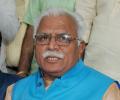
Haryana Chief Minister Manohar Lal Khattar on Sunday said that government will introduce teaching of Bhagavad Gita in schools across the state from coming academic session.

Because of the treaty, no big dams or power projects can be built by India on Jhelum, Indus or Chenab.

Vikas Swarup says India unlikely to give Pathankot-like offer to Pak in Uri attack probe.

Sheela Bhatt, who is travelling with Prime Minister Manmohan Singh on his two-nation visit, analyses the outcome of crucial talks between the PM and his Chinese counterpart in Beijing.

'Much can be done by India under the provisions of the treaty to make full use of its rights it has.' 'The impact of that will be felt downstream.'

'Pakistan's recent utterances and tendency to use pinpricks to try our patience appear reminiscent of 1965. We are a strong nation, emerging stronger,' says Lieutenant General Syed Ata Hasnain (retd).
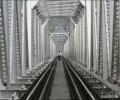
India has planned 14 strategic railway lines in areas bordering China, Pakistan and Nepal, but most of these projects are stuck for want of funds. Anusha Soni reports

'We don't know what the reasons were that we gave back the Haji Pir Pass which was strategically very important. Today the entire infiltration into Kashmir takes place from that area. If we had retained that post that we had captured, things could have been different.' 'A lesson we need to learn is if you start losing the gains of war at the negotiating table, they become a disincentive for future wars,' says Lieutenant General D B Shekatkar (retd), reviewing the lessons from the 1965 War.
