
The 9th Annual All India Shree Cement Bridge Championships begins in Kolkata, featuring over 400 participants competing for a prize pool of Rs 10 lakh.

Shree Cements Ltd said it received certificate of registration for ISO 14001 by British Standards Institutions, UK.
Its rich valuation with a PE of 62 times raises downside risk for investors

'East Bengal have a great legacy. We all want Mohun Bagan and East Bengal to play in ISL. I am very happy that Mohun Bagan are playing and we all want East Bengal to play in the ISL too.'
With no signs of an end to the ongoing crisis in Indian hockey, leading cement manufacturer Shree Cement on Tuesday said it is willing to provide financial support so that players can resume training for the upcoming World Cup to be held in New Delhi next month.

The company, which had not ventured out of Rajasthan so far, obtained licences for mining limestone in three states. However, the company says land acquisition is proving a problem.
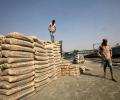
Indian cement manufacturers, despite a stable Q4FY26, are bracing for significant profitability pressures from Q1FY27 onwards due to escalating input costs, primarily driven by the West Asia conflict's impact on coal and petcoke prices.

The Indian women's cricket team is set to face Bangladesh in a critical T20 World Cup Group A match, aiming to address persistent middle-order batting struggles and fielding lapses. While openers Smriti Mandhana and Shafali Verma have provided strong starts, the inability of the middle order to capitalise has put pressure on the lower order. India, currently second in their group, needs a strong performance to solidify their semi-final chances, especially after a recent loss to South Africa highlighted their vulnerabilities.

East Bengal ended a 22-year wait to win the national league crown, defeating Inter Kashi in a thrilling final. Under coach Oscar Bruzon, the team overcame early setbacks and showed resilience to secure the title, marking a defining moment for the club and Indian football.
Cement manufacturers' show during the June 2023-ended quarter (Q1FY24) has indicated an intensified slugfest for market share. For instance, Dalmia Bharat (Cement) said it has lost market share in eastern India owing to lack of price discipline. Industry analysts also said that the seasonal weakness in cement prices for Q1 is showing up earlier than usual.

There are hopes of a turnaround in overall corporate earnings after six quarters of single digit growth.
With over 10 deals announced in 2024, the cement sector logged the highest number of pacts, including acquisitions and fresh financial investments, in a single calendar year since 2014, with the combined value of investments over $3.5 billion. During the year so far, 11 deals have been announced, according to Bloomberg data.

Acceleration in demand, together with marginal price hikes of about 2-3 per cent by cement companies in the October-December quarter (third quarter, or Q3) of 2022-23, may not be enough to cushion the impact of high input costs on the bottom line, reveal Bloomberg consensus estimates for the quarter. Year-on-year (YoY) net sales growth in Q3 will come in at nearly 7 per cent, shows Bloomberg data, while bottom-line growth will show a sharp decline of 25 per cent from a year ago. The earnings before interest, tax, depreciation, and amortisation (Ebitda) will likely decline by nearly 5 per cent versus a year ago, shows data.
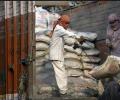
The Indian cement industry is hopeful of greener pastures after a long period of stress led by pricing pressures and other factors. The second half of FY25 is expected to bring respite due to price hikes, cost benefits and higher volumes, said analysts. The optimistic momentum also makes cement stocks attractive, analysts added, advising to buy dips following a period of bearish sentiment in these stocks.

India Women beat Australia by 17 runs; clinch historic T20I series victory

Of the top four companies, which collectively hold more than half of India's market share, two have pitted Shah Rukh Khan and Sunny Deol against each other.
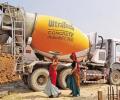
UltraTech currently has 19% market share with Shree Cement commanding 22% of the market
Shree Cement beats ACC in market value, Lupin ahead of Dr Reddy's Labs
Finance Minister P Chidambaram's efforts to bring down cement prices have finally borne fruit as cement manufacturers have introduced cuts in prices.
The recent price correction in broader markets has hit cement companies hard. So far in the current month, smallcap firms like Visaka Industries, Andhra Cements NCL Industries, Sahyadri Industries, and KCP have lost 19.7 per cent, 14.3 per cent, 13.8 per cent, 13.5 per cent, and 11.5 per cent, respectively. On the contrary, largecap companies, while registering losses for the month, have seen a softer blow.
Cement may get costlier by Rs 7 per bag of 50 kg because of the hike in freight rate by 5.79 per cent in Railway Budget today, but manufacturers of the building material said a final call will be taken after the Union Budget.

Analysts remain selective on cement stocks amid the likely government's capex push ahead of the scheduled general elections in May 2024. While UBS has initiated coverage on the Indian cement sector with an anti-consensus negative view and suggests investors sell select cement stocks on a rally, those at Nomura remain selectively bullish on the sector and prefer companies with large brownfield optionality and multi-region presence. In the near-term, UBS expects strong earnings of cement companies in the next two quarters to be driven by robust demand and margin tailwinds, but suggests any sharp uptick in stock prices could offer a good opportunity for booking profits in the related counters.
Cement companies witnessed speculative support from investors through FY23 amid hopes of a rebound. After capex announcements in the FY24 Budget, there was further interest due to expectations that government expenditure would boost earnings, besides a generic macro-recovery. Cement earnings were under pressure in FY22 and FY23 due to high raw material and fuel costs; muted demand prevented them passing on the higher cost.

BSE 200 companies together paid 5,819.75 crore as remuneration to their CEOs and directors in FY25, up from 5,352.8 crore a year earlier.
The cement industry continues to present a puzzle to investors.

The stocks are largely from sectors such as chemicals, finance and cement, which struggled earlier but the worse seems to be behind them.

With the increased death rate in the ongoing second wave of Covid-19, domestic cement companies are in no better condition than they were in the April-June quarter of FY21 when the country faced nationwide lockdown. "This wave has had high death rate which has impacted the business. "We are in no better situation than last (year) April. "Deaths of drivers, dealers, contractors and also employees have hit the industry really very hard since April (FY22)," M Ravinder Reddy, director of Bharathi Cements said.

Players like UltraTech Cement more expensive than ITC and HUL; others catching up fast.
The cement sector may be looking at better realisations and higher volume offtake going by the trends of the October-December quarter of the 2022-23 financial year (Q3FY23), a recent price hike, and the promise of a continued infrastructure thrust in FY24. In Q3, revenues rose by an aggregate of 17 per cent year-on-year (YoY), but Ebitda (earnings before interest, tax, depreciation and amortisation) per tonne, fell by 14 per cent YoY while profit after tax (PAT) rose by 23 per cent YoY. Expenses were up 30 per cent per tonne YoY - power and fuel costs in particular - and that's no surprise given the rise in fossil fuel prices.

In what could be a game-changing move for the struggling East Bengal, EPL giants Manchester United may end up taking the ownership of one of oldest football clubs in the country.

East Bengal finally got an investor with West Bengal chief minister Mamata Banerjee announcing on Thursday a joint venture of the century-old club with city-based Shree Cement company and making a strong pitch for its inclusion in the Indian Super League this year.
The possible acquisition of Holcim India business will be one of the biggest inbound corporate deals in the country. Currently, Walmart Inc.'s $16-billion acquisition of Flipkart Online Services in 2018 remains the biggest acquisition of an Indian asset by any acquirer, followed by BP plc acquisition of 30 per cent stake in Reliance Industries' 23 oil and gas production blocks in 2011 for $7.2 billion. Bloomberg reported late on Wednesday night that Holcim - the world's biggest cement maker - is considering a potential sale of its India business and gauging interest in its controlling stake in Ambuja Cement.

The 100-stock largecap basket of Mutual funds (MFs) has seen a major reshuffle in the latest semi-annual reclassification with seven midcap stocks and four new listings earning the largecap tag. According to a report from Nuvama Alternative & Quantitative Research, the midcap stocks that have been upgraded include CG Power, Rail Vikas Nigam, ICICI Prudential Life Insurance, Polycab India, Indus Towers, Cummins India, and Info Edge.

With infrastructure claiming a larger share, movement and distribution of cement is bound to change.

Half of India's top-priced stocks have outperformed the benchmark indices this year. On a year-to-date basis (YTD), the Sensex has gained 3.8 per cent and the Nifty50 3.4 per cent. The stocks which have outperformed the indices include 3M India, Nestle India, MRF, Shree Cement and Bosch while those who have underperformed the benchmarks include Page Industries (-10.4 per cent), Procter & Gamble (-4 per cent), Honeywell Automation (-0.9) and Lakshmi Machine Works, which gained 1.3 per cent.

Changes have been made in several indices including Nifty 500, Nifty 200, Nifty 100, Nifty Midcap 150, Nifty Smallcap 250 and host of sectoral indices including FMCG, IT, media, pharma, commodities and services sector.
In the domestic segment, demand is currently led by rural markets, oil and gas, LPG and B2C segments like roofing and sheeting.

A sum of Rs 7060 crore is provided in the current fiscal for the project of developing one hundred Smart Cities.

Ahmedabad-based firm to fund deal through equal amount of equity and debt.
Stocks to watch: ACC, Ambuja Cements, India Cements, Shree Cement, Ultra Tech Cement.
