
The outcome of the investigations essentially formed the basis for the Department of Telecommunications (DoT) to issue a sweeping directive on November 28 last year, mandating that app-based communication services like WhatsApp, Telegram and Signal must be continuously linked to an active, physical SIM card within the device.

The Indian government has directed app-based communication services like WhatsApp and Telegram to ensure continuous linkage to a user's active SIM card to combat cyber fraud. Non-compliance will result in penalties under the Telecommunications Act, 2023.

The missive has, however, polarised stakeholders, with mobile operators under COAI coming out in its support, while digital platforms under the aegis of Broadband India Forum expressing "serious concerns" around overreach and calling for a pause in implementation of timelines.

Social media unicorn ShareChat has laid off 200 employees, around 15 per cent of its workforce, in another round of layoffs this year to reduce costs and achieve profitability within the next six quarters. In January, Mohalla Tech Pvt Ltd, the parent company of platforms ShareChat and Moj, fired 500 employees, 20 per cent of its workforce. The same month, company co-founders Bhanu Pratap Singh and Farid Ahsan also stepped down from executive roles.

ShareChat on Thursday said it has raised $502 million (about Rs 3,725 crore) in funding led by Lightspeed Venture Partners and Tiger Global, valuing the homegrown social media platform at over $2.1 billion. Snap Inc (which owns photo-messaging app Snapchat) and existing investors Twitter and India Quotient, among others, also participated in the funding round in Mohalla Tech, the parent company of ShareChat and short video app, Moj. Founded in 2015, Mohalla Tech has raised over $766 million across six fundraising rounds.

The removal of over 54,000 accounts was the largest such removal yet.

Scrutiny of Google's code of conduct in the Indian Android ecosystem is far from over with several start-ups preparing to appeal against the company's revised policies of service fee on in-app purchases and subscriptions, according to sources in the know. This comes days after the National Company Law Appellate Tribunal (NCLAT) granted partial relief to the tech giant, reversing four of the 10 key non-monetary directives that would have forced Google to allow uninstalling of its pre-installed apps on Android devices. Paytm, BharatMatrimony, and ShareChat are among the start-ups that are likely to file grievances against the tech major for alleged non-compliance with the Competition Commission of India's (CCI's) cease-and-desist order on Play Store policies.

Internet giant Google is investing $10 billion in India's digitisation fund, its CEO Sundar Pichai has told Prime Minister Narendra Modi, a step that will recognise India's leadership on fintech and will support small and large businesses in India, the US and around the world. Pichai met Prime Minister Modi in Washington on Friday and also announced the opening of Google's global fintech operation centre in the Gujarat International Finance Tec-City (GIFT) in Gandhinagar. "It was an honour to meet Prime Minister Modi during the historic visit to the US. We shared with the Prime Minister that Google is investing $10 billion in India's digitisation fund," Pichai said.

Indian startups received about $6.5 billion in funding in the April-June 2021 quarter, while 11 of them entered the coveted unicorn club, a report by Nasscom-PGA Labs said. During the second quarter, 160 funding deals were closed -- up 2 per cent from the January-March period. "Q2 2021 has been impeccable for the start-up growth story. From being the most funded quarter, it has also added the most number of unicorns. "Standing tall during the pandemic second wave headwinds, Indian start-up ecosystem has shown a strong resilience in this quarter," the report said.

Sreesanth had been a part of the Indian side that lifted the T20 World Cup in 2007 and the ODI World Cup in 2011 under Dhoni's captaincy.

The idea behind starting Chingari is not to build a TikTok clone but to position itself as a super app for India like WeChat.

Tiger Global-backed Koo, an Indian alternative to Twitter, has laid off 30 per cent of its workforce of 260 employees in the last year as the budding firm, like many other start-ups in the country, battles global headwinds. "It's important for businesses of all sizes to adopt efficient and conservative approaches to see this period through. "In line with this, we have acted on some role redundancies by letting go of 30 per cent of our workforce over the course of the year," said a Koo spokesperson.

From Twitter to Facebook to Spotify, everyone it seems is clambering aboard the social audio bandwagon. Neha Alawadhi reports.

Indian startups have raised $42 billion in 2021, up from $11.5 billion in the previous year, a report by Orios Venture Partners said. The report titled 'The Indian Tech Unicorn Report 2021' said India saw 46 unicorns (companies with $1 billion valuations) in 2021 alone, more than doubling the total number of unicorns to 90. These include ShareChat, Cred, Meesho, Nazara, Moglix, MPL, Grofers (now Blinkit), upGrad, Mamaearth, GlobalBees, Acko, Spinny and others. India - with 90 unicorns - is the third-largest unicorn hub behind the US (487) and China (301), and ahead of the UK (39).

Uber on Tuesday said it is laying off about 600 employees in India -- about a quarter of its staff in the country -- as business has taken a major hit amid the COVID-19 pandemic. The development comes days after rival Ola had announced laying off 1,400 people from its rides, financial services and food business.

In platforms, such as Twitter, Facebook, TikTok, Helo, and ShareChat, mediators have been asked to put in more hours to ensure that no communal or fake news spread.

The sources said Twitter has not sent details of Chief Compliance Officer to the ministry and only shared details of a lawyer working in a law firm in India as their Nodal Contact Person and Grievance Officer.

Banking technology start-up Zeta is the latest entrant to the unicorn club after raising $250 million in its Series C round from SoftBank Vision Fund 2. Sodexo participated as an additional minority investor in the round. Founded by serial entrepreneur and billionaire Bhavin Thurakia, the startup is now valued at $1.4 billion. It is the 14th company this year to cross the $1 billion valuation mark after Meesho, Cred, Pharmeasy, ShareChat, Moglix and others.

Eighteen months after the government started banning Chinese mobile apps, two distinct changes have occurred in the country's mobile app sweepstakes. The move has given a thrust to domestic app publishers, especially in certain segments and it has dramatically reduced the market share of Chinese apps. What started as an interim government ban on 59 Chinese apps, including the highly popular TikTok and WeChat in March 2020 ended as a permanent ban on many of them in January this year. According to a China Internet Report 2021 (by South China Morning Post), the market share of Chinese apps in India has dropped substantially from 44 per cent in 2018 to only 29 per cent in 2020. In 2017 it was 41 per cent.

Their startup investments number 13 so far, compared to 17 deals in 2020.
The top five most mentioned Twitter accounts in tweets as on Thursday were those of Narendra Modi (@narendramodi) with 16,395 tweets, followed by @BJP4India (BJP's verified Twitter account) with 11,875, @RahulGandhi with 5,398, @INCIndia with 4,202 and @AmitShah with 3,496.

First it was called content-led commerce. Then it came to be known as influencer-led commerce. And its latest iteration is creator economy. This evolution of the terminology for online personas impacting buying decisions -- through blogs, memes, bite-sized videos, and podcasts -- has happened over the past five to seven years.

This is thrice of what agencies seized during the 2014 Lok Sabha poll process, reports Archis Mohan.

The Chinese government is imposing severe restrictions on their tech companies - whether it is on data security, marketing practices or floating an IPO. Should this be music to the ears of Indian start-ups and home-grown private equity (PE) funds? Ask Indian start-ups and the answer is a resounding "yes".

Multi apps will be designed by taking core parts of the Hike product and remoulding them into creating new apps, each delivering one service -- Social and Messaging in one and Content in another, report Patanjali Pahwa and Karan Choudhury.

Companies, industry associations, law firms and individuals have pointed out the lack of clarity on how the changes are worded and said it would violate user privacy.
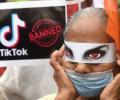
The ban in India would hit Chinese internet companies that were making headway in the world's fastest-growing mobile market.

The party workers were busy overseeing the preparations for the D-Day and said the exit polls had underlined what they were always confident about.

The average salary of a content manager with less than a year's experience is Rs 369,000 per annum.

'Political parties and leaders understand the impact the new media can have on outcomes.' 'From treating them as broadcast tools five years ago, now they look at them as arsenal that can potentially change electoral outcomes.'

As we get used to a long haul of isolation to curb the spread of COVID-19, the police's new avatar in many places is a far cry from that of the high-handed enforcer of law and order.

Google is going ahead with a policy revision mandating 30% charge on in-app purchases across all apps on Play Store. This has left developers' community worried about tighter squeeze on their earnings, says Yuvraj Malik.

A Molotov cocktail of lies, abuse and bigotry is blowing up social media.

Digital campaigns compared to billboards or even print ads not only have the power to reach wider audiences but also reduce the campaign costs. The focus on social media by political parties at election time, therefore, is hardly misplaced.
 © 2026 Rediff.com - Advertise with us - Disclaimer - Privacy Policy - Sitemap - Feedback - About us - Terms of use - Grievances