
Securities Transaction Tax is applicable on purchase or sale of equity shares, derivatives, equity oriented funds and equity oriented mutual funds.
The government will reduce taxes levied on various transactions in the securities market, a move that will help in bringing down the overall cost for investors.

The government on Friday proposed hiking the securities transaction tax on Futures & Options (F&O) contracts, a move that will increase the trading costs in the derivatives segment as well as help in curbing excessive trades. In the Finance Bill 2023, passed by the Lok Sabha on Friday, the Securities Transaction Tax (STT) on options is proposed to be increased to 0.0625 per cent from 0.05 per cent and on futures contracts to 0.0125 from 0.01 per cent. Analysts opined that higher STT will shore up the government's revenues to some extent and also discourage excessive trading since a large number of retail traders are losing money in the segment.

Securities Transaction Tax (STT) reduced on cash delivery transactions by 20 per cent from 0.125 per cent to 0.1 per cent on cash delivery transactions.

Finance Minister Nirmala Sitharaman on Tuesday said the securities transaction tax (STT) will be increased on futures and options (F&O) trade from October 1 to discourage retail investors from investing in the risky instrument.
The Union government's revenue from securities transaction tax (STT) is on track to exceed its Budget projection for the current fiscal year, with the mop-up already surpassing 50 per cent of the annual estimate. Provisional figures reveal that the Centre has collected approximately Rs 14,000 crore in the first half of this fiscal year up to September, according to a government official. This amount exceeds half of the full-year target of Rs 27,625 crore set for FY24.

India's net direct tax collections have surged by 16.4 per cent year-on-year to 6.51 trillion as of July 13, primarily driven by robust growth in corporate tax receipts, according to provisional data from the Central Board of Direct Taxes (CBDT).

India's net direct tax collection has surged by 13 per cent to over Rs 12.12 lakh crore by September 17 in the current fiscal year, driven by a significant increase in advance tax payments from corporates, according to CBDT data.
A N Shanbhag explains various issues related to the Securities Transaction Tax

A deposit is not necessarily taxable simply because it appears in a bank account. What matters is whether its source can be satisfactorily explained.
The proposal to impose a transaction tax on all securities at the uniform rate of 0.15 per cent has been rolled back.
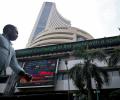
India's derivatives market experienced a significant 23 per cent fall in average daily contracts traded in August, reaching a 13-month low of 224 million. This decline is primarily attributed to regulatory changes, including a higher securities transaction tax (STT) and enhanced collateral requirements, alongside the introduction of a closing auction session.

Sectors throw up a wishlist for the Finance Minister.

India's net direct tax collection has seen a robust 15 per cent increase, reaching approximately 5.21 trillion in the first two and a half months of FY27, as on June 17, driven by strong growth in both corporate and non-corporate tax segments.
The Securities Transaction Tax regime covering shares as well as mutual funds has come into effect from October 1.

The Congress party has criticised the government's new 0.4% charge on UPI transactions above Rs 2,000 for merchants, terming it a "Modi tax". Opposition leaders, including Rahul Gandhi and Mallikarjun Kharge, allege that this move will ultimately burden consumers through price hikes and accuse the government of succumbing to American pressure to dilute India's zero-MDR policy. The government states the charge will support banks and fintechs.

Finance Minister Nirmala Sitharaman announced that the Goods and Services Tax (GST) Council's October 7 meeting will focus on 'GST 2.0' process reforms, including e-invoicing and input tax credit rules, while also addressing complex issues surrounding the taxation of the digital economy and cryptocurrency.

The FM also said the government has proposed a joint panel of Corporate Affairs Ministry and CBDT for incorporation of income computation and disclosure standards.

'AIS helps taxpayers check whether all income streams and reportable transactions -- such as interest from old bank accounts, small dividend receipts or transactions across multiple brokers -- have been properly disclosed.' 'Mismatches between these transactions and declared income may trigger automated notices or scrutiny.'

The economy overall was bleak last year with sticky inflation forcing the RBI to raise the interest rates aggressively.

The Closing Auction Session (CAS) on expiry day led to unprecedented volatility in the Nifty 50 and Sensex, causing the indices to swing wildly in just 14 minutes and raising concerns among traders about market manipulation and increased speculation.
The deduction of Securities Transaction Tax on trade in equities will come into force in major bourses from October 1.

The Indian government has introduced a 0.4% fee on UPI transactions above Rs 2,000 for merchants, effective October 15, sparking strong opposition from political parties and traders. Despite accusations of foreign influence and demands for a rollback, the finance ministry and top functionaries have stated there will be no reversal, citing the need for a self-sustaining digital payments ecosystem.

Sebi cautions investors against fake notices demanding Securities Transaction Tax (STT) payments and warns about fraudsters posing as account handlers promising risk-free profits.
The Finance Ministry has clarified that the decision to impose a 0.4% Merchant Discount Rate (MDR) on UPI transactions above Rs 2,000 was made independently, refuting claims of foreign influence. The ministry stated the policy aims to build a self-sustaining digital payments ecosystem, with MDR funding infrastructure and supporting small merchants.
Finance Minister P Chidambaram on Wednesday exempted bonds from the new transaction tax and reduced the levy on day traders and arbitrageurs from 0.15 per cent to 0.1 per cent.

The Congress party has criticised the Modi government over a notification regarding UPI transactions, alleging it paves the way for imposing fees, especially on transactions above Rs 2,000. Rahul Gandhi claimed the government is surrendering to American pressure, while Mallikarjun Kharge highlighted the potential burden on common citizens amidst inflation. The government's notification prohibits charges on UPI transactions up to Rs 2,000 but remains silent on higher amounts, sparking fears of a "Digital Payments Tax."

The Central Board of Indirect Taxes and Customs (CBIC) is set to significantly increase its use of artificial intelligence (AI), machine learning (ML), and real-time analytics in Customs processes, aiming for a near-touchless, near-digital clearance experience, according to Chairman Vivek Chaturvedi.

The Indian government has confirmed there will be no rollback of the 0.4 per cent Merchant Discount Rate (MDR) charges on Unified Payments Interface (UPI) transactions exceeding Rs 2,000, effective from October 15. Despite opposition, officials state the decision aims to make the UPI ecosystem self-sustainable and secure, with charges applying only to merchant payments, not person-to-person transactions.
Taxpayers must provide more details to support deduction and exemption claims.

Can your money be protected against online frauds like hacking, digital arrests, etc?

'Taxpayers should not ignore any of these notices. Verifying the facts and responding promptly can help resolve issues early and avoid unnecessary litigation.'

The government is introducing a 0.4% Merchant Discount Rate (MDR) on UPI person-to-merchant payments above Rs 2,000, effective October 15. This move ends the zero-MDR regime, aiming to fund UPI infrastructure and sustainability, as the previous government subsidy was insufficient to cover operational costs. Payments between individuals and most everyday merchant transactions will remain free.

The National Payments Corporation of India (NPCI) stated that the Merchant Discount Rate (MDR) "is distributed only amongst the UPI ecosystem, to further invest into infrastructure resilience, innovation, cybersecurity (protecting the UPI infrastructure with banks and non-banks) and customer service."

rediffGURU Vipul Bhavsar answers readers' personal income tax queries

India's net direct tax collections increased by 5.12 per cent to over Rs 23.40 lakh crore in the 2025-26 fiscal year, but this figure still fell short of the revised budget target of Rs 24.21 lakh crore, primarily due to income tax cuts implemented earlier in the year.

Pitching for a slew of reforms in the Indian capital markets, leading bourse BSE has suggested the government bring in a new transaction taxation structure and besides seeking tax pass through status for Infrastructure Investment Trusts (InvITs).

The authorities have said that it is not permissible to examine and review in 2026 the decision taken by the trustees in 1988 regarding the existence of necessity for transfer of shares.
Apprehending a sharp decline in business, mutual funds including UTI AMC have asked Finance Minister P Chidambaram to exempt all debt instruments from the proposed 0.15 per cent transaction tax.

What items did Finance Minister Nirmala Sitharaman make costlier?
