
Sebi allowed the deal with some riders, five months after it was announced last August.

Sebi also plans to examine if any comments made by company officials or the bankers could have misled investors.

Stock exchanges have sought clarification on violation of disclosure norms by Adani Group entities regarding the alleged bribery case in the US and subsequent cancellation of Kenya's airport expansion deal. In its response to the case in the US, Adani Group firms on Thursday had said "there are no allegations made against the company". On clarification with regard to Kenya cancelling airport expansion and energy deals following the US bribery and fraud indictments, the group is yet to respond to the bourses.

The Supreme Court has dismissed a plea seeking review of its January 3 verdict by which it refused to transfer the probe into allegations of stock price manipulation by the Adani Group to a special investigation team or the CBI.

In the high profile co-location case, markets regulator Sebi on Wednesday imposed a penalty of Rs 1 crore on the NSE for failing to provide a level-playing field for trading members subscribing to its tick-by-tick (TBT) data feed system. In addition, the regulator levied a fine of Rs 25 lakh each on NSE's former managing directors and chief executive officers Chitra Ramakrishna and Ravi Narain. Alleged lapses in high-frequency trading offered through NSE's co-location facility came under the scanner of the watchdog after a complaint was filed in 2015.

Madhabi Puri Buch, the first female chairperson of Sebi, doesn't plan to rest on her laurels in her third and final year in office and has set out an ambitious goal, such as moving towards a same-day and instantaneous settlement cycle for the secondary market.

While basic policies focus on structural damage, comprehensive ones extend to household contents like furniture, electronics, clothing, and other personal belongings.

Markets regulator Sebi and the Directorate of Revenue Intelligence (DRI) are probing some Adani Group companies for alleged non-compliance with rules, the government told Lok Sabha on Monday. Minister of State for Finance Pankaj Chaudhary in a written reply to a question said accounts of three of the six Mauritius-based funds, that have invested most of their money in Adani Group firms, were frozen in 2016 over the issuance of Global Depository Receipt (GDR) by certain listed firms. No freeze was ordered for their holding in other firms.

Among other measures, for stocks in F&O segment meeting certain criteria, Market Wide Position Limit might be revised to 50 per cent of the existing levels.

Several brokers used shares of dormant or inactive clients to provide margins for other more active clients. This prompted Sebi to rework its entire system of pledging.

Markets regulator Sebi on Tuesday imposed a penalty of Rs 5 crore on NDTV for its failure to disclose price-sensitive information about VCPL loan agreements but the company denied the charges and said it will appeal against the ruling. The loan agreements had clauses and conditions that substantially affected the functioning of the media company, Sebi said in its order. The regulator said its probe began after receipt of complaints in 2017 from Quantum Securities Pvt Ltd about an alleged violation of rules by non-disclosure of material information to the shareholders about loan agreements with Vishvapradhan Commercial Private Ltd (VCPL).

Digital financial services firm Paytm has received market regulator Sebi's approval for its Rs 16,600 crore initial public offer, a source involved in the process said on Friday. The company expects to hit the bourses by the end of this month and is planning to skip the pre-IPO share sale rounds to fast-track listing.

The three companies have been issued observations by the watchdog, according to the update on the processing status of draft offer documents as on October 8. An observation letter is mandatory for an initial share sale. In Sebi parlance, the issuance of observations implies its go-ahead for the IPO. One Mobikwik Systems Ltd is a leading mobile wallet (MobiKwik Wallet) and Buy Now Pay Later (BNPL) player in India.
Markets watchdog Sebi on Tuesday decided to tighten norms for utilisation of IPO proceeds by companies, introduce special situation funds to invest only in stressed assets and amend various regulations, including those on mutual funds and settlement proceedings. The board of Sebi, which met on Tuesday, also gave its nod for amending Foreign Portfolio Investor (FPI) regulations and introducing a provision for appointment or re-appointment of any person, including as a managing director or a whole time director or a manager, who was earlier rejected by the shareholders at a general meeting. Once the amended norms are in place, such appointments or re-appointments can only be done with the prior approval of the shareholders.

IndiGo has been facing a probe by Sebi ever since a public spat came to light between two founders of the airline, including over certain related party transactions involving one of the warring promoters.

The new wing will be known as the corporate finance investigation department, which will be headed by one of Sebi's executive directors. This department will have information technology solutions experts, particularly to detect the menace of frauds.

Under the new guidelines, the top 10 active equity schemes in terms of assets would collectively require investments of around Rs 365 crore -- up from mandated Rs 50 lakh at present -- in their own schemes.

Markets regulator Sebi on Wednesday ordered attachment of bank accounts as well as share and mutual fund holdings of Rana Kapoor, former MD and CEO of Yes Bank, to recover dues of over Rs 1 crore. The decision has been taken after Kapoor failed to pay the fine imposed on him. Sebi, in September 2020, had levied a fine of Rs 1 crore on Kapoor for not making disclosures regarding a transaction of Morgan Credit, which was an unlisted promoter entity of Yes Bank.

'Many do not have robust business models, and their prospects of survival and long-term growth are poor.'
While experts' views are divided, the move is aimed at improving the coordination between the government and the regulator.
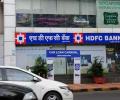
HDFC Bank on Wednesday reported a 2.3 per cent year-on-year rise in its consolidated net profit to Rs 17,657 crore for the October-December quarter, restricted by slower loan growth. On a standalone basis, the largest private sector lender's net profit came at Rs 16,735.50 crore for the period, up from Rs 16,372.54 crore in the year-ago period, but marginally down from the preceding quarter's Rs 16,820.97 crore.

Sebi on Monday barred Franklin Templeton AMC from launching any new debt scheme for two years and fined it Rs 5 crore for violating regulatory norms in the case of winding up of six debt schemes in 2020. Also, it has been asked to refund investment management and advisory fees to the tune of Rs 512 crore, including interest, collected with respect to the six debt schemes, Sebi said in its 100-page order. In a separate order, the regulator has barred Vivek Kudva, former head of Asia Pacific (APAC) for Franklin Templeton, and his wife Roopa from the securities market for one year for redeeming units of Franklin Templeton MF schemes while in possession of non-public information.

Coming down heavily on MF players who in recent past chose to use shareholder fund to buy out debt of bleeding invested companies, Sebi said MFs can't have standstill agreements with companies and will take action against fund houses for such deals.

Regulator Sebi on Friday imposed penalties on Reliance Industries Ltd, its chairman and managing director Mukesh Ambani as well as two other entities for alleged manipulative trading in the shares of erstwhile Reliance Petroleum Ltd (RPL) back in November 2007. Fines of Rs 25 crore and Rs 15 crore have been imposed on Reliance Industries Ltd (RIL) and Ambani, respectively. Besides, Navi Mumbai SEZ Pvt Ltd has been asked to pay a penalty of Rs 20 crore and Mumbai SEZ Ltd has been directed to pay Rs 10 crore. The case pertains to sale and purchase of RPL shares in the cash and the futures segments in November 2007.

'Investors should do proper analysis before putting in their money in NFOs as most new launches are in the high-risk thematic space.'

Billionaire Gautam Adani's group on Monday announced its exit from FMCG joint venture Adani Wilmar by selling its entire stake to the Singaporean partner and in the open market for an estimated over $2 billion in a first major deal since the US bribery indictment. In a statement, Adani Enterprises Ltd -- which held 43.94 per cent stake in Fortune brand cooking oil, wheat flour and other food product maker Adani Wilmar Ltd -- said it will sell 31.06 per cent stake to Wilmar International. About 13 per cent will be sold in the open market to meet minimum public shareholding requirements.

The company, backed by China's Ant Group, is planning to issue fresh shares worth Rs 7,500 crore in the IPO. This will make this India's third-largest offering after Reliance Power and DLF.

Growth-oriented technology companies have raised Rs 15,000 crore through initial share sales in the last 18 months and IPOs worth around Rs 30,000 crore by such firms are in the pipeline, Sebi chairman Ajay Tyagi said on Thursday. "Growing number of unicorns in the startup ecosystem is a testimony of the new age tech companies coming of age in our economy. These companies often follow a unique business model focusing more on rapid growth than immediate profitability," Tyagi said at an event organised by industry body CII. During the last 18 months, growth-oriented technology companies have raised a sum of around Rs 15,000 crore through IPOs (Initial Public Offerings).

The markets regulator, Securities and Exchange Board of India (Sebi), recently introduced fresh guidelines to determine the place of a mutual fund (MF) on its riskometer tool.

Adani Group on Friday raised Rs 4,850 crore from the sale of 13.5 per cent of its stake in Fortune oil maker Adani Wilmar as part of a strategy to exit non-core activities to focus on main infrastructure business. The conglomerate, which last month announced its exit from Adani Wilmar by selling the bulk of its stake to a joint venture partner, had on Thursday announced sale of 17.54 crore shares (13.50 per cent equity) in the company on January 10 (to non-retail investors) and on January 13 (to retail investors) at a floor or minimum price of Rs 275 apiece.

Life Insurance Corporation (LIC) on Wednesday said markets regulator Sebi has granted an additional 3 years time till May 16, 2027 to comply with the 10 per cent public shareholding norm. Currently, government holding in LIC is 96.50 per cent, while public holding is 3.50 per cent.

The National Financial Reporting Authority (NFRA) will invite public comments on the revised International Standard on Auditing 600 (ISA 600) proposed to be adopted by publicly listed companies and non-public-sector banks, sources close to the development told Business Standard. The decision to take this "graded approach" for the adoption of the ISA, which is meant to rein in auditors often found hiding behind the audit reports signed off by subsidiary companies, was taken at a meeting of various financial sector regulators at NFRA's board meeting on Monday (August 26). The idea behind upgrading the Standards of Audit 600 currently followed by Indian auditors to ISA 600 is to plug current gaps, which have led to major audit lapses in the recent past.

As the country moves towards creating a spot gold exchange, markets regulator Sebi's whole time member G Mahalingam on Wednesday suggested routing all the imports of the precious metal through the exchange ecosystem in the future. Such a "funnelling" would ensure that gold monetisation takes place right at the source as the metal enters the country, he said while addressing a conference organised by industry lobby Ficci. However, he also noted that the issue has not been dealt with in the papers floated by Sebi.

The Adi/Nadir Godrej family, along with other family members/trusts, has made an open offer to the shareholders of Astec Lifesciences to acquire an additional 26 per cent stake from the public as part of the family settlement agreement (FSA), according to an announcement to the stock exchanges on Wednesday. The offer, made at the price of Rs 1,069.75 per share, was triggered by the Adi/Nadir family's plan to acquire a 20.84 per cent stake in Godrej Industries (GIL) from the Jamshyd Godrej/Smita Crishna Godrej family, according to the FSA announced on Tuesday.
The watchdog would provide an additional option to the existing pricing methodology for preferential issuances.

F&O trading is a zero-sum game where one person's loss is another's gain. Only one per cent of traders gained the money lost by 93 per cent, warns Harsh Roongta.

Reliance Jio, the telecom business of the Mukesh Ambani-promoted conglomerate, is expected to go for an initial public offering (IPO) of over $6.25 billion either in the second or the third quarter of the calendar year 2025, sources said. Reliance Retail is likely to be listed around the same time with a short gap, it is learnt. The timing of the two IPOs, however, will depend on the company's assessment of the market conditions among other factors.

Goldman Sachs expects gold to reach $3,150 per ounce in the international market by December 2025, up around 19.1 per cent from its current level of $2,645, according to a recent report in Business Standard. Domestically, gold is trading at Rs 76,018 per 10 grams after delivering a remarkable 21.9 per cent return in the past year.

'Choose an equity allocation that will allow you to remain invested even if the market falls by 50 to 60 per cent.'

During the first eight months of CY24, 50 IPOs mobilised Rs 53,453 crore.
