
'Defence, capital goods, engineering, capital market-related stocks, autos, and cement sectors are my bullish bets for Samvat 2082.'

These nations officially top the list when it comes to maximum number of official days off.

After a year of modest returns, equity investors may anticipate gains of 10-15 per cent in Samvat 2082, which began on October 21. Although valuations have moderated from their peaks a year earlier, they remain above long-term averages, potentially limiting sharp upsides.
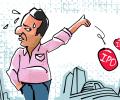
'The primary market's rhythm mirrors investor confidence. While sentiment may appear cautious, it reflects maturity, not weakness.'

Among the Sensex shares, Infosys, Tata Motors, Axis Bank, Adani Ports, Mahindra & Mahindra, HDFC Bank, Larsen & Toubro, Tata Steel, BEL and Power Grid were among the lead gainers. Kotak Mahindra Bank, ICICI Bank, Bharti Airtel, Asian Paints, Bajaj Finserv, and Titan were the among the laggards.

'The outlook for the next Samvat is more constructive, as many of the earlier drags are gradually becoming supports.'

Among major Sensex gainers, Mahindra & Mahindra rose the most by 3.29 per cent. Adani Ports gained 1.26 per cent, Tata Motors by 1.14 per cent, and Axis Bank by 0.92 per cent. Nestle, NTPC, Reliance, ITC Titan, Kotak Bank, Infosys and TCS also gained. HCL Tech, Tech Mahindra, and ICICI Bank were the losers.

Domestic institutional investors (DIIs) have infused a record Rs 4.6 trillion into Indian equities over the course of Samvat 2080, marking the highest net annual investment in any Samvat to date. This robust domestic inflow has effectively counterbalanced the comparatively subdued investments from foreign portfolio investors (FPIs), who contributed a net Rs 90,956 crore within the same timeframe. Against this backdrop, the Nifty 50 and BSE Sensex indices are on track to achieve their best performance in three Samvat years, despite recent market corrections.

'Higher interest rates make gold less attractive as it doesn't generate yield.' 'However, with rates set to fall, the tables are turning for gold.'
Among major Sensex gainers Bajaj Finserv rose the most by 1.42 per cent, Axis Bank gained 0.80 per cent, Infosys by 0.72 per cent, Mahindra & Mahindra by 0.60 per cent, Tata Motors by 0.55 per cent, Bajaj Finance by 0.53 per cent and Tata Steel by 0.52 per cent. Kotak Mahindra Bank, ICICI Bank, HCL Technologies, Bharti Airtel, Maruti Suzuki India, Trent Ltd and Tata Consultancy Services were the losers.

The National Stock Exchange (NSE) on Monday said it will conduct a special Muhurat trading session on Tuesday, October 21, to mark the festival of Diwali.

Among the Sensex shares, Infosys rose the most by 1.37 per cent, followed by Larsen & Toubro (0.90 per cent), and Wipro (0.83 per cent). HDFC Bank, ICICI Bank, Reliance Industries, ITC, TCS, Kotak Bank, Asian Paints and Titan were among the lead gainers.
Riding the wave of the equity market, the mutual fund (MF) industry experienced double-digit growth in Samvat 2079, concluding the Hindu calendar year close to the Rs 50 trillion assets under management milestone. After a subdued 6 per cent growth in Samvat 2078, the industry's assets surged over 18 per cent last year to Rs 46.7 trillion. Industry players anticipate that Samvat 2080 will also be a fruitful year for the asset management industry, given the strong inflows from retail investors, particularly through the systematic investment plan route.

The new Samvat 2080 is viewed as a year of hope for industrial and precious metals. A key reason is the expectation of US interest rates peaking, followed by a reduction in the coming months. Regarding crude oil, its trajectory depends more on how the situation unfolds in West Asia.

Equity market investors would track global trends, foreign fund movement and quarterly earnings in a holiday-shortened week ahead, analysts said. Stock exchanges BSE and NSE will conduct a special Muhurat trading session on Tuesday, October 21.

Market benchmark BSE Sensex rallied 635 points to 59,942 in the opening trade of the special Muhurat session on Monday to mark the beginning of Hindu Samvat year 2079. The 30-share index was trading higher by 635.12 points, or 1.07 per cent, at 59,942.27 in the first few minutes of trade. Similarly, the broader NSE Nifty surged 192.20 points or 1.09 per cent to 17,768.50.

The likelihood is that India will maintain a moderately upbeat economic tempo -- well short of tearaway growth, explains T N Ninan.

: Build lasting wealth via disciplined, long-term mutual fund investing in India's compounding marathon, Shanaihi, Shanaihi, says Ramalingam Kalirajan


M&M led the gainers' pack, spurting 2.76 per cent, followed by ITC, Kotak Bank, L&T, SBI, Bajaj Auto and Nestle India.

A total of 49 companies raised Rs 81,615 crore in Samvat 2077, more than the preceding four years and almost double the amount raised in the previous year. Samvat 2078 appears even more promising with mega issues of Paytm and Life Insurance Corporation (LIC) of India. However, Paytm's record could be short-lived as state-owned LIC is planning to launch a Rs 1-trillion IPO by March 2022.

The broader NSE Nifty, after shuttling between 10,600.25 and 10,491.45 points, ended the last session of Samvat 2074 with a rise of 6 points, or 0.06 per cent, to end at 10,530.

Despite unprecedented levels of uncertainty in Samvat 2077, investors have little to complain about on the returns front. The BSE Sensex delivered returns of 38 per cent in this period, while the Nifty registered a return of over 40 per cent. As is the case in bull markets, companies in the small- and mid-capitalisation basket outperformed the benchmarks, with returns almost twice those of frontliners.
It has been a choppy Samvat 2069 for the global markets.

You will need a sharper eye for stock picking and a greater appetite for risk than most retail investors possess, recommends T N Ninan.
Fourteen stocks have appreciated by more than 1000 per cent this Samvat, with Walchand and MMTC being the only better known stocks.
The BSE benchmark Sensex rose 192 points to end at 39,250 on Sunday as investors built up fresh positions in the special Muhurat trading session to mark the beginning of Hindu Samvat year 2076.

Experts believe there are more such decisions in the offing, which along with a recovery in economic growth and India Inc.

Samvat 2071: Sensex drops most in 4 years

After a strong run in the midcap and smallcap indices, which surged 46 per cent and 43 per cent, respectively, on the National Stock Exchange (NSE) during Samvat 2080, analysts suggest that the rally in these segments may pause to catch its breath in Samvat 2081.

The BSE Mid-and Small-cap indices outperformed their larger peers rising 72 per cent and 52 per cent, respectively, during Samvat 2070.

Veterans recall they haven't seen gold falling for 3 years in a row.
Indian stock markets are likely to remain bullish during the current Hindu calendar year (Samvat 2071) and investors would continue to reap rich gains, say experts.
Experts say the BSE Sensex could rise to around 32,000 in a year.
The index opened with a positive gap of 447 points at 8,957 on the back of positive cues from the global markets. The Sensex moved in a range of 9,057 to 8,909, and finally ended with a gain of 499 points at 9,008.
Contrary to usual practice, the new Samvat year, the most auspicious day for Indian business, will start from home this year, as traders have downed their shutters across the country to protest against value added tax system

The BSE benchmark Sensex recovered by nearly 44 points in early trade today on buying by funds and retailers amid a mixed trend in Asian region.

Price up on weak dollar and strong demand
