Banks enjoyed an expansion in Net Interest Margins (or NIMs) as well as in credit demand through the 2022-23 financial year (FY23). The credit expansion was because economic growth continued to recover from the Covid-19 years, and indeed, second half GDP growth surprised on the upside. The NIM expansion was because banks raised lending rates immediately (in many cases automatically due to floaters) as the Reserve Bank of India (RBI) hiked policy rates, and only started raising deposit rates late into the fiscal.

India witnessed 22 initial public offers worth over $2.5 billion in the first three months of 2021 amid "high momentum" in the country's capital markets and the trend is likely to stay bullish in the current quarter also, according to a report. Leading consultancy EY India's IPO (Initial Public Offer) report released on Wednesday showed that consumer products and retail, diversified industrial products, automotive and transportation were the most active sectors in terms of the number of IPOs in the 2021 first quarter. The IPOs include both in the main as well as SME (Small and Medium Enterprise) markets.

If a 5% to 10% fall in the equity market gives you sleepless nights, you are not cut out for a 75% to 80% allocation to equities and must reduce it.

Make the most out of the fresh guavas arriving in the marker with this unusual seasonal recipe.

The Soros Economic Development Fund, Omidyar Network, and Google.org on Wednesday said they are working together to create a new $17 million small to medium enterprise investment company for India in Hyderabad to create job opportunities.

Reliance has significant investments in telecom, consumer retail and media businesses in India.

Bajaj Finance's quarterly business update, coupled with around 24 per cent fall over the past six months, has turned risk-reward favourable for investors, observe analysts. They see up to 39 per cent upside in the stock, from a one-year perspective. Global brokerage CLSA, for instance, has upgraded the stock from 'underperform' to 'outperform' with an increased one-year target price of Rs 6,600 (vs Rs 6,000 earlier) as it believes the risk-reward has turned favourable for the counter, and there is scope for expansion if growth remains robust.

Axis Bank's results for the fourth quarter of the 2022-23 financial year (Q4FY23) were skewed due to large one-off charges related to its acquisition of Citi's retail business. Axis reported a loss of Rs 5,730 crore on account of exceptional items of Rs 12,350 crore (net of tax) towards Citi's acquisition, policy harmonisation etc. Excluding this one-off, the adjusted net profit or profit after tax (PAT) would be Rs 6,630 crore, up 61 per cent year-on-year (YoY).
"While setting up exchange for SMEs, Sebi should come out with separate rules so that they do not have to incur high expenses on advertising for their public issues and reports to the investors," a senior official in the ministry of micro, small and medium enterprises. He said the ministry would try to impress upon the Securities and Exchange Board of India to ensure that these units do not have spend too much while raising funds from the market.

The study covers 3,234 SMEs, with sales turnover ranging from Rs 1 crore (Rs 10 million) to Rs 500 crore (Rs 5 billion). It includes manufacturing, trading and service companies in 30 industries across 20 states.

The Indian financial services space seems to be in a sweet spot as foreign investors have made a net investment of Rs 14,205 crore ($2.1 billion) in the sector in November amid strong credit growth and manageable non-performing loan portfolio. The investment comes following a net withdrawal of Rs 4,686 crore from financial services stocks in October on account of profit booking. Overall, foreign portfolio investors (FPIs) have made a net investment of Rs 36,238 crore in the country's equity markets in November.
'When we look at the quality of our retail loan book, the non-performing asset percentage is low.'

The World Bank must become Archimedes's lever to help change the world into a more prosperous, inclusive, and sustainable planet in the 21st century. The change in leadership now provides that opportunity, observes Ajay Chhibber.

HDFC Bank was the top loser in the Sensex pack followed by IndusInd Bank, Axis Bank, HDFC, Maruti and Bajaj Finance. NSE Nifty fell 171 points to 15,752.40.

The government has brought in changes to the investment pattern for non-government provident funds, and superannuation and gratuity funds, enabling them to invest up to 5 per cent in the units of Category I and Category II alternative investment funds (AIFs), subject to some caveats. The development is part of the central government's strategy to channelise domestic savings and improve their returns to attract more investment in the said sectors. At present, these funds typically invest a minimum 45 per cent in government securities, besides new instruments, such as exchange-traded funds and real estate investment funds, while a portion in equity-related instruments.

'For our traditional membership base, it would be an access to disruptive ideas,' FICCI President Subhrakant Panda tells Asit Mishra/Business Standard.

Just 14 companies raised Rs 35,456 crore through main-board primary share sales in the first half of the fiscal, down 32 per cent from the year-ago period when 25 issues had mopped up Rs 51,979 crore. But according to Prime Database, the IPO pipeline is strong with 71 issues worth Rs 1,05,000 crore having Sebi approvals and another 43 worth about Rs 70,000 crore are awaiting approval. Of these 114 planned issues, 10 are new-age tech companies, which are looking to raise roughly Rs 35,000 crore.
Google's intent in India is to make it an 'online and mobile first' advertisement market.

There are loans to salaried people where the borrower is employed, but has failed to make repayment. Such loans would be identified and sold in a pool to ARCs.
Power2SME, a one-stop shop for sourcing and buying raw materials for SMEs, is the only B2B firm in this space.

The coming years could be exciting for Bandhan Bank, IDBI Bank, IDFC First Bank, Federal Bank, and CSB Bank.
Reliance Industries was the top gainer in the Sensex pack, rising over 1 per cent, followed by M&M, HCL Tech, Axis Bank, ICICI Bank and HUL. On the other hand, Bharti Airtel, Maruti, SBI, PowerGrid, NTPC and Tata Steel were among the laggards.

As many as 56 firms collectively mopped up Rs 17,283 crores through IPOs during the April-September period of 2016-17.
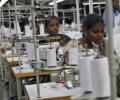
'We have 750 districts across the country, and each district can create one cluster like Tirupur on any product of their choice.' 'This way, we can even have $3 trillion in exports.'

Ajit Mishra, vice president, research, Religare Broking, answers your stockmarket queries.

The minister added that the exchanges should not be discouraged by the failure of past attempts at launching such a dedicated platform for small exchanges.

Commercial banks in the country continued with their improving asset quality trend in the October-December 2021 quarter with slippages remaining under control coupled with healthy recoveries and upgradation of asset classification. The 28-listed banks reported improvement in bottom line with net profits rising 64.1 per cent year-on-year (YoY) and 21.5 per cent sequentially. This is mostly on account of a fall in provisions and contingencies.

There has been a "sharp decline" in collection efficiencies in retail asset pools across asset classes in May due to the second wave of the pandemic, with microlenders witnessing a dip of up to 20 per cent, a report said on Monday. "ICRA has observed a sharp decline in the collections of its rated securitisation transactions in April 2021 (i.e. May 2021 payouts), following the rise of COVID-19 cases and imposition of lockdowns/movement restrictions which has impacted the operations and collection activities of the NBFCs and HFCs," the report from domestic rating agency ICRA said. A major part of the country was undergoing localised lockdowns till May-end in the second wave, which saw new cases top 4.14 lakh and resulted in over 4,500 deaths daily at its peak.
Citigroup will pick up 5 per cent stake in SMERA, a rating agency for small firms and have a strategic tie up.\n\n

Fitch Ratings on Monday said it expects a moderately worse sector outlook for Indian banks for the next fiscal beginning April 1 based on muted expectations for new business and revenue generation, and deteriorating asset quality. Fitch believes that the disproportionate shock to India's informal economy and small businesses, coupled with high unemployment and declining private consumption, have yet to fully manifest on bank balance sheets. The rating agency said the impact of the COVID-19 pandemic is likely to pose challenges to Indian banks' improving financial performance once asset-quality risks manifest in the financial year ending March 2022.

The Navi lending app, launched in May, provides instant loans of up to Rs 5 lakh, with repayment tenures of up to 36 months.

According to the order, all factories producing essential goods and services will remain operational at full capacity.

According to a latest study, maximum engineers opt for a job with a large company while a small but appreciable set of engineers opt for jobs with a start-up.
This meeting assumes importance pursuant to the fiscal stimulus package announced last Sunday mentioning package for housing loans below Rs 20 lakhs (Rs 2 million). The government had earlier said that public sector banks would soon announce a package for borrowers of home loans up to Rs 500,000 and between Rs 500,000 and Rs 20 lakhs (Rs 2 million).
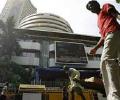
The Union finance ministry has sought views of the Securities and Exchange Board of India (Sebi) for setting up a 'social bourse.'

This is following revival of demand from the corporate sector and small and medium enterprises (SMEs), even as a nascent economic recovery is taking shape. Credit growth of scheduled commercial banks had accelerated to 9.2 per cent year-on-year (YoY) by the end of December 2021 after breaching the 7 per cent-mark in November, for the first time since April 2020.

The primary issue market has hit an all-time high with 63 corporates raising Rs 1,18,704 crore through main-board initial public offerings (IPOs) so far in 2021, which is nearly 4.5 times more than the Rs 26,613 crore raised through 15 issues in 2020 and almost double of the previous best of Rs 68,827 crore in 2017, according to a report. Pranav Haldea, managing director of Prime Database Group, said the IPO frenzy was driven by new-age loss-making technology start-ups along with strong retail participation, and the resultant massive listing gains were the key highlights of the year. Another highlight was only 51 per cent or Rs 103,621 crore of the total Rs 202,009 crore was fresh capital raising and the remaining Rs 98,388 crore were offers for sale.
