
Bangladesh's Home Minister Salahuddin Ahmed will skip the first-ever BIMSTEC home ministers' meeting in New Delhi, with a senior bureaucrat leading the delegation. This absence underscores strained India-Bangladesh ties, particularly following the ouster of the Sheikh Hasina government in August 2024 and Dhaka's request for her extradition from India.

The twice-postponed meeting of SAARC Home Ministers to discuss ways to combat terrorism, extremism and drug trafficking in the region is now likely to be held in Islamabad in June this year.

Bangladesh summoned India's Deputy High Commissioner to convey "deep disappointment" after Dr. Zahed Ur Rahman, an adviser to the Prime Minister, was stopped and questioned by immigration authorities at Delhi's Indira Gandhi International Airport. The incident led to Rahman's decision to return home despite being cleared to proceed.

BNP chairman Tarique Rahman called for maintaining law and order and sought cooperation in building a safe and humane Bangladesh after his party's victory in parliamentary elections.

SAARC countries are facing common challenges and they should cooperate with each other to address them, Home Minister Rajnath Singh said on Thursday, underlining that India is committed to reviving the grouping as a major forum to promote active regional collaboration.
Home Ministers from South Asian Association for Regional Cooperation nations discussed ways to strengthen police cooperation and other means to combat terrorism that has afflicted the region. The SAARC Interior Ministers' conference, attended by Home Minister P Chidambaram, also discussed proposals like maritime security and anti-piracy operations under the SAARC charter.
On the first day of the three-day SAARC Home Ministers' meet, the police chiefs of these countries agreed on sharing information among police organisations to check various trans-border crimes, Home Ministry sources said. They said the delegates spoke of the need for having a better institutional mechanism so that coordinated action could be taken to meet the common challenges.

The home minister will reach Islamabad on Wednesday and return to New Delhi the next day after attending the 7th meeting of SAARC.

Indian journalists, who went to cover the SAARC Home Ministers' conference in Islamabad, had to face hostile Pakistani officials.
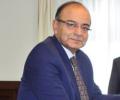
As persources, Economic Affairs Secretary Shaktikanta Das will represent India at the 2-day event to be hosted in Islamabad from August 25-26.
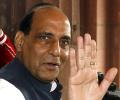
During the visit, apart from attending the SAARC meet, Singh is likely to have bilateral meetings with his counterparts from other SAARC member-countries, including Pakistan's Interior Minister Chaudhry Nisar Ali Khan.

Several Pakistani nationals visiting India started returning home through the Attari-Wagah land route in Amritsar on Thursday, a day after the Centre set a 48-hour deadline for them to leave the country. The decision came after India announced a raft of measures, including the expulsion of Pakistani military attaches, suspension of the Indus Water Treaty of 1960, and the immediate shutting down of the Attari land-transit post in view of the cross-border links to the horrific terror attack in Kashmir's Pahalgam that killed 26 civilians on Tuesday.

India has suspended the Indus Waters Treaty with Pakistan, citing sustained cross-border terrorism and security concerns. The treaty, brokered by the World Bank in 1960, governs the distribution and use of the Indus river and its tributaries between the two countries. India's decision follows a recent terror attack in Jammu and Kashmir, and has been met with strong condemnation from Pakistan.

India on Thursday sought strengthening of SAARC monitoring desks on terrorism and drugs, underlining that illicit funds generated from narcotics and fake currency networks are being fed into supporting terror activities
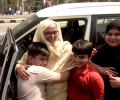
Following a deadly terror attack in Pahalgam, India has ordered all Pakistani nationals to leave the country within 48 hours. This has led to a mass exodus of Pakistani citizens from India, while several women married to Pakistani nationals and holding Indian passports are facing difficulties returning to their families in Pakistan.

The Indian government has revoked 14 categories of visas for Pakistani nationals, including business, conference, visitor, and pilgrim visas, following the terror attack in Pahalgam, Jammu and Kashmir. The decision was made after a Cabinet Committee on Security meeting, and the Home Minister has instructed state governments to ensure that all Pakistani nationals leave India by the set deadlines. The order does not apply to Long Term Visas (LTVs) and diplomatic and official visas issued to Pakistani nationals.

Catch all the latest action from the Lok Sabha and Rajya Sabha here.
According to the Immigration and Foreigners Act 2025, which came into effect on April 4, overstaying, violating visa conditions, or trespassing in restricted areas could lead to three years in jail and a fine of up to Rs 3 lakh.
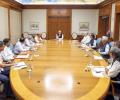
The Cabinet Committee on Security (CCS) met on Wednesday under the chairmanship of Prime Minister Narendra Modi and firmed up the responses to the terror attack.
In the first high-level bilateral visit since Mumbai terror attacks, Home Minister P Chidambaram will travel to Pakistan on February 26 for a SAARC meeting on a two-day visit that is expected to break the deadlock in Indo-Pak dialogue.
In the midst of current chill in Indo-Pak relations, a South Asian Association for Regional Cooperation home ministers' conference is scheduled next month in Islamabad to which Union Home Minister P Chidambaram plans to go subject to Foreign Office's approval.

Swarup also asserted that there was "full coordination" between home ministry and the ministry of external affairs on Rajnath's Islamabad visit.
The high-profile visit of Home Minister P Chidambaram to Pakistan for the SAARC conference may not take place on February 26 as the meet is expected to be postponed to the middle of next month.

Sing is expected to bluntly ask Pakistan to stop sponsoring acts of terror in India.

Raising the Kashmir issue at the SAARC meeting, Pakistan's Interior Minister Chaudhry Nisar Ali Khan on Thursday alleged that the violence being committed in Kashmir is "open terrorism".
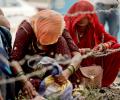
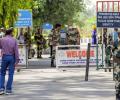
The Attari-Wagah border crossing point between India and Pakistan was shut completely on Thursday following a week-long heavy rush of people from either side to cross over after the Union government ordered all Pakistani citizens with short-term visa to leave India in the wake of the Pahalgam terror attack, sources said.
Strengthening of police cooperation will be high on agenda of the upcoming South Asian Association for Regional Cooperation Home Ministers' conference during which India is expected to press for visible collaboration by member countries in the fight against terrorism.

Modi said the coming together of SAARC leaders will lead to effective outcomes and benefit citizens in the fight against coronavirus. The PM on Friday had proposed formulation of a joint strategy by the SAARC nations to fight coronavirus, a suggestion that was backed by all the member states.
India has asked Pakistan to handover voice samples of the handlers of the Mumbai attackers, speed up the trial against 26/11 terror accused, including LeT Commander Zakiur Rehman Lakhvi, and to stop cross-border terrorism.
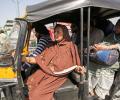
The exit deadline for Pakistani nationals visiting India on SAARC visas ended on April 26, while for the rest, except those on medical visas, it is set to close on Sunday, April 27 amid escalating tensions between the two countries over the Pahalgam terror attack that killed 26 people.

Pakistani Hindu refugees residing in Delhi's Majnu Ka Tila are experiencing anxiety over their visa status despite government clarifications regarding Long Term Visas (LTVs). The government's decision to revoke all visas issued to Pakistani nationals, following heightened tensions between India and Pakistan, has left many refugees worried about their future. While LTVs for Hindu Pakistani nationals remain valid, the renewal process every two years and ongoing citizenship applications under the Citizenship (Amendment) Act, 2019, have fueled concerns. The Delhi Police has initiated a verification drive, adding to the unease among the refugees, who fear being uprooted yet again. The article highlights the plight of these refugees, who have fled Pakistan seeking a better life in India, and the uncertainties they face in the current political climate.
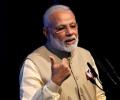
He said the SAARC leadership can discuss via video conferencing ways to keep their citizens healthy.

Stringent action should also be taken against persons involved in terrorism and their extradition should be ensured, he said.

India has revoked all visas issued to Pakistani nationals effective April 27, advised Indian nationals in Pakistan to return home, and suspended visa services to Pakistani nationals. The move comes in retaliation to the Pahalgam terror attack that killed 26 people and alleged cross-border links to the attack. This escalation follows India's previous actions against Pakistan, including expelling Pakistani military attaches, suspending the Indus Water Treaty, and shutting down the Attari land-transit post.
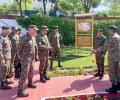
'India today feels enough is enough and we need to teach Pakistan a lesson.' 'Unless compelled, Mr Modi will think 10 times before taking the extreme step.'

India will provide immediate medical visa for patient and an attendant coming for treatment as well as business visa for 3-5 years for SAARC nations.
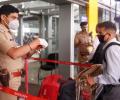
'We have communicated that SAPM (Special Assistant to Pakistani Prime Minister) on Health (Zafar Mirza) will be available to participate in the video conference of SAARC member countries on the issue,' Pakistan Foreign Office Spokesperson Aisha Farooqui said in a tweet on Friday.

From traditional Nepali thali to Gujarati basundi with jalebi, it was a lavish vegetarian spread of cuisines laid out for the SAARC leaders as they met in the cooler climes of exotic Dhulikhel resort for a retreat session.

During his terse speech, Singh launched a veiled attack on Pakistan, saying mere condemnation of terrorism and individual acts by terrorists was not enough.
More than 2,000 activists of various religious and jihadi outfits in Pakistan on Wednesday protested against the visit of Home Minister Rajnath Singh, accusing him for the unrest in Kashmir.
