
Private hospitals accounted for 30.8 per cent of current health expenditure in FY23, while pharmaceuticals and medical goods contributed more than 21 per cent, underlining continued dependence on private healthcare and medicine spending.

The Union Budget for 2026-27, presented by Finance Minister (FM) Nirmala Sitharaman on Sunday, which was a first, had an excellent domestic macro backdrop. According to the first advance estimates, gross domestic product (GDP) in constant prices is projected to grow 7.4 per cent in the current financial year, against 6.5 per cent in 2024-25.
'The roadmap ahead seems very difficult especially in the rural areas where there is very poor infrastructure, vaccine reach and hesitancy.' 'These are a deadly cocktail for the next wave.'

'I realised why the farmers and the rural folks are going for Trump. They are so insecure and vulnerable that anybody who is throwing a line of hope to them, they seize it.'
The next Census' findings will help identify the extent of India's ageing population and vulnerability levels.
For nearly two decades, Nitish Kumar has cultivated women as a distinct constituency. 'To create a broader vote base, he thought it would be better to bring women to electoral politics.'

Uttar Pradesh still remains far behind the Indian average on most health indicators, says Dipa Sinha.

Saha has kept the home, health and family welfare and public works department with him while Ratan Lal Nath has been given the charge of power, agriculture and farmers' welfare, according to an official notification issued by Chief Secretary J K Sinha.
Continuing the downward trend, retail inflation fell to a five-month low of 4.31 per cent in January, mainly due to a decline in the prices of vegetables, eggs, and pulses. The Consumer Price Index-based retail inflation was 5.22 per cent in December and 5.1 per cent in January 2024. The previous low inflation was in August 2024 at 3.65 per cent.

Ayush refers to the six Indian systems of medicines, namely Ayurveda, Yoga and Naturopathy, Unani, Siddha, Sowa-Rigpa and Homeopathy are majorly prevalent in the country.

It will be interesting to see what shifts have been recorded in the last decade-and-a-half -- from the effects of demonetisation and Covid's second wave to the drop in fertility and increase in farm workers -- but we will only know this if and when the Census is conducted, points out Aakar Patel.

Gujarat has done a little worse than the national average when it comes to achieving decline in the Total Fertility Rate and Maternal Mortality Rate, according to the Union health ministry.

The Supreme Court of India has directed all high courts, state governments, and union territories to ensure the availability of separate toilet facilities for men, women, persons with disabilities (PwDs), and transgender persons in all court premises and tribunals across the country. The court stressed the importance of public health and the right to privacy, stating that adequate public toilets protect women and transgender persons. The court also expressed concern about the condition of public toilets near toll plazas on national highways and emphasized the need for proper sanitation facilities in court premises for judges, advocates, litigants, and staff members. This decision highlights the importance of access to basic amenities in ensuring a fair and dignified justice system.

According to the report, Maharashtra, Tamil Nadu, and Madhya Pradesh are identified as the states with the highest number of student suicides, together accounting for one-third of the national total.

And the way to a cure begins with conversation.
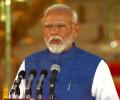
Here is the complete list of ministers in Modi 3.0 and their portfolios:

The report highlights that India's population in 2036 is expected to be more feminine compared to the 2011 population, as reflected in the sex ratio which is projected to increase from 943 in 2011 to 952 by 2036, highlighting a positive trend in gender equality.

This is the fourth such recruitment drive proposed to be undertaken by the Narendra Modi government which had in 2018 initiated lateral entry.
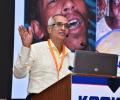
I did not take up research for any award.' 'What is more important is the medicine that I have developed.' 'This helps the patient recover and the family is happy that their relative has survived and they go back to their lives.
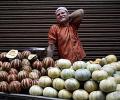
New Delhi says existing food stocks will be sufficient to contain any food price shock.
Claims of a spike in poverty and inequality in India during the Covid-19 pandemic are patently false as such claims are based on uncomparable different surveys, according to a paper co-authored by eminent economist Arvind Panagariya. The paper also noted that inequality fell in the country during Covid years, both in rural and urban areas as well as nationally. Panagariya, Columbia University Professor and former vice chairman of NITI Aayog and Vishal More of Intelink Advisors, New Delhi have co-authored a detailed paper 'Poverty and Inequality in India: Before and After Covid-19'.
.jpg)
A household survey shows that they don't think using a toilet is good for their health, pointing to the need for sanitation policies that focus on changing attitudes rather than just building latrines.
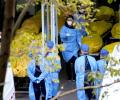
The average age of those who died was 80.3, and 90 per cent of the fatalities were aged 65 or over, the Hong Kong-based South China Morning Post reported.

There has been a decline of four points in male U5MR and three points in female U5MR during the corresponding period.

'The government should act proactively to instil confidence in the private investors, and also boost the purchasing power of people directly or indirectly by ensuring minimum wages.'

The SARS-CoV-2 sero-positivity rate among children is high and comparable to the adult population and hence, it is unlikely that any future third wave of the prevailing COVID-19 variant would disproportionately affect children aged two years and above, according to the interim findings of an ongoing study conducted in the country.

Shivakumar has got the all-important Major and Medium Irrigation and Bengaluru City Development, including the Bruhat Bengaluru Mahanagara Palike (BBMP), Bangalore Development Authority, Bangalore Water Supply and Sewerage Board, Bangalore Metropolitan Region Development Authority and the Bangalore Metro Rail Corporation Limited.

A total of 415 million people moved out of poverty in India within just 15 years from 2005/2006 to 2019/2021, the United Nations said on Tuesday, highlighting the remarkable achievement by the world's most populous nation.

There should have been a focus on sanitation and not on littering or garbage. Absence of sanitation affects the health of children, explains Aakar Patel.

'80% of the rural and urban population don't have enough purchasing power.'

'As our per capita income increases and various demographic segments emerge, the need for various kinds of protection and risk covers will become even more explicit.'

'Within a short span, it increased attendance, improved children's physical fitness, and led to a rise in the enrolment ratio.'
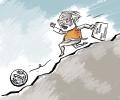
'The large scale and widespread shrinking of the labour force in November, the peaking of unemployment in October and the fall in lead indicators in October and November point towards a worsening of the slowdown of the Indian economy in the third quarter of 2019-20,' says Mahesh Vyas.

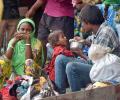
The number of poor people in India fell by about 415 million between 2005-06 and 2019-21, a "historic change" and a demonstration that the Sustainable Development Goal target of reducing at least by half the proportion of men, women and children of all ages living in poverty by 2030 is possible to achieve, even at a large scale, according to the UN.
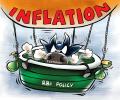
The RBI, which mainly factors in CPI for arriving at its bi-monthly monetary policy, has been mandated by the government to ensure that inflation remains at 4 per cent, with deviation of 2 per cent on either side.

'If deaths had been properly reported, it would have helped contain the pandemic.'

The substantially increased economic dualism may exert lasting negative influences which could include a reduced potential for economic growth; the persistence of a very weak employment and poverty situation; rising social and political discord; and heightened vulnerability to geopolitical challenges, cautions Shankar Acharya, former chief economic adviser to the Government of India.

My goal is to implement the Sevak project all over India and make the villages true Gandhian villages -- self sustainable in every way, including health, says Dr Thakor Patel, head of the American Association of Physician of Indian Origin's Public Health Committee. Aziz Haniffa reports
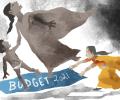
Women and children have been given short shrift with these crucial sectors facing substantive budgetary cuts, discovers Rashme Sehgal.
