
The country had imported 5.5 million tonnes of pulses last year.

The impact of weak monsoon so far this year on India's farm production and economy is likely to be limited, the central bank said, as rainfall levels have improved considerably over the past one month.
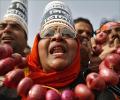
Traders estimate around 30 per cent of rabi crop damage.

As Tagore's 150th birth anniversary became a trending topic on Twitter, the social media site, it seemed like a good time to ask which Tagore we were celebrating.

Nobody likes misery for company, especially on a holiday, says Kishore Singh.

Food inflation further eased to 16.04 per cent for the week ended April 24, as arrival of rabi (winter) crops cooled down prices of essential items.
A group of Maoists kidnapped a school headmaster in West Bengal's Bankura District on Friday evening and threatened to kill him if the state government failed to release the six villagers arrested after police officer Rabi Lochan Mitra's murder. On Friday evening, the armed Maoists barged into Shibram Satpathy School in Sarulia village of the District and went around searching for its headmaster Ranjit Duley.
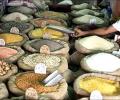
Prices moved up sharply in recent months.
Even as Prime Minister Dr Manmohan Singh is eyeing a decline in inflation to 5-6 per cent by the year end, Planning Commission member Dr Narendra Jadhav said only a good monsoon and augmentation of agriculture production could help achieve the target.
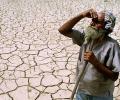
Poor rainfall has also depleted water reservoirs levels, which is likely to impact the winter crops.

India, the world's second largest producer, had produced a record of 80.71 million tonnes wheat in 2009-10 crop year (July-June) despite a severe drought. Wheat is grown only in rabi season.

The cold wave and intense fog across the northern states are deemed beneficial for the rabi crops, notably the main cereal, wheat.
The cold wave and intense fog across the northern states are deemed beneficial for the rabi crops, notably the main cereal, wheat. Agricultural experts have, however, advised farmers to protect oilseeds and vegetable crops against a possible damage from frost, which may ensue when the fog lifts.

The El Nino risks for this year is rising in India and it could result in sub-par rains, says a report.
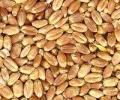
However, storage capacity way behind even present public distribution system procurement need.
The wholesale price index inflation is projected at 6.4 per cent for 2017-18.

Already, the government has projected a dip in the production of summer foodgrain by 21 million tonnes, triggering fears about further price rise.

Ahluwalia's assessment of economic growth is marginally higher than 6.3 per cent projected by the Commission earlier.

Besides regular buyers, there is lot of interest among those in essential services, such as health, banking, and IT. The sales will be helped by social distancing becoming the new normal in both urban and rural regions as people will be averse to using public transport.
A police officer and a Maoist were killed and two others injured in a gunfight between the security forces and the ultras at Sarenga in Bankura district, the police said on Thursday.A group of armed Maoists shot at and injured local Communist Party of India - Maoist leader Tarashankar Patra late on Wednesday night. On getting the information, police and joint forces rushed to the spot, and a gun-battle ensued.

Food inflation rose for the third successive week and moved closer to 18 per cent in the week ended January 30.
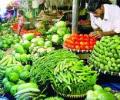
Economists forecast the benchmark food price indicator to slip to 12 per cent in near future
The recovery seen in the increased economic activity till September or October is running out of steam. Labour statistics indicate a substantial slowing down of the economy in November, notes Mahesh Vyas.

The Reserve Bank on Friday said the agriculture growth will be muted this fiscal on account of the impact of poor monsoon on kharif crops.

Planning Commission Member Abhijit Sen on Wednesday said food inflation is expected to decline to 4 to 5 per cent by November from the current over 16 per cent after the arrival of Kharif (summer) crops.

Key macroeconomic indicators suggest softening industrial growth.

Even though he consults chief ministers at regular intervals, the ultimate decision is still his own. He will be blamed, nobody else, if, god forbid, there is a huge spurt in fatalities after the reopening, notes Virendra Kapoor.
Rajan said that demand needs to be reduced without having severe effects on investment and supply.

The food crisis was obvious in July but the government had unrealistic hopes of a good rabi, says Shreekant Sambrani.

The total water stock in the country's 81 major reservoirs is still 57 per cent of their live storage capacity, falling 12 per cent short of the normal level for this time. This is a cause for concern for both irrigation and hydro power production.
This is Rabi Rashmi Abasan, India's first "solar housing complex". Piloted by the West Bengal Renewable Energy Development Authority (WBREDA), the 26 villas in this complex are a showcase for the exciting possibilities that BIPV - building integrated photovoltaic - technology offers for residential projects of a similar nature.

The RBI may be concerned about inflation but it is unlikely to put an abrupt end to monetary accommodation
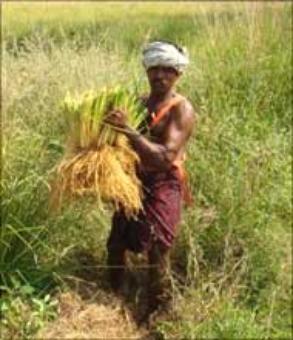
The agriculture growth slowed down to 2.4 per cent in the April-June quarter this year from 3 per cent in the same quarter last year.
The alleged 'water blockade' by India could adversely affect kharif crops, particularly cotton and sugarcane that are in maturity stage and require final watering, and the sowing of rabi crops early next month, sources told the Dawn newspaper.

Though three crops of onions are raised in a year - early kharif, late kharif and rabi - their harvests are not evenly spread out.

Reader Ranjan Banerjee, 62 from Baripada, Orissa takes us back in time.

'The TMC forgets that if people don't stand by you, your party will never win.'
Terminal Markets Projects will be expedited in all states that have potential for such projects, said a conference organized by the agriculture ministry.
Critics argue that much more could have been done and that the government was slow to react to many events.
The kharif grain output is estimated to have declined 2.48 per cent to 117.96 million tonnes while the rabi grain output has remained flat at 109.92 million tonnes, according to a government release. Output has declined mainly in kharif pulses and coarse cereals while a marginal dip has been projected in the rabi wheat output.
