
Why are far right Hindu organisations growing in strength? Why is there a rising subscription to Neo-Wahabism, the Saudi Arabian version of contemporary Islam?
AMU has once again been pulled into a crossfire of crass political opportunism. In these post-truth times, that the university also had political stirrings not subscribing to the Muslim League is chosen to be forgotten, says Mohammad Sajjad.

The Hindutva brigade's silence on the rape may possibly be explained that this incident is an intra-Hindu affair for them. What is even more intriguing is that vocal gender activists have preferred to almost ignore the incident. Why? Is it because homosexual rape does not involve the woman either as victim or as aggressor, asks Mohammad Sajjad.

'Forming cults around Lalus, Nitishes, Mulayams, Mayawatis and Mamatas will do as much harm to the Republic as the bhakti of the Hindus for Modi will do,' says Mohammad Sajjad.

Hamid Anasari's was not talking of reservation for the whole religious community to which he too happens to belong. Yet, sections of media chose to put words into his mouth and then subject him to the criticism he never deserved. This does not augur well for our media or democracy, says Mohammad Sajjad.
'Indian nationhood is indeed at the cusp of alarming redefinition -- hate-filled, and exclusionary.' 'Nations are not built this way, instead these are the ways of liquidating nations.' 'We must pre-empt it.' 'Can we?' asks Mohammad Sajjad.

The man behind Aligarh Muslim University 200 years on.
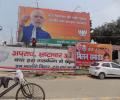
'The BJP has replaced huge portraits of the two BJP leaders from Gujarat with very small portraits of many leaders from Bihar. Much is being read into this changed tactic of hoardings and banners,' says Mohammad Sajjad.

Let Bihar be damned under its contradictions of having gone 'dry' and then having been submerged under flood, which is a recurrent phenomena? After all it is a godforsaken land, having lost its promises of overcoming its problems, says Mohammad Sajjad.

'Why do sections of Muslims seem to prefer Lalu and Mulayam who symbolise wilful neglect of governance and development? In this election, secularism is less at stake. What is more at stake is the degenerative, cynical, opportunistic, and discredit-worthy misuse of secularism by the non-BJP leaders and their social constituencies,' says Mohammad Sajjad.
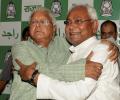
'The clearest interpretation of the November 8 mandate is that the backwards, Dalits and minorities, and a huge proportion of women cutting across caste and class, displayed massive consolidation to the extent that despite chipping of votes by the Left Front, by the Third Front and by the BSP, Mahagathbandhan candidates won, and in many cases by huge margins,' says Mohammad Sajjad.

Muslims constitute 20% of UP's electorate. Currently, Muslim voters are divided between Akhilesh's SP and Mayawati's BSP. What will tilt the balance? Can Muslims back the winning party? Mohammad Sajjad explains the mysteries of UP's Muslim politics.

While the row over allowing women into the AMU library has been wrongly portrayed, it does not mean gender biases are non-existent in AMU. The campus does have its own shares of all kinds of cultural and ideological prejudices prevalent in the world outside. The AMU campus is not a segregated island, says Mohammad Sajjad.
'Compared to other social groups, managing the Muslim constituency has always been easier for the secularists.' 'Just some symbolic measures and window-dressing would keep the Muslim flock together.' 'Having been betrayed by all the supposedly 'secular' political parties, Muslims should turn into citizens without any ascriptive identity marks,'says Mohammad Sajjad.
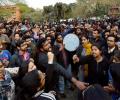
The State is trying to curb the students movements, therefore, there are suspicions against some of the Subramanian report on education's recommendations, says Mohammad Sajjad.
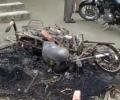
'The horrific episode of January 18 in Muzaffarpur, Bihar, is quite different from what happened in Muzaffarnagar, UP, in September 2013. The Akhilesh Yadav-led administration in UP and riot-mongers among our political formations need to learn lessons from the response of the state and society in Bihar's Muzaffarpur,' says Mohammad Sajjad.
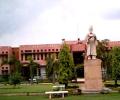
Attorney General Mukul Rohatgi's stand that AMU is not a minority university reveals the anti-minority stand of the political party now in power, says Mohammad Sajjad, outlining the long history behind one of India's premier universities.

'India should think big: About how in a multi-polar world, India can indeed be one of the poles, rather than being a secondary power that has to worry about 'alignment' with one of the poles. A G3 in other words, India should look to getting others to align with itself rather than the US or China,' says Rajeev Srinivasan.

The 'secularists'are more adept at the politics of intense and alarmingly exaggerated fear-mongering, as this kind of politics provides easy votes of Muslims without making them answerable for the concrete issues of poverty, unemployment, lawlessness, and of basic needs like roads, electricity, etc, which is exactly how Nitish Kumar was defeated in the elections, says Mohammad Sajjad.
