
If the TVK joins the NDA, there is every likelihood of the AIADMK winning an absolute majority in the 234 seat assembly and wanting to form a stand-alone government. In turn, it could mean that the BJP especially and the TVK equally so, will want to restrict the AIADMK's seat share closer to the cut-off figure, if only to ensure that EPS won't get the absolute majority that he desires (if the NDA won, that is) and will have to settle for a coalition government, observes N Sathiya Moorthy.

...the DMK chief minister's campaign -- which includes criticism of the BJP's 'pro-Hindutva, anti-Tamil, anti-federal' policies and building on his own government's social welfare programmes targeting especially women and youth -- appeals to Tamil Nadu's voters in next year's assembly election, explains N Sathiya Moorthy.
The political stability that Tamil Nadu saw under Chief Minister Jayalalithaa may be a thing of the past, as the new administration struggles to find its feel, says R Rajagopalan.
Post-Jayalalithaa AIADMK cannot take on the Narendra Modi dispensation like their late charismatic leader did it on several occasions in the past, says R Ramasubramanian.
O Paneerselvam did not even sit in Jayalalithaa's office chamber and left her seat vacant in the assembly. This time Amma is not coming back and he has a large number of challenges awaiting him.
The fracas between Chief Minister Edappadi K Palaniswami and his deputy O Panneerselvam on Monday over who will be projected as the CM candidate in next year's assembly polls not only points to a possibility of another vertical split in Tamil Nadu's ruling party but will also come as sweet music for the opposition DMK which in the past stood to gain from the AIADMK's squabbles, says N Sathiya Moorthy.

Will the AIADMK acknowledge the role of CAA and the anti-CAA protests, both inside the state and outside, as among the causes for the current electoral reversal, as many in the party now want? It is unlikely to be so, but then the pressure will increase on the leadership to reassess the BJP alliance at one level and the 'blind support' for Prime Minister Narendra Modi's controversial policies on the other, says N Sathiya Moorthy.

Dinakaran, who was expelled from the AIADMK in 2011, was re-inducted into the party last month by Sasikala after he expressed regret for his alleged anti-party activities.

The DMK combine has won 37 of the 38 LS constituencies in Tamil Nadu, and bagged 13 of the 22 assembly bypolls. What swept away the AIADMK-BJP alliance in the southern state was not dravidian ideology but job loss and graft bias, says N Sathiya Moorthy.
The Bengal outcome can have a marginal impact on national politics. Whereas elections in UP next year might still change the course ahead of the parliamentary poll in 2024, observes Virendra Kapoor.
'The DMK may get a little more than 50% of the minority vote.' 'The AIADMK always gets over 10% of the minority vote.'
Vellore is one of the two seats that the DMK alliance won by the narrowest of margins in 2019. For the DMK's vote-score to be so low in a constituency with a substantial Muslim population has not missed the BJP strategists' eyes, observes N Sathiya Moorthy.

ndependent of the political fallout, which Stalin has sought to arrest through the withdrawal of the measures as fast as they were introduced, there are concerns about the way those decisions came to be taken, without adequate application of mind, not in official terms but in political and electoral contexts, points out N Sathiya Moorthy.
On the face of it, the first round has gone to Edappadi K Palaniswami. Not only has he been named chief ministerial candidate, that too by his one-time bete noire Panneerselvam, he also gets one member more in the steering committee than OPS. He can now hope to wean away one or more members of the OPS team in the steering committee just as he had done with other leaders in the latter's camp, post-reunification. That was also OPS's concern, says N Sathiya Moorthy.

The contemporary problem with the BJP in Tamil Nadu is that it has been trying hard to package the DMK especially as anti-god and anti-Hinduism, and seeking it to link to Periyar and M Karunanidhi, and by extension to Stalin, the latter's son and successor to the party mantle. Their hope was to consolidate the perceived 'pro-god, pro-religion votes', which they saw returning to the fold post-MGR, post-Jayalalithaa. But no such substantial vote-bank existed even in Periyar's time, says N Sathiya Moorthy.

By getting the Tamil Nadu assembly to act on his very imaginative public declaration to keep petro-chemical industries out of the Cauvery delta, which has traditionally been a DMK stronghold, Chief Minister Edappadi K Palaniswami has not only set the ball rolling for the assembly elections due a year later but also sent out a strong message to the BJP government at the Centre, which took a unilateral decision to exempt petro-complexes from environmental clearance, says N Sathiya Moorthy.

Never before in the history of the Republic has an election in the state mattered so much as it does now, observes Virendra Kapoor.

This time round, even 'petrol coupons' were reportedly distributed for those attending campaign rallies, especially those addressed by top leaders, cutting across party lines. If this owed to the rising cost of petrol and diesel -- which is a poll issue this time -- there were the customary coupons for 'quarter' (liquor bottle size) and non-vegetarian biryani. Some media reports claimed that some of these 'crowds' attended more than one political rally on the same day in the last week, and at times for rival political parties in adjoining constituencies or districts, says N Sathiya Moorthy.
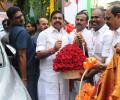
In the absence of the over-arching 'Jaya charisma', EPS has to convince the AIADMK's traditional constituencies, including those in his western districts, that his leadership would stand up against the BJP-led Centre even in a post-poll scenario, a la Jayalalithaa, and would not yield as much as party founder MGR had done, says N Sathiya Moorthy.
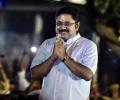
TTV Dhinakaran's call to the Congress to break up with the DMK and tie up with him, is aimed at consolidating the traditional anti-BJP votes. The stronger message is to all anti-BJP constituencies in the state, especially the minorities and traditionally aligned sections of the Dalit community, that he could be trusted to take forward an 'anti-Hindutva' agenda more seriously than anyone else, the DMK included, says N Sathiya Moorthy.
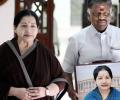
'Going by his political conduct over the past 15 years since first becoming chief minister, he has made enough enemies among equals as friends and followers.' 'They could gang up and that could mean a lot for AIADMK politics to handle,' says N Sathiya Moorthy.

With faction bosses not seeming to control anyone any more, can the BJP count on the AIADMK for the presidential polls any more, asks N Sathiya Moorthy.

In the post Jayalalithaa Tamil Nadu, Sasikala is the person to be watched in the coming days, weeks and months, writes R Ramasubramanian.
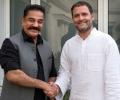
Even as the actor-turned-politician said that it was just 'a courtesy call', speculation about a future alliance between them has been doing the rounds in the national capital, says R Rajagopalan.

Truth be acknowledged, Rajinikanth is not known for wanting to leave his comfort zone to take the politico-electoral plunge, even if it meant his becoming the chief minister of a state that has conferred Tamil cinema's superstardom on him over the past 25 years. Today, his fans belong to the younger generation all right, but their numbers are far fewer than their counterparts in the '90s. They are not devoid of personal ambitions and agendas, unlike what Rajinikanh wants them to be, if he and they were to enter politics, says N Sathiya Moorthy.
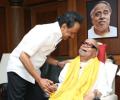
Coming as it does only months ahead of the Lok Sabha polls, the Chennai meet could provide the launch pad for a national alternative to the BJP-NDA, and MK Stalin may be given the credit for getting it going, says N Sathiya Moorthy.
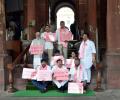
It is possibly the first time that a regional party with not even enough numbers to move a no-trust motion has taken the lead, and others are following it. The hints of a no-trust move first came from the YSR Congress, and the ruling TDP could not have stayed on together when the question is another version of 'Telugu atma gouravam' - an issue that fired its founder N T Rama Rao in the 1980s, says N Sathiya Moorthy.
 © 2026 Rediff.com - Advertise with us - Disclaimer - Privacy Policy - Sitemap - Feedback - About us - Terms of use - Grievances