
The sources said the situation in eastern Ladakh remained 'tense' and that around 30-40 soldiers of China's People's Liberation Army (PLA) are holding up at a position close to an Indian post in the Rezang-La ridgeline in eastern Ladakh.

The use of firearms along the LAC marks a serious escalation in border tensions as the previous instance of shots being fired at the de-facto border was in 1975.
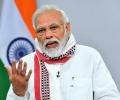
The military brass is learnt to have apprised Modi about the evolving situation in eastern Ladakh, though officials maintained that the agenda of the pre-scheduled meeting was to discuss the ambitious military reforms and ways to boost India's combat prowess.
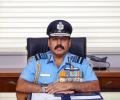
Air Chief Marshal Bhadauria was at the Leh IAF base on Wednesday where he reviewed operational preparedness of the force in effectively guarding the sensitive border areas in eastern Ladakh where Indian and Chinese armies have been on a nearly six-week standoff.

'The military advantage the Indian Army had gained by the Special Frontier Force occupying the heights of the Rezang La-Rechin La ridge on the Kailash Range is lost without the PLA withdrawing to east of the Khurnak Fort line.'

External Affairs Minister S Jaishankar and his Chinese counterpart Wang Yi met in Moscow on Thursday amid hopes of a possible breakthrough in reducing tensions along the Line of Actual Control (LAC) in eastern Ladakh.

The disengagement of troops of the Indian Army and China's People's Liberation Army from the Line of Actual Control was reached after sustained negotiations at the military and diplomatic level, said the ministry of external affairs last week.

The Indian Army has been matching up to the Chinese build up in both Pangong Tso lake and Galwan Valley, the two locations in Ladakh which have witnessed major reinforcement of troops in the last two weeks, sources said. There was very little chance of easing of tension anytime soon as both sides are aggressively holding onto their respective positions, they said.


The sources said the Indian Army has been on a very high level of alert and is ready to deal with any eventuality in the area.
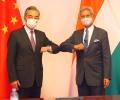
Jaishankar said full restoration and maintenance of peace and tranquillity in border areas was essential for the development of the bilateral ties.
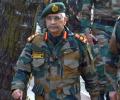
Chief of Army Staff Gen MM Naravane on Friday visited several forward areas in eastern Ladakh and carried out a comprehensive review of India's operational preparedness in the backdrop of its prolonged military standoff with China in the mountainous region.

Chinese foreign ministry spokesman Geng Shuang told a media briefing in Beijing that "at the moment the situation in the boundary region between China and India is overall stable and controllable".

The shelters were installed in locations near Tashigong, Manza, Hot Springs and Churup among others, in reflection of simmering tensions between the two sides in the region.

The talks took place in a beach resort in Benaulim on the sidelines of a meeting of the Council of Foreign Ministers of the Shanghai Cooperation Organisation.
The meeting primarily focused on implementation of certain decisions taken at the fifth round of talks between Corps Commanders of the two armies last week on the disengagement process as well as to bring down prevailing tension in the region, sources said.

'The Pangong Tso lake is frozen from September-October to February-March. The windchill factor is phenomenal. The night temperature goes to minus 40. The area is like a barren desert. You are out in the open with no trees or bushes to take cover.'
The fresh round of Corps Commander talks are scheduled to start at 10:30 AM at Moldo border point on the Chinese side of the Line of Actual Control in eastern Ladakh, they added.
'We hope the Indian side will work with China to follow through the important consensus of our two state leaders, abide by relevant agreements and treaties to de-escalate the tension at the border'
'This reluctance to respond forcefully to Chinese PLA provocations and outright aggression has as much to do with Prime Minister Modi personally, as with the institutional mindset of the MEA or even the Indian Army.' 'They are scarred by the 1962 War and are still cowed by China.'

'Our villagers used to go up to Finger 4 and Finger 6, but today the Chinese are there.' 'Since April 2020, Chinese troops have blocked Indian troops from reaching at least ten patrolling points running from the Depsang plains in the north to Pangong Tso lake in the south.'

The Indian side is expected to seek disengagement as soon as possible in the remaining friction points besides pressing for resolution of issues in Depsang Bulge and Demchok.
"All temporary structures and other allied infrastructure created in the area by both sides have been dismantled and mutually verified. The landform in the area has been restored by both sides to the pre-standoff period," the Army said in a statement.

The Indian side is expected to seek disengagement as soon as possible in the remaining friction points besides pressing for resolution of issues in Depsang Bulge and Demchok.
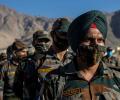
A day after the nearly 13-hour meeting, the two sides in a joint statement on Saturday reaffirmed that such a resolution would help restore peace and tranquillity along the Line of Actual Control (LAC) in eastern Ladakh and facilitate progress in bilateral relations.
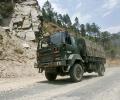
It is learnt that Defence Minister Rajnath Singh has conveyed to top military brass that there was no need for reviewing the implementation of any of the key projects along the Line of Actual Control (LAC) in Ladakh, Sikkim, Uttarakhand or in Arunachal Pradesh in view of the aggressive behaviour by Chinese troops in several sensitive areas.

With the two armies again in a face-off at multiple points, there is apprehension of renewed clashes.
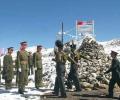
People familiar with the situation in the region said the two sides were engaged in trying to resolve the dispute, but there was no indication of a positive outcome yet as both the armies continued to bolster their positions in disputed areas of Pangong Tso and Galwan Valley and Demchok.

Vice Chief of Army Staff Lieutenant General C P Mohanty on Thursday carried out a comprehensive review of India's military preparedness in eastern Ladakh on the first day of his three-day visit to the region where Indian and Chinese troops have been locked in a bitter standoff for over a year.
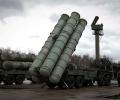
RInstead of disengagement, the Indian and Chinese armies have deployed an estimated 35,000 to 40,000 soldiers each along the LAC. The PLA has deployed S-400 air defence missiles to neutralise the IAF's advantage in air power

'The government will ensure that India's pride is not affected as far as the situation along Indo-China border is concerned'
The decisions were mentioned in a joint statement issued by the two armies late Tuesday, a day after the sixth round of Sino-India Corps commander-level talks that lasted for 14-hours.

It will be the first high-level meeting between the two sides after the border row escalated in eastern Ladakh in early May.

'India's behaviour violated agreements...It's a serious military provocation'
People familiar with the development said Chief of Army Staff General M M Naravane and the top commanders will review the country's combat readiness in eastern Ladakh where Indian and Chinese troops have been locked in a bitter standoff for 17 months.

The deployment of strategic bomber aircraft is also still on by the Chinese

Jaishankar, who arrived in Santo Domingo on his first official visit to the Dominican Republic, also said that India has seen a dramatic expansion in connectivity, contacts, and cooperation across the region.

External Affairs Minister S Jaishankar on Thursday asserted that India's relationship with China cannot be normal unless there is peace in the border areas and there is no ambiguity in New Delhi's signalling to that country.
'The two sides should support rather than undermine each other, strengthen cooperation rather than guard against each other, and enhance mutual trust rather than be suspicious of each other'
China and India have agreed to work to maintain peace along the Line of Actual Control and resolve the border standoff through talks while implementing the consensus reached between the two countries' leadership that 'differences' do not escalate into 'disputes', a top Chinese official said.
