
We'll need to wait a couple of years to see how many restructured loans turn bad and whether some banks fall victim to their obsession for growth, explains Tamal Bandyopadhyay.

It is up to the bank management to decide which application gets to interact with the CBS
The gross non-performing assets of banks may rise to 13.5 per cent by September 2021, from 7.5 per cent in September 2020, under the baseline scenario, according to Financial Stability Report (FSR) released by the Reserve Bank of India.

Despite rising interest rates, and high inflation, the banking sector is doing well, on the back of a recovering economy. The last couple of quarters indicate credit demand is picking up and Return on Assets (RoA) is more than acceptable at the moment. The PSU bank pack may be more interesting at the moment simply due to being valued at far lower multiples than the private banks.

Flush with liquidity, banks are eager to lend. And, therein lies the problem, warns Tamal Bandyopadhyay.
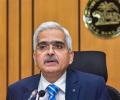
The RBI raked in a massive net income gain from foreign exchange currency sales as a buffer for the rupee during tumultuous geopolitical upheavals last year owing to Russia's invasion of Ukraine.
RBI has allowed public sector banks to expense their pension and enhanced gratuity liabilities over five years.

Finance Minister Nirmala Sitharaman on Wednesday said she has requested banks to work with all state governments to push the 'one district, one product' agenda. Banks have also been requested to have interaction with export promotion agencies, chambers of commerce and industry to understand and address the requirement of exporters on a timely manner, Sitharaman said while addressing the media in Mumbai on Wednesday.

'We may bite the bullet and draw up plans for privatisation.' 'If that is done now, the sale of the government stake will fetch money; a delay will see erosion in whatever value is left in these banks,' says Tamal Bandyopadhyay.

Jhunjhunwala, one of India's well-known individual investors, was speaking at the India Economic Conclave organised by the Times Network. He said he won't rule out 5-10 times gains in state-owned banks over the next five years. Shares of PSBs have been on a tear this year. The Nifty PSB index is up 20 per cent so far this year.
About 50 per cent of the accounts that availed of the EMI moratorium amid the pandemic, which made things worse in an already slowing economy, are expected to be restructured, and of these accounts that would undergo restructuring, one-third, or Rs 6-9 trillion, could turn into NPAs.

'The solution is to enable a graceful transfer of the deposit and funding 'franchise' from capital-deficient firms to capital-surplus firms.' 'This will expand credit intermediation, bring down its costs, and put the financial sector on a definite path of recovery,' argues former RBI deputy governor Viral Acharya.

The United Forum of Bank Unions (UFBU), an umbrella body of nine unions, on Tuesday gave a call for a two-day strike from March 15 to protest against the proposed privatisation of two state-owned lenders. In the Union Budget presented last week, Finance Minister Nirmala Sitharaman announced the privatisation of two Public Sector Banks (PSBs) as part of its disinvestment plan. The government has already privatised IDBI Bank by selling its majority stake in the lender to LIC in 2019 and merged 14 public sector banks in the last four years.
RBI may be inclined to impose severe restrictions on lending in the coming quarters.

PSBs have been requested to reach out to MSMEs to provide bill discounting to them against their dues since they suffer the most from shortage of cash.
The global turmoil in the banking sector has made analysts cautious, who advise that investors stay away from stocks of this sector till the overall sentiment improves. The recent trouble for the banking sector started with the collapse of US-based Silicon Valley Bank (SVB), Silvergate Capital and Signature Bank. On its part, Moody's Investors Service has also cut its outlook for the US banking system to 'negative' from 'stable', citing the run on deposits at these three banks that led to the collapse of these banking majors in less than a week.

The Rs 20,000 crore is in addition to Rs 10,000 crore support announced earlier by the housing sector regulator NHB.

This is part of the first batch of Supplementary Demands for Grants for 2020-21 moved by Finance Minister Nirmala Sitharaman in the Lok Sabha.

The RBI expects the assessment to show if the systemic failure was only in PNB or in the overall banking universe

Insurer has also made fresh investments since December 2015 quarter when RBI told banks to recognise bad loans
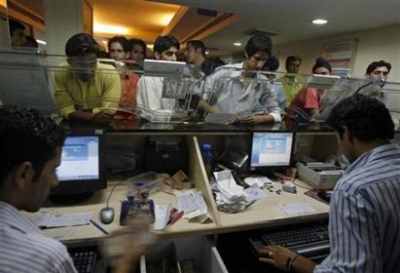
Punjab National Bank, Bank of Baroda, Bank of India and Canara Bank already charge their customers a levy for failing to maintain a minimum balance for a quarter or a month.

The incremental stress is mainly from sectors including power, infrastructure, constructions, hospitality, iron and steel, telecom, and realty.

Most of those punished were managers across different scales, from Scale 7 (general managers) to Scale 1 (officers). However, at least one bank - Oriental Bank of Commerce - revealed that 17 single-window operators (SWOs), five head cashiers, two clerks, one clerk-cum-cashier, and one peon-cum-housekeeper were among those penalised for staff delinquency. Punishments against these employees included withholding of increment, demotion for one year, and censure under provisions of the bipartite settlement.
These recommendations are based on interactions held by the Banks Board Bureau with eligible candidates from PSBs towards appointment against vacancies in PSBs for the period 2018-19

The need to allow government shareholding in public sector banks to come down below 51 per cent

RBI slams public sector banks for the strange phenomenon of profits dipping when a new chairman takes over.

The Centre has advised banks to make a 20 per cent reduction in expenditure related to non-core business activities, along with deferring "avoidable expenditure" on "purchase of staff cars", "refurbishment of guest houses" and on the interior decoration of administrative and back offices.

Bank credit offtake is expected to pick up following normalisation of economic activities aided by the government thrust on public expenditure in current fiscal year, a report said. According to the Care Edge report, the gross non-performing assets (GNPA) ratio hit a six-year low of 5.9 per cent in FY22 but remained above the pre-asset quality review of 2015-16. However, it said, India's NPA ratio is one of the highest among the comparable countries despite gradual decline.
The government must set up a Bank Investment Company to shrink its role in PSBs, if we are serious about tackling the two persistent issues - lax corporate governance practices and discretionary decision-making, says Shyamal Majumdar.

A day after the RBI put in public domain a draft scheme of merger of Lakshmi Vilas Bank (LVB) with subsidiary of Singapore-based DBS, public sector banks' officer union AIBOC on Wednesday said the amalgamation is not in the national interest and demanded the consolidation with any PSB. The proposed amalgamation of the cash-strapped LVB with DBS Bank India seems to be a ploy to provide entry of foreign banks into the country in a big way, All India Bank Officers' Confederation (AIBOC) president Sunil Kumar said. The Indian banking sector provides huge opportunity for growth, so the foreign banks have been looking at inorganic route to expand their presence for long, he said.

Given the relevance of bank deposits for Indian savers, whether the regulator would permit linking savings interest rate to a repo-like structure needs to be seen, as a move of this nature could increase volatility in savings also.

'We will infuse the next tranche of recapitalisation by mid-December. Close to Rs 42,000 crore remain to be infused as capital in public sector banks in the current financial year,' a senior finance ministry official said.
Gross non-performing assets (GNPAs) of banks may rise to 9.8 per cent by March 2022 under a baseline scenario, from 7.48 per cent in March 2021, according to the Financial Stability Report (FSR) released by the Reserve Bank of India. Under a severe stress scenario, GNPA of banks may increase to 11.22 per cent, it added.


Capital infusion seen necessary for banks to maintain regulatory norms at the time of paying interest towards AT-1 bonds

The financial position of India's public sector banks (PSBs) has deteriorated sharply over the past financial year.

AIBOC in a letter to the Prime Minister, has said the government should not expect the banking fraternity to "join the political campaign of #MainBhiChowkidar" unless issues related to merger of banks, salary revision and staff recruitment, among others, are addressed.

As many as 10 public sector banks could be out of the infusion plan because of Sebi's minimum public shareholding norms.

On the sectoral map, consumer durables stayed in the lead by surging 2.39 per cent, followed by realty index, oil and gas and infra.

The finance ministry on Wednesday allowed all private sector banks to participate in government-related business, like collection of taxes. pension payments and small savings schemes. At the moment, only few large private sector are allowed to conduct government-related business.
