
There will be status quo with regard to the MoUs signed with Hengli Engineering, PMI Electro Mobility Solutions JV with Photon and Great Wall Motors on June 15, 2020.

The seasonally adjusted Nikkei India Services Business Activity Index fell to 50.2 in May, from 51.0 in April, pointing to the slowest growth rate in the current 12-month stretch of expansion.

India's services sector activities eased in March as growth was hit by the detrimental impact of the coronavirus pandemic and input costs remained elevated, a monthly survey said on Wednesday. The seasonally-adjusted India Services Business Activity Index fell from 55.3 in February to 54.6 in March. Though the rates of expansion softened, it indicated growth for the sixth consecutive month. In PMI parlance, a print above 50 means expansion while a score below 50 denotes contraction.

Benchmark indices continued their downtrend on Monday, with the Sensex falling 84.88 points, tracking selling in index majors Infosys and Reliance Industries along with weak global equities. The 30-share BSE benchmark went lower by 84.88 points or 0.15 per cent to settle at 56,975.99 after recovering some lost ground during the fag-end of trade. During the day, it tanked 648.25 points or 1.13 per cent to 56,412.62. The NSE Nifty declined 33.45 points or 0.20 per cent to close at 17,069.10.
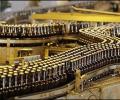
A figure above 50 indicates that the sector is expanding, while a figure below that level means contraction.

The IHS Markit India Manufacturing PMI rose from 51.2 in November to 52.7 in December. Factories benefited from a rebound in demand, and responded by scaling up production to the greatest extent since May. As per the survey, new work orders witnessed marked improvement, with the pace of expansion picking up to the fastest since July.

In the absence of major domestic events, equity markets will be driven by global trends, foreign fund flows and movement in the Brent crude oil, analysts said. The major global events this week are the European Central Bank interest rate decision and China's inflation rate, they added. "Indian equity markets are outperforming most of their global peers and trying to show resilience despite weak global cues.

On the job front, Indian service providers continued to add to their payrolls and the sector witnessed the second-strongest increase in employment since March 2011.
Broadly stagnant sales causes the first drop in business activity in over a year.
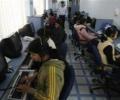
The services sector suffering due to slowing orders, says HSBC.
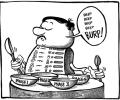
India was already in the midst of a protracted economic slowdown before the virus hit due to a festering crisis among shadow lenders and declining consumer demand and private investment. Service sector activity in India is still effectively on hold.

This is the 14th consecutive month that the manufacturing PMI remained above the 50-point mark. In PMI parlance, a print above 50 means expansion, while a score below that denotes contraction.

Domestic macroeconomic data, RBI policy and developments related to the Russia-Ukraine war would be major driving factors for the stock market this week, analysts said. Moreover, FPI investment and trends in crude oil would also influence the trading sentiment, they added. "This week, the RBI credit policy will be a critical factor for Indian markets.

IndusInd Bank was the top gainer in the Sensex pack, zooming over 12 per cent, followed by Bajaj Finance, Axis Bank, ICICI Bank, Tech Mahindra, Bajaj Finserv and Kotak Bank. On the other hand, ITC, NTPC, Titan, Reliance Industries and ONGC were the laggards.

The main factor boosting production was a sustained rise in new work inflows.
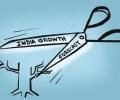
Moody's Investors Service on Thursday slashed India's economic growth projection for 2022 to 7.7 per cent, saying that rising interest rates, uneven monsoon, and slowing global growth will dampen economic momentum on a sequential basis.
Firms seem to have adopted a wait-and-see approach on their plans until public policies become clearer upon the formation of a government.

The seasonally adjusted IHS Markit India Manufacturing Purchasing Managers' Index (PMI) fell from 58.9 in October to a three-month low of 56.3 in November, indicating that the manufacturing sector growth remained strong, despite losing traction.
The headline seasonally adjusted Nikkei India Composite PMI Output Index, that maps both the manufacturing and services sectors, rose from 53.3 in June to 54.1 in July.

IndusInd Bank was the top gainer in the Sensex pack, rising nearly 6 per cent, followed by Axis Bank, SBI, Maruti, Tech Mahindra and Reliance Industries. NSE Nifty surged 183.70 points to close at 17,166.90.

Services companies reported an increase in new work intakes, which they attributed to successful marketing efforts and strengthening demand.
This is the 22nd consecutive month that the manufacturing PMI has remained above the 50-point mark.
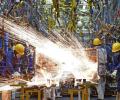
This is the ninth consecutive month that the manufacturing PMI remained above the 50-point-mark.

Foreign portfolio investors (FPIs) turned net buyers in October after being net sellers in the previous month. In October, FPIs bought shares worth nearly Rs 8,430 crore ($1 billion) against net selling of Rs 13,405 crore ($1.6 billion) in September. Positive flows during three of the previous four months have pushed the domestic markets towards fresh all-time highs. At present, the Sensex and Nifty are less than 2 per cent shy of breaching record highs logged in October 2021. A rally in equity markets in the US and Europe is in hopes that the Federal Reserve may go soft on rate hikes after its November meeting.

The seasonally adjusted India Services Business Activity Index rose sharply from 34.2 in July to 41.8 in August, the highest since March, before the escalation of the pandemic.

New business received by Indian manufacturers expanded at the fastest pace since February.

Stock markets are expected to remain under pressure this week due to the overhang of US presidential polls and uncertainty over global growth due to resurging cases of coronavirus, according to analysts.

Wipro's ServiceNXT Operations framework will be utilised to manage PMI's technology and applications infrastructure.

Fitch Ratings has revised India's GDP growth estimate to 12.8 per cent for the fiscal year beginning April 1 from its previous estimate of 11 per cent, saying its recovery from the depths of the lockdown-induced recession has been swifter than expected. In its latest Global Economic Outlook (GEO), Fitch said revision is on the back of "a stronger carryover effect, a looser fiscal stance and better virus containment." "India's second half of 2020 rebound also took GDP back above its pre-pandemic level and we have revised up our 2021-2022 forecast to 12.8 per cent from 11.0 per cent," it said. "Nevertheless, we expect the level of Indian GDP to remain well below our pre-pandemic forecast trajectory."
With factory production, activities across the private sector saw the biggest drop in over three years
However, predictions that economic conditions will normalise after the elections underpinned optimism regarding the outlook and supported a stronger upturn in employment.

On the price front, Indian manufacturing companies continued to face higher input costs during August.

Bolstered by improved domestic demand, India's services sector expanded for the fourth consecutive month in January as business activities quickened and rising business optimism is set to sustain the growth momentum, a monthly survey said on Wednesday. The seasonally-adjusted India Services Business Activity Index rose from 52.3 in December to 52.8 in January, pointing to a quicker expansion in output. The index was above the critical 50 mark that separates growth from contraction for the fourth month in a row during January.

According to Japanese financial services major Nomura, India's manufacturing PMI remained in the expansion zone but suggested some consolidation after the rapid ramp up of activity in December.

India's inflation trajectory in the coming months will be influenced more by the geo-political situation due to the war in Europe and its impact on supply chains and commodity prices. However, the country is better placed than most to "weather the storm" and achieve growth of close to 8 per cent in the current fiscal year, the finance ministry said in its latest monthly economic report on Thursday. "Through the channel of imports, elevated global crude and edible oil prices now have a significant impact on India's inflation outlook. "Government measures to keep the prices of these commodities in check, along with the recent hike in policy rates by the RBI, are expected to temper inflationary pressures in the economy," the monthly economic report for April, drafted by the finance ministry's economic division, said.

It will bear fruit in the next five years, which is why FDI is so strong. The foreigners clearly know what Indians don't, asserts T C A Srinivasa-Raghavan.

The Russia-Ukraine conflict, which has spooked financial markets globally, will set the tone for Dalal Street this week amid concerns over energy prices and foreign fund outflows, analysts said. Participants will also track key macroeconomic signals like GDP estimates and PMI data for manufacturing and services sectors to be announced this week, they added. "With earnings season behind us and given the overall sentiments, markets are expected to move in sync with global peers in the coming week. "A close eye will be kept on the developments concerning the Russia - Ukraine crisis and considering the inflation overhang, market participants will also observe movements in energy prices," said Shrikant Chouhan, Head of Equity Research (Retail), Kotak Securities Ltd.

The Nikkei India Manufacturing Purchasing Managers Index (PMI), fell from 52.1 in February to a five-month low of 51.0 in March, indicating the slowest improvement in operating conditions recorded by the survey since last October.

Firms said subdued demand conditions, unfair pricing among competitors and economic woes affected the sector.

The IHS Markit India Services Business Activity Index stood at 5.4 in April, an extreme decline from 49.3 in March, and indicative of the most severe contraction in services output since records began in December 2005. As per the IHS Markit India Services Purchasing Managers' Index (PMI), a print above 50 means expansion, while a score below that denotes contraction.
