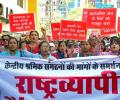
Bank unions on Friday deferred their two-day nationwide strike beginning Monday after they received positive assurance from both the finance ministry and the IBA on their demands, including a five-day work week and adequate recruitment in all cadres. The strike call for March 24 and 25 was given by United Forum of Bank Unions (UFBU), an umbrella organisation of nine bank employees' association.
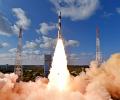
Andhra Pradesh will establish two expansive integrated space cities in Lepakshi and Tirupati, spanning around 33,000 acres.

A vast majority of the business leaders believe that the Production Linked Incentive (PLI) schemes have been beneficial and expect an extension to other sectors in the coming years, a Deloitte Survey said on Friday. An overwhelming number of survey respondents hope the budget will fuel growth across industries by building strong domestic demand and focussing on capital expenditure and believe that it would define the 'Amrit Kaal'. "Critical to this growth will be the pace of capital expenditure, infrastructure development, and the need to boost infrastructure financing through private partnership. 60 per cent of respondents suggested raising funds through Indian Government Bonds," the survey said.
As many as 15 companies, including Adani Copper Tubes, LG Electronics and Wipro Enterprises, with committed investment of Rs 1,368 crore, have been selected as beneficiaries under the PLI scheme for the white goods sector, the government said on Tuesday. In March, the commerce and industry ministry had reopened the application window for its Rs 6,238-crore PLI scheme for white goods -- air-conditioners (ACs) and LED lights-- with an aim to accommodate more players as several firms had expressed interest in the initiative. Last year, as many as 46 firms, including Daikin, Panasonic, Syska and Havells, with committed investment of Rs 5,264 crore were selected in the first round the scheme.

Ashwin retired from the game as the second highest wicket-taker for India in Tests with 537 scalps in 106 games, leaving him only behind Anil Kumble (619 wickets).

The Union Cabinet on Wednesday approved a Rs 26,058 crore production linked incentive (PLI) scheme for auto, auto-components and drone industry to enhance India's manufacturing capabilities, Union Minister Anurag Thakur said on Wednesday. The PLI scheme will incentivize the emergence of advanced automotive technologies' global supply chain in India.

In a communication to the empowered committee on PLI recently, the Indian Cellular & Electronics Association (ICEA) has stated that except one player (Samsung), all the other eight players (which include vendors of Apple Inc) selected under the scheme were facing numerous challenges in fulfilling the qualification criteria.

A strike by Karnataka's state-owned transport corporation employees has severely disrupted bus services across the state, leaving passengers stranded and impacting school, college, and office attendance. The strike persists despite a court stay, as unions demand wage revision and payment of salary arrears.
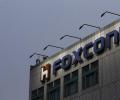
The government has approved Rs 357.17 crore for Apple's vendor Foxconn India and Rs 58.29 crore for Dixon Technologies subsidiary Padget Electronics under the Production-Linked Incentive scheme for mobile phones. This is the first time the government has cleared an incentive of a global company engaged in electronics manufacturing in the country. "Foxconn Hon Hai Technology India Mega Development Pvt. Ltd is the first global company that has been approved under the target segment 'Mobile Phones' (in the category of invoice value of Rs 15,000 and above) to receive incentive under mobile manufacturing for the period 1 August 2021-31 March 2022 based on its incremental investments and sales figures.

With the spectrum auction now delayed till at least next May, the expected 5G orders for telecom equipment have not been sealed, the companies point out. Surajeet Das Gupta reports.

Despite recent underperformance, MNC funds have delivered over longer time frames.

India's smartphone exports surged nearly fivefold to the US and about fourfold to Japan in the past three years, propelling the segment to surpass petroleum products and diamonds as the country's top exported goods, according to government data. The smartphone exports rose by 55 per cent to $24.14 billion in 2024-25 from $15.57 billion in 2023-24 and $10.96 billion in 2022-23.

These cameras will detect vehicles older than 10 years (diesel) or 15 years (petrol) and an alert will be sounded to the command centre and enforcement teams comprising traffic and transport department officials which will impound the vehicles.

Doshi represented India in 33 Test matches and 15 One Day Internationals from 1979 to 1983.
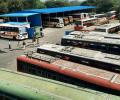
Maharashtra Transport Minister Pratap Sarnaik on Saturday ordered the suspension of the state transport buses to Karnataka after an Maharashtra State Road Transport Corporation (MSRTC) bus was attacked.
Recently, Prime Minister Narendra Modi met over 40 CEOs across broad swathes of industry, ranging from makers of mobile devices, auto components, food products to telecom networking equipment and pharmaceuticals. The agenda: To discuss how to make India an integral part of the global supply chain. The focus of the discussion would be the much touted yet not so well understood production-linked incentive scheme (PLI), the centrepiece of the government's drive to massively boost the manufacturing sector. To do so, the government has created a war chest of over Rs 197,000 crore to be paid out as incentives to over 14 industries in five years. There are three objectives to the scheme, two explicitly stated, one implied.

As many as 12 flights were diverted at the Delhi airport between 3 pm and 4 pm due to adverse weather conditions, an official said.
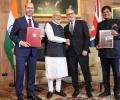
'That way you're not hostage just to US sort of exports to India.'

The Cabinet on Wednesday approved the production-linked incentive (PLI) scheme worth Rs 10,683 crore for textiles sector with an aim to boost domestic manufacturing and exports. The decision was taken in a meeting which was chaired by Prime Minister Narendra Modi. The Cabinet "has approved the PLI scheme for textiles for MMF (man-made fibre) apparel, MMF fabrics and ten segments/ products of technical textiles with a budgetary outlay of Rs 10,683 crore," Textiles Minister Piyush Goyal told reporters.

The growing rift between MSIL and rival automakers has complicated the government's efforts to finalise the CAFE norms.

American automaker Ford on Thursday said that it had withdrawn plans to manufacture electric vehicles (EVs) in India and it won't invest in the country under the performance-linked incentive (PLI) scheme. "After careful review, we have decided to no longer pursue EV manufacturing for exports from any of the Indian plants. "We remain grateful to the government for approving our proposal under the PLI and for being supportive while we continued our exploration. "Ford India's previously announced business restructuring continues as planned, including exploring other alternatives for our manufacturing facilities.
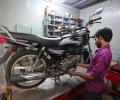
Hero MotoCorp Ltd (HMCL) has been the best-performing auto stock over the last three months, gaining over 17 per cent during this period. Multiple tailwinds, especially on the rural front, are expected to boost its volumes. In addition to the demand drivers, new launches too should help drive growth both in the commuter and premium motorcycle categories.
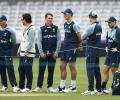
Australia finished second in the league table during the 2023-25 WTC cycle, behind South Africa, having claimed 67.54 per cent of the points on offer to them.

Several multinational medical device makers are focusing on deepening their presence in India by expanding their local manufacturing footprint and research capabilities, a move that can catapult India into a strategic hub for the medical technology (medtech) industry. Among those increasing their reach in the country are Siemens Healthineers and Philips, signalling a broader shift from India being only a sales destination to becoming a global production and innovation base.

The move has come after an organization 'Matheran Paryatan Bachao Sangharsh Samiti' (Save Matheran Tourism Struggle Committee) has called for the indefinite bandh due to growing menace of horse owners operating in the hill station.

India's production-linked incentive (PLI) scheme, which aims to make domestic manufacturing globally competitive, has attracted investment worth over Rs 45,000 crore and has also created three lakh jobs, NITI Aayog CEO Parameswaran Iyer said on Monday. The government has rolled out the scheme with an outlay of about Rs 2 lakh crore for as many as 14 sectors, including automobiles and auto components, white goods, pharma, textiles, food products, high efficiency solar PV modules, advanced chemistry cell and speciality steel. "The PLI programme has already started showing results.

There's no change in Apple Inc's India strategy, said a top government source. 'It can only be enhanced'.

Apple's ambitious strategy to expand iPhone exports, shift more production from China to India at a faster pace, and grow its domestic market hits a Trump-sized roadblock.

Earlier in May, Ford India announced that it had dropped its plans to make electric vehicles (EVs) in India, which it intended to export, under the production-linked incentive scheme (PLI). Ford was among 20 companies that had signed a Champion OEM Incentive Scheme under the PLI project with the government in February this year. The decision comes as a blow for the 4,000-odd employees at Ford India's Maraimalai Nagar plant near Chennai and in Sanand, Gujarat. In September last year, the company had announced that it would exit the India market, which it had entered in 1995 through an on-again, off-again joint venture with Mahindra & Mahindra (they split in 1998, signed a JV in 2019 and split again in December 2020), retailing petrol and diesel brands such as the EcoSport, Figo, Aspire, and Endeavour.

Even if you have a comprehensive motor insurance policy, it may not provide sufficient protection against monsoon-related risks.

Hero MotoCorp is expecting its electric vehicle (EV) business to break even once it reaches monthly sales volumes of 25,000 to 30,000 units, which is a couple of years away, Chief Financial Officer (CFO) Vivek Anand said on Tuesday. "This year, in 2024-25 (FY25), if I really look at my EV performance, our volumes have grown by 200 per cent," Anand told analysts during the company's post-results conference call.
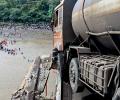
'Who will answer for these lives crushed under their neglect?'

Civil Aviation Secretary Vumlunmang Vualnam on Thursday said the number of planes with domestic airlines will increase to 1,400 in the next five years as he highlighted the growth potential of the country's aviation space. Currently, the fleet is around 800 aircraft and leading carriers IndiGo and Air India have placed significant plane orders.

Driven by smartphone, electronics exports have reached $22.5 billion in value in the first eight months of the current financial year (FY25), a near 28 per cent growth over the $17.66 billion electronics exports during the corresponding period of FY24.

Shubman Gill, who has been India's stand out batter in the tournament, was the only one who did not turn up for practice.

In the June quarter of 2024-2025, smartphone exports hit $2 billion, well ahead of non-industrial diamond exports, which stood at $1.44 billion.
The global PC landscape is poised for a seismic shift as artificial intelligence (AI) PCs are projected to dominate the market, with 98 per cent of all PCs expected to feature AI capabilities by 2028, according to a senior Dell executive. Talking to PTI, senior director and general manager of Client Solutions Group at Dell Technologies India, Indrajit Belgundi said AI PC adoption is significantly growing across all age groups, industries, and categories.
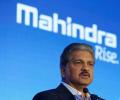
"I took some time to explore the contours of this initiative. I don't use the term 'game-changer' too often but it's apt in this case. For me, what's much more important than the mechanics of the scheme is the dramatic shift it signals in the attitude towards industry," Mahindra said in a tweet.
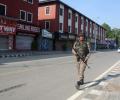
The Kashmir valley observed a shutdown on Wednesday in protest against a terror attack that killed at least 26 people, mostly tourists, in Pahalgam. This was the first time in 35 years that the valley observed a shutdown for a terror attack. Organisations from all walks of life supported the bandh call, including political parties, socio-religious organisations, trade bodies, and civil society groups. Security has been beefed up across the valley, especially at vital tourist spots.

Marin Cilic had never beaten a Top-5 player on grass in his entire career before Thursday.
