
The luxury carmaker plans to drive growth through local assembly of the MINI Countryman, expansion into 10 new cities and a broader product portfolio.

Hybrid mutual fund schemes attracted significant inflows of Rs 1.55 lakh crore in FY26, a 29 per cent increase, as investors increasingly opted for diversified investment strategies to navigate volatile market conditions and geopolitical tensions.

The Indian government's decision to ban sugar exports until September 30 has drawn sharp criticism from the sugar industry and farmer leaders, who fear long-term negative impacts despite the stated aim of controlling domestic prices and ensuring availability.

Ola Electric is experiencing a significant rebound in the June quarter, with vehicle registrations in Q1 FY27 already exceeding the total registrations for Q4 FY26, indicating a strong recovery in demand.

Dabur India's shares rose 3.7 per cent after reporting in-line Q4FY26 results, driven by a healthy 10 per cent growth in its India business, despite some analysts remaining cautious about future execution.

Jewellery majors Titan Company and Kalyan Jewellers reported robust Q4 FY26 results, with Titan's consolidated revenue surging 81 per cent year-on-year, largely propelled by a sixfold increase in bullion and digital gold sales. Despite strong top-line growth, Titan's gross and operating profit margins faced pressure due to the higher share of lower-margin gold products and increased marketing expenditure.

Listed capital market companies in India delivered strong fourth-quarter earnings growth, with a universe of 12 firms posting 30 per cent year-on-year revenue growth and 19 per cent earnings growth in Q4FY26, despite mark-to-market (MTM) losses impacting headline profitability for some.
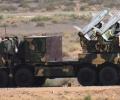
Indian defence stocks have seen an average year-on-year gain of 67 per cent, driven by renewed interest following 'Operation Sindoor' and a broader increase in global geopolitical tensions, with the combined market capitalisation of 18 firms increasing by approximately 2.3 trillion.

Foreign Portfolio Investors (FPIs) have withdrawn nearly Rs 43,000 crore from Indian equities in the first week of June, contributing to a total outflow of Rs 2.67 lakh crore in 2026, driven by a global shift towards technology and AI-linked opportunities and persistent rupee depreciation.

The Indian government is set to accelerate reforms, including measures to enhance foreign direct investment, speed up divestment, and boost asset monetisation, to maintain economic growth despite rising fuel and fertiliser import costs driven by the West Asia crisis.

Outgoing Air India CEO Campbell Wilson stated that the airline's foundations have been rebuilt over the last four years, but non-delivery of aircraft on schedule has significantly impacted growth and fleet modernisation. He also revealed he has no plans to take up another full-time executive position after stepping down.

Pakistan Prime Minister Shehbaz Sharif expressed 'forever grateful' to US President Donald Trump for his 'timely' intervention in securing a ceasefire with India following a military conflict last year, a claim India has consistently rejected.

Fuel prices have risen by about Rs 7.5 per litre since May 15, as global crude oil prices surged due to the ongoing conflict in West Asia and supply concerns around the Strait of Hormuz.
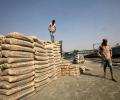
Indian cement manufacturers, despite a stable Q4FY26, are bracing for significant profitability pressures from Q1FY27 onwards due to escalating input costs, primarily driven by the West Asia conflict's impact on coal and petcoke prices.

Indian benchmark equity indices, Sensex and Nifty, saw a rebound in early trade, driven by a rally in global markets and easing Brent crude oil prices, with hopes of US-Iran peace negotiations also contributing to investor optimism. Track Sensex, Nifty on May 22

The Indian equity market is set for an event-heavy week, with analysts pointing to the Reserve Bank of India's (RBI) interest rate decision, developments in the US-Iran situation, and crude oil prices as the primary determinants of market trends.

The start of the West Asia conflict has led to a sharp increase in crude-linked raw material prices, pushing up the price of helmets across the country.

The asymmetry in deposit and credit growth is the biggest challenge before the Indian banking industry. For every 100 deposit that a bank mobilises, it needs to keep 3 with the banking regulator in the form of cash reserve ratio on which it doesn't earn any interest. Another 18 is used for buying government bonds (statutory liquidity ratio). This means, a bank is left with 79 for giving credit. Add to this, its capital which can be used for giving loans. Most banks are facing a fund crunch. They need to find ways to attract deposits if they want to sustain credit growth, explains Tamal Bandyopadhyay.

India's consumption stocks, which have outperformed the broader market, are now facing significant pressure due to a gradual rise in fuel prices and the potential for higher inflation. Analysts warn that companies may be forced to pass on increased input costs to consumers, potentially hurting demand across both staples and discretionary categories, with a looming threat of deficient monsoon rainfall further exacerbating inflationary concerns.

Indian benchmark indices Sensex and Nifty climbed in early trade, driven by a significant drop in crude oil prices following reports of a potential 60-day ceasefire extension between the US and Iran, coupled with positive global market trends and buying in IT stocks.

The Mumbai-Ahmedabad bullet train project has achieved a significant milestone with the excavation of a mountain tunnel in Palghar, Maharashtra, marking the third such achievement in the district within the last five months. This progress underscores the rapid construction pace in a geographically challenging section of the high-speed rail corridor.

Indian stock markets experienced a significant sell-off, with the Sensex tumbling over 1,300 points, driven by escalating crude oil prices due to US-Iran tensions and Prime Minister Narendra Modi's call for austerity measures, which amplified investor concerns about India's economic outlook.

Donald Trump expressed optimism about securing an agreement with Tehran to prolong a truce and restore transit through a strategic maritime chokepoint within the next week, even as he criticised political opponents and the media for what he described as their tendency to distort outcomes, even in a hypothetical scenario of complete Iranian military surrender.

Crude oil prices surged over 3% in futures trade after US President Donald Trump expressed doubts about the Iran ceasefire, reigniting fears of supply disruptions from West Asia and pushing Brent crude above USD 107 per barrel.

RBI Governor Sanjay Malhotra stated that the central bank is closely monitoring whether the supply shock from the West Asia conflict will lead to a generalised price rise, potentially necessitating monetary policy action.

US President Donald Trump described Prime Minister Narendra Modi as 'a Great One', while Russia hailed him as the 'doyen of all Indian prime ministers' as world leaders congratulated him on becoming India's longest continuously serving elected representative at the top post.

Indian oil marketing companies are incurring significant losses, selling petrol at a Rs 14 per litre loss and diesel at Rs 18 per litre, as elevated global crude oil prices, exacerbated by the West Asia crisis, outpace capped retail fuel rates, according to rating agency Icra.

India's eight core infrastructure sectors recorded a two-month high growth of 1.7 per cent in April, primarily boosted by strong performances in steel, cement, and electricity production, according to government data.

Aaron Rai, an Englishman, defied expectations with a remarkable final round to win the PGA Championship at Aronimink Golf Club, marking a significant achievement in his career.

Indian mutual funds have significantly reduced their exposure to the information technology (IT) sector, with holdings now at an eight-year low of 6.7% in April 2026, driven by weak earnings growth, global demand slowdown, and concerns over AI-led disruption.

Indian benchmark indices Sensex and Nifty closed marginally lower due to profit-taking, following the Reserve Bank of India's decision to keep the repo rate unchanged while lowering its growth expectations for the current fiscal year and forecasting higher inflation.
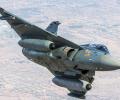
Despite a disappointing Q4 FY26 performance, many analysts remain bullish on Hindustan Aeronautics (HAL) due to its substantial order book and pipeline. However, persistent supply chain issues, particularly for jet engines, and execution challenges are key factors that could impact its future stock performance and revenue growth.

The Indian banking sector is projected to experience a steady 9-13 per cent industrial credit growth in the first half of 2026, driven by capital expenditure, infrastructure development, and sectoral demand recovery, according to a Ficci-IBA survey.

Maruti Suzuki India reported a significant 147 per cent year-on-year increase in mini-car sales (Alto and S-Presso) during April-May 2026, reaching 32,341 units, driven by eased production constraints and a surge in demand for CNG vehicles amidst rising fuel prices.

Through his commitment to democratic norms, debate, dissent and constitutionalism, Jawaharlal Nehru helped ensure that parliamentary democracy took deep root in independent India. Utkarsh Mishra evaluates Nehru's 17 years as India's first prime minister, examining his role in nation-building, democratic institution-building, economic planning, scientific advancement and foreign policy.

IndiGo, India's largest airline, reported a net loss of Rs 2,536.9 crore in the March quarter of fiscal year 2025-26, primarily attributed to a significant foreign exchange loss of approximately Rs 8,100 crore, the impact of December flight disruptions, and expenses related to new labour laws.

The Indian central government has reduced its total expenditure by approximately 60,000 crore in FY26, below its revised estimate, to successfully achieve the fiscal deficit target of 4.4 per cent of gross domestic product (GDP), according to the latest data from the Controller General of Accounts (CGA).

Tata Motors' MD and CEO, Girish Wagh, has identified rising diesel prices as the most significant threat to India's commercial vehicle (CV) industry recovery, despite the sector recently surpassing its pre-FY19 wholesale peak. Diesel costs account for 25-50% of a truck operator's total cost of ownership, making any increase a critical concern for fleet economics.

Indian shooter Esha Singh credits her mental fortitude, developed after the Paris Olympics, for her recent success, including a world-record gold at the ISSF World Cup in Munich.

Mahindra & Mahindra (M&M) is largely bullish among analysts following its Q4FY26 results, driven by strong SUV demand, a robust product pipeline, and improving growth visibility across segments, despite near-term margin pressures from rising commodity costs and potential weakness in the tractor cycle.
