
India's top 11 listed real estate developers are projected to achieve combined presales of 1.82 trillion by FY27, a significant increase from 1.49 trillion in FY26, demonstrating sustained sales momentum despite market challenges.

A Goldman Sachs report indicates that US and Indian equity markets are becoming less attractive due to lower free cash flow (FCF) yields as valuations rise, while European markets offer significantly higher yields. Concurrently, India's top-listed residential real estate developers experienced a moderation in pre-sales in Q1FY27, attributed to delayed project approvals, limited launches, and high year-ago bases, though underlying housing demand remains healthy.

India Inc's first-quarter earnings season was significantly impacted by the West Asia conflict, leading to rising costs, calibrated price increases, and margin pressures across various sectors including FMCG, automotive, steel, and cement. Companies are implementing price hikes to protect profitability, with many anticipating further escalations if input costs remain elevated.
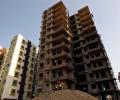
Mumbai-based developers Macrotech Developers (Lodha) and Oberoi Realty have emerged as top gainers among largecap realty stocks over the past month, with gains ranging from 29 per cent to 33 per cent. Strong ongoing sales trends in Mumbai's core market, record bookings in the January-March quarter, and healthy guidance for 2024-25 (FY25) have propelled these companies, which derive the majority of their revenues from India's financial capital.
India's leading listed real estate developers are increasingly focusing on pan-India expansion, diversifying beyond their traditional home markets into high-demand residential areas like MMR, NCR, Bengaluru, Hyderabad, Pune, and Chennai to tap broader housing demand and reduce reliance on single-city market cycles.

The Mumbai-based real estate developer Oberoi Realty has been one of the top-performing companies in its segment and most brokerage remains bullish on the stock. The company's stock price is 52 per cent in the last 12 months beating the broader market by a huge margin. The benchmark BSE Sensex is up just 6.5 per cent during the period.
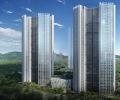
Oberoi Realty has hit the top slot in Mumbai's ranking of the top-20 developers in terms of sales in 2021, evicting the Runwal group which was number one last year. The Lodha group which had occupied the top slot three out of five times since 2017 slipped to second place in 2020 and continues to be in the same position in 2021. The Oberoi group was in fifth place in 2019 and fourth place in 2020. This is the first time that it has occupied the number one position. The Runwal group which took the top slot in 2020 is down to third place in 2021.

Both Oberoi Realty and Ritz-Carlton refused to share further details of the management contract stating confidentiality.
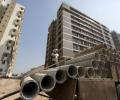
Gurugram, already established as the corporate hub of Delhi-NCR, is increasingly attracting developers from outside the region, drawn by robust end-user demand, premium pricing, and emerging development opportunities.

Office redevelopment is emerging as a key growth frontier for developers as India's commercial real estate market shifts towards quality, sustainability, and capital efficiency. With land parcels scarce in central business districts (CBDs) and demand for Grade A offices remaining strong, developers and investors are increasingly turning to ageing office stock in prime locations to unlock value.

After three post-pandemic years of an upcycle, it was a mixed bag for the realty sector in 2025, with sales volumes in the residential real estate moderating across top cities, and commercial real estate and institutional investments emerging as standout performers. Residential: Volumes soften, value holds firm.

Real estate developer Oberoi Realty on Friday said it will hit the capital market with its initial public offer on October 6.

Top real estate developers reported healthy presales growth in the second quarter of FY26, aided by a steady pipeline of new project launches. While overall housing momentum across major Indian cities moderated during the quarter, listed players remained relatively insulated.
Top real estate developers are expected to report improved earnings and resilient presales growth, even as overall housing sales across major Indian cities declined during the July-September quarter (Q2) of 2025-26. The anticipated earnings growth in what is typically a subdued quarter is credited to steady sustenance sales, improved collections, the strong positioning of listed developers, and sustained demand for premium homes.

India's top listed real estate developers reported steady growth in Q4FY25, supported by healthy pre-sales, even as earnings reflected signs of moderation amid elevated housing prices and subdued launches.
India's top listed real estate developers - DLF, Lodha Group, Prestige Estates, and Oberoi Realty, excluding Godrej Properties - reported strong presales growth in the first quarter (Q1) of 2025-26 (FY26), even as earnings showed a mixed trend. According to Nomura, the top five developers - DLF, Lodha, Prestige, Oberoi, and Godrej - recorded a cumulative 59 per cent year-on-year (Y-o-Y) growth in presales.
Consultants said the fact that Oberoi had no debt on its books and Kalpataru had low debt helped the two in the slow realty market.

The last time these two indexes recorded a negative performance on a calendar year basis was in CY19.

The stocks of Mumbai-based real estate companies have been hitting lifetime highs on expectations that launches, steady demand, and price increases in the largest real estate market in the country would boost their financials. Macrotech Developers (Lodha) and Oberoi Realty hit their all-time highs last week, while Godrej Properties came close to its 52-week high last month before witnessing a sharp correction.

The national real estate market presents an intriguing picture. Lower volumes and flat pricing serve as dampeners. Sales bookings across the top ten markets have seen 6 per cent growth year-on-year (Y-o-Y) between April and August 2024, but sales volume is down 8 per cent Y-o-Y. Unsold inventory is up.
The recent blip in housing sales on a quarter-on-quarter (Q-o-Q) basis should not worry investors as the long-term prospects of real estate stocks remain on a strong foundation, according to analysts. In the first half of the calendar year 2024 (H1CY24), realty stocks surged up to 104 per cent. This sharp run should be used to book partial profit in related stocks, suggested Deepak Jasani, head of retail research at HDFC Securities.
The past 18 months have seen a resurgence in the real estate industry, with developers regaining the ground lost to the Covid-19 pandemic. But it is once again adding inventory at a pace faster than sales. The industry's inventory rose by 28 per cent year-on-year (Y-o-Y) in H1FY24, com-pared to a 25.5 per cent year-on-year increase in net sales during the same period.

Leading property developers, such as Oberoi Realty, Tata Realty and Infrastructure, and Hiranandani, have turned to redevelopment of existing buildings in the expensive parts of Mumbai as a way of augmenting revenue. Experts estimate that Mumbai's redevelopment projects could be worth Rs 30,000 crore. As such, they are not new. What is new is that the big developers are interested in them. Leading the race is Oberoi Realty, which has set up a separate team for these projects.

CLSA has downgraded select real estate stocks and expects most counters from this sector to consolidate in the months ahead after the sharp run seen in them in the last few months. Most positive factors in terms of a pick-up in housing demand and office space absorption, it said, are already priced in. "We expect housing industry demand to grow around 12 per cent in 2024 and for large developers to outpace industry to grow at 15 - 20 per cent.

After Maharashtra, analysts expect more states like Karnataka and Haryana to slash stamp duty rates. However, analysts, do caution that it's still a long road to recovery for the realty sector.

Check out some of the stocks that will react on the basis of their numbers in the near term.
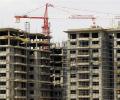
However, both developers as well as analysts are hopeful that these business metrics will pick up once activity resumes.
Whether it is DLF in the National Capital Region, or Godrej Properties and Oberoi Realty in Mumbai or Sunteck Realty, Prestige Estates and Sobha Realty in Bengaluru, most top players have launched or lined up a slew of new project launches during this season.
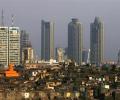
In the quarter ended September 30, the Pirojsha Godrej-led firm recorded Rs 492 crore net sales, up 49% year-on-year
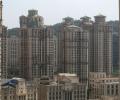
The S&P BSE Realty Index has emerged as one of the top-performing sectors, yielding a remarkable 45 per cent return over the past six months. The three leading players, listed by market capitalisation, have substantially enriched investor wealth by 43-70 per cent during this period. If the second quarter (Q2) of 2023-24 (FY24) updates from Macrotech Developers (Lodha) and Sobha, along with industry data for the quarter, serve as any indication, the trend of strong bookings for larger players is expected to continue.
Home prices across the top six cities are set to jump 6-10 per cent this fiscal and 3-5 per cent in the next financial year because of a steep rise in raw material, labour and land costs, and relatively favourable demand-supply dynamics, a report said on Thursday. The report by Crisil also said large residential realtors are on course to log a robust 25 per cent sales growth in 2022-23 and 10-15 per cent in the next fiscal. The unsold inventory level is down to 2.5 years from four years pre-pandemic, and this has credit profile of the large realtors strengthening, the report said.

Realty major DLF's chairman Rajiv Singh remains the wealthiest Indian real estate entrepreneur with a wealth of Rs 59,030 crore, according to GROHE-HURUN India. With a wealth of Rs 42,270 crore, Mangal Prabhat Lodha and his family of Mumbai-based Macrotech Developers (Lodha Group) is at the second position. Arjun Menda & family of Bengaluru-based RMZ Corp debuted at the third position on the list, with a wealth of Rs 37,000 crore.

Godrej Properties, is on the horizon as it unlocks value in its high-value Bandra-Kurla Complex (BKC) project.

Registration of housing properties in the Mumbai municipal region increased 35 per cent year-on-year to 7,556 units during this month on rising demand, according to Knight Frank. The registrations for September 2021 were 87 per cent higher compared to the pre-pandemic period of September 2019. "Mumbai BMC region (Churchgate to Dahisar and Colaba to Mulund) recorded its best September month performance. Recording 35 per cent YoY growth in property registrations in September 2021, 7,556 units is a 10-year best performance in the month of September," Knight Frank said in a statement.

The Kanakia group, from which Mapletree did the purchase, had bought the plot from India Tube Mills and Metal Industries for Rs 363 crore in 2018.
Some of the country's largest listed real estate developers - DLF, Prestige Estates, and Puravankara - are foraying into the Rs 50,000-crore residential property market of Mumbai, where home prices are among the highest in the world. All of them are set to launch residential projects in the financial capital of the country, where the market is dominated by players such as Runwal, Lodha, and Oberoi Realty, among others. Leading the race is Prestige, which has lined up 6 million square feet (msf) of new launches in the city across Mulund and Byculla in the third quarter of this financial year (2021-22).

The real estate sector is not only one of the key drivers of economic growth of a country but is also a measure of the same. As challenging conditions prevail, we expect that issues like government approvals, FDI and liquidity would be addressed.
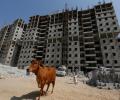
Experts say that the lockdown and its aftermath will further quicken the consolidation in the real estate sector, which has been taking place since 2012, with more small players going out of the business and bigger, branded players dominating the market.
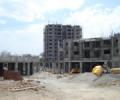
Land costs constitute 50 to 60 per cent of a project's overall costs.

Home sales continue to show declining trend in cities such as Mumbai and national capital region because of high home loan rates and property prices.
