
'The Kuki-Zo are aware of this rich resource in their areas and feel the Meitei push for ST status is because of this reason'.
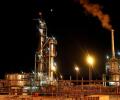
India's import of discounted crude oil from the Russian Federation hit an all-time high in May, with state-run refiner IOC becoming the biggest importer of Russian oil, relegating Reliance Industries to the second place, trade and shipping data show. Indian imports of Russian oil, accounting for over 46 per cent of its total crude oil imports in May, have grown after strong backing by New Delhi, with state-run refiners powering imports of discounted crude. Discounts on Russian oil average around $10 a barrel, said an official from a state-run refiner. IOC's May purchases rose by 64 per cent on the month, and accounted for half of its total crude imports last month, ship tracking data show.

India's crude oil production fell 2.15 per cent in October as state-owned firms produced less but, natural gas output rose by a quarter on the back of output from KG-D6 fields of Reliance-BP, government data released on Tuesday showed. Crude oil production dropped to 2.51 million tonnes in October, as output from fields operated by Oil and Natural Gas Corp (ONGC) and Oil India Ltd (OIL) dipped. While ONGC produced 4 per cent less crude oil at 1.64 million tonnes, OIL output dropped 1.46 per cent to 2,53,000 tonnes.

BG Exploration and Production India, a part of UK-based BG group and Reliance Industries, hold 30 per cent stake each in the field, while ONGC has a participating interest of 40 per cent.

Sensex may remain under pressure this week due to weak global factors.
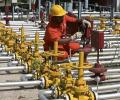
The government on Thursday hiked by 62 per cent the price of natural gas that is used to produce electricity, make fertilisers and turned into CNG to use as fuel in automobiles and cooking gas for household kitchens. This is the first increase in rates since April 2019 and comes on back of firming benchmark international prices but does not reflect the spurt in spot or current price of liquefied natural gas (LNG) witnessed during the last couple of weeks. The oil ministry's Petroleum Planning and Analysis Cell (PPAC) said the rates paid for gas produced from fields given to state-owned Oil and Natural Gas Corporation (ONGC) and Oil India Ltd (OIL) will be $2.90 per million British thermal unit for the six-month period beginning April 1.

Faced with high-speed wind and swelling sea, the ill-fated barge Pappa-305, with 261 crew onboard, lost anchors and smashed into an unmanned platform before sinking in the Arabian Sea after its captain ignored weather warnings and chose not to move the vessel away from the path of severe cyclonic storm Tauktae, a survivor recounted.

Capital expenditure by 54 large central public sector enterprises and five departmental arms, having a capex minimum target of Rs 100 crore, rose 93 per cent year-on-year (YoY) in the April-May period to Rs 1.39 trillion. The National Highways Authority of India (NHAI) and the Railways have started this financial year's capex cycle on a stronger note. In the first two months of FY24, the 54 CPSEs, along with the departmental arms, achieved 19 per cent of their combined budget target of Rs 7.33 trillion, Business Standard has learnt.

They beat the experienced pair of Amanpreet Singh and Shweta Singh of ONGC
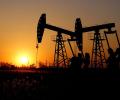
The government has cut windfall gains tax on domestically-produced crude oil to nil while continuing the rate at zero on the export of diesel and ATF. The government has slashed the special additional excise duty (SAED) on crude oil produced by companies such as Oil and Natural Gas Corporation (ONGC) to nil from Rs 4,100 per tonne with effect from Tuesday, an official order dated May 15 said. This is the second time that the levy, which was introduced in July last year in the form of a cess to tax supernormal gains of oil producers and fuel exporters, has been cut to nil for domestically-produced oil.
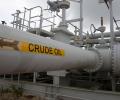
The government has cut windfall profit tax on export of diesel and ATF to their lowest while also reducing the levy on domestically-produced crude in line with softening international oil prices, according to an official order. The levy on crude oil produced by companies such as Oil and Natural Gas Corporation (ONGC) has been cut to Rs 4,350 per tonne from Rs 5,050 per tonne, the order dated February 15 said. Crude oil pumped out of the ground and from below the seabed is refined and converted into fuels like petrol, diesel and aviation turbine fuel (ATF).

Hindustan Zinc (HZL), a subsidiary of Vedanta, announced an interim dividend of Rs 21 per share last week, resulting in an outflow of Rs 8,863 crore. The announcement has turned the spotlight on India Inc's dividend-paying policy - more so for reasons driving the generosity of firms. An analysis of BSE 500 companies by Business Standard Research Bureau shows that some of the top 20 dividend-paying companies in 2021-22 (FY22) include Vedanta, Tata Consultancy Services, HZL, Oil and Natural Gas Corporation (ONGC), Indian Oil Corporation (IndianOil), Hindustan Unilever (HUL), Reliance Industries (RIL), and Bajaj Auto, among others.

Brokerages expect Nifty50 companies to have cumulatively witnessed strong double-digit growth in their earnings in the first quarter of FY24 (Q1FY24). This growth in the combined earnings is expected to have been driven by banks, automakers, and oil & gas companies. Other sectors may report muted profit growth.

Deregulation of the oil sector has brought windfall gains for Oil and Natural Gas Corporation, with its net profit jumping 70 per cent to Rs 10,529.33 crore (Rs 105.29 billion) in 2002-03.
The surprise decision of OPEC and its allies, including Russia, to cut oil output may cause an immediate rise in prices, delaying revision in fuel prices in India, industry sources said. The grouping of Organisation of Petroleum Exporting Countries (OPEC) and its allies, called OPEC+, on Sunday decided to further cut oil output by around 1.16 million barrels. The move led to Brent rising by almost 6 per cent to $84.58 per barrel on Monday.

The government has raised the windfall profit tax levied on domestically produced crude oil as well as on the export of diesel and ATF, in line with firming international oil prices, according to an official order. The levy on crude oil produced by companies such as Oil and Natural Gas Corporation (ONGC) has been increased to Rs 2,100 per tonne from Rs 1,700 per tonne, the order dated January 2, said. Crude oil pumped out of the ground and from below the seabed is refined and converted into fuel like petrol, diesel and aviation turbine fuel (ATF).
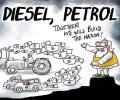
The government on Wednesday scrapped a week-old tax on the export of petrol and cut windfall taxes on overseas shipment of diesel and ATF as well as the one imposed on domestically produced crude oil after global oil prices fell. While the Rs 6 a litre export duty on petrol was scrapped, the tax on the export of diesel and jet fuel (ATF) was cut by Rs 2 per litre each to Rs 11 and Rs 4 respectively, government notifications showed. The tax on domestically produced crude was also cut to Rs 17,000 per tonne from Rs 23,250, a move that will benefit producers like ONGC and Vedanta Ltd.
The government has slashed the windfall profit tax levied on domestically-produced crude oil as well as on export of diesel and ATF following a drop in global oil prices, according to an official order. The levy on crude oil produced by companies such as Oil and Natural Gas Corporation (ONGC) has been cut steeply to Rs 1,700 per tonne from Rs 4,900, the order dated December 15 said. Crude oil pumped out of the ground is refined and converted into fuel like petrol, diesel and aviation turbine fuel (ATF).

As much as 8 billion rubles (about Rs 1,000 crore) of dividend income belonging to Indian oil firms is stuck in Russia after the Putin administration clamped down on dollar repatriation, officials said on Friday. Indian state oil firms have invested $5.46 billion in buying stakes in four different assets in Russia. These include a 49.9 per cent stake in Vankorneft oil and gas field and another 29.9 per cent in TAAS-Yuryakh Neftegazodobycha fields.

'I decided to send a bat and a ball which was smaller in size so that it shouldn't get stuck in the pipe. And with that, they had a little good time.'
The government has reduced the windfall profit tax levied on domestically-produced crude oil as well as on the export of diesel and ATF, in line with softening international oil prices, according to an official order. The levy on crude oil produced by companies such as Oil and Natural Gas Corporation (ONGC) has been cut to Rs 1,900 per tonne from Rs 2,100 per tonne, the order dated January 16, said. Crude oil pumped out of the ground and from below the seabed is refined and converted into fuel like petrol, diesel and aviation turbine fuel (ATF).
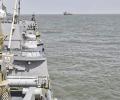
The death toll on barge P305 that sank in the Arabian Sea four days ago rose to 49 on Thursday with the recovery of more bodies even as the Navy and the Coast Guard continued the search for the 26 personnel missing from the barge and 11 from anchor boat Varaprada, as hopes of finding more survivors of the Cyclone Tauktae fury receded.
Indian Oil Corporation (IOC), the nation's largest oil firm, has walked away with half of the natural gas that Reliance Industries Ltd and its partner bp of the UK offered in the latest auction of the fuel used to generate power, produce fertilizer, turned into CNG and used for cooking purposes. IOC got 2.5 million standard cubic meters per day out of the 5 mmscmd of gas auctioned last month, sources with knowledge of the matter said. The oil refining and marketing company, which was the top bidder even in the previous auction of gas from the eastern offshore KG-D6 block of Reliance-bp, bid the volumes on behalf of seven fertilizer plants.

In a move that may boost the Indian hydrocarbon industry and bring more investments into the sector, the Union Cabinet on Wednesday decided to give marketing freedom to domestic crude oil producers, allowing them to sell petroleum to any company in the local market. The move is set to be beneficial for major crude oil producers, such as state-run Oil and Natural Gas Corporation (ONGC) and Oil India, and private sector majors like Vedanta's Cairn Oil and Gas and Reliance Industries. As of May 31, India was dependent on imports for 86 per cent of its crude oil consumption; domestic production sufficed the remaining 14 per cent demand.

OVL had bid for two of the 10 shallow-water blocks that Myanmar had auctioned in December but drew a blank when the fields were awarded on March 26.

'It's a clear case of political patronage helping an individual grow.'
Indian officials will focus on expanding the country's footprint in oil-rich Siberia when they meet their Russian counterparts at the four-day 7th Eastern Economic Forum beginning Monday in Vladivostok. The two sides will discuss the possibility of joint oil exploration in the area and cooperation in running offshore oil and gas fields Western companies are in the process of exiting, officials said in New Delhi. Pavan Kapoor, India's ambassador to Russia, will lead the official-level talks at the summit scheduled September 5-8.
India's natural gas production is projected to jump by 52 per cent to 122 million standard cubic metres per day by 2024 as state-owned Oil and Natural Gas Corporation (ONGC) and Reliance Industries Ltd-BP combine raise output from the KG basin fields. Natural gas production in 2019-20 was 85 mmscmd, which is estimated to have fallen to 80 mmscmd in the following year, HDFC Securities said in a report. The output is projected to rise in the current fiscal that started on April 1 to 93 mmscmd, 107 mmscmd in the following year and 122 mmscmd in 2023-24, the brokerage estimated.
The government on Friday cut the windfall profit tax on locally produced crude oil in line with a fall in international rates, and reduced the levy on export of diesel and jet fuel (ATF). At the fifth fortnightly review, the government reduced tax on domestically-produced crude oil to Rs 10,500 per tonne from Rs 13,300 per tonne. The levy on the export of diesel was reduced to Rs 10 per litre from Rs 13.5. Also, the tax on Aviation Turbine Fuel (ATF) exports was cut to Rs 5 a litre from Rs 9 with effect from September 17, according to a finance ministry notification issued late Friday night.
India was the world's biggest importer of Russian oil in February, exceeding China by 20 million barrels.

ONGC was the top loser in the Sensex pack, shedding around 4 per cent, followed by NTPC, PowerGrid, M&M, Nestle India, SBI and HCL Tech. On the other hand, HUL, Bajaj Auto, Bharti Airtel, Bajaj Finserv were among the gainers.

Reliance Industries and ONGC were down 4-6% each contributing the most to the Sensex losses

There is no word yet on the progress of rescue operations for the accommodation barge SS-3 and the Sagar Bhushan oil rig.

However, in the last few sessions, the stock of Mukesh Ambani-controlled Reliance Industries Limited (RIL), hit its 52-week low level of Rs 2269.75, and has been one of the worst performers among the Sensex pack thus far in calendar year 2023 (CY23). Thus far in CY23, RIL has tanked nearly 11 per cent as compared to a fall of around 5 per cent in the S&P BSE Sensex. The fall in the stock, according to Gaurang Shah, senior vice-president at Geojit Financial Services is mostly due to the overall dip in the market sentiment, which in turn has impacted large-caps, including RIL.

Led by Tata Motors and Tata Consultancy Services (TCS), the combined revenue of the Tata group's listed firms crossed the Rs 10-trillion mark for the first time, in 2022-23. The group's 14 key listed companies in which Tata Sons holds a direct equity stake reported a combined revenue of Rs 10.07 trillion in FY23, up 15.3 per cent from Rs 8.73 trillion in FY22. The combined net profit of these companies was, however, down 10.6 per cent year-on-year (YoY) at Rs 66,670 crore in FY23, from a record high of Rs 74,540 crore in the previous financial year, when the profit had jumped 156 per cent YoY, aided by Tata Steel's strong showing.

Reliance Industries was the top gainer in the Sensex pack, rising around 1.5 per cent, followed by Bajaj Finance, ONGC, Infosys, PowerGrid, L&T and IndusInd Bank. NSE Nifty advanced 12.50 points to its fresh record of 15,811.85.
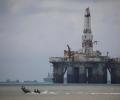
The scrutiny started when it came to the government's notice that Shelf Drilling, a company that operates one third of ONGC's contracted jackup rig and earns a revenue of close to $220,000 a day, has China Merchant Group as its single largest shareholder.
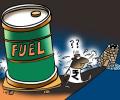
The windfall tax on oil produced within India and fuel exported overseas will make up for more than three-fourths of the revenue that the government lost when it cut excise duty on petrol and diesel to cool soaring inflation, industry sources said. India on July 1 joined a select league of nations globally that have taxed windfall gains accruing to oil companies from soaring energy prices. The government slapped a Rs 6 per litre tax on the export of petrol and jet fuel (ATF) and Rs 13 a litre on the export of diesel effective July 1. Additionally, a Rs 23,250 per tonne tax was levied on crude oil produced domestically.

ONGC was the top loser in the Sensex pack, shedding around 3 per cent, followed by Sun Pharma, PowerGrid, Axis Bank, HDFC Bank, Bharti Airtel and Kotak Bank. NSE Nifty declined 124.10 points to 14,906.05.

IndusInd Bank was the top loser in the Sensex pack, shedding over 3 per cent, followed by HUL, ONGC, ICICI Bank, Axis Bank, Kotak Bank, M&M and Tech Mahindra. NSE Nifty tumbled 154.25 points to 14,696.50.
